


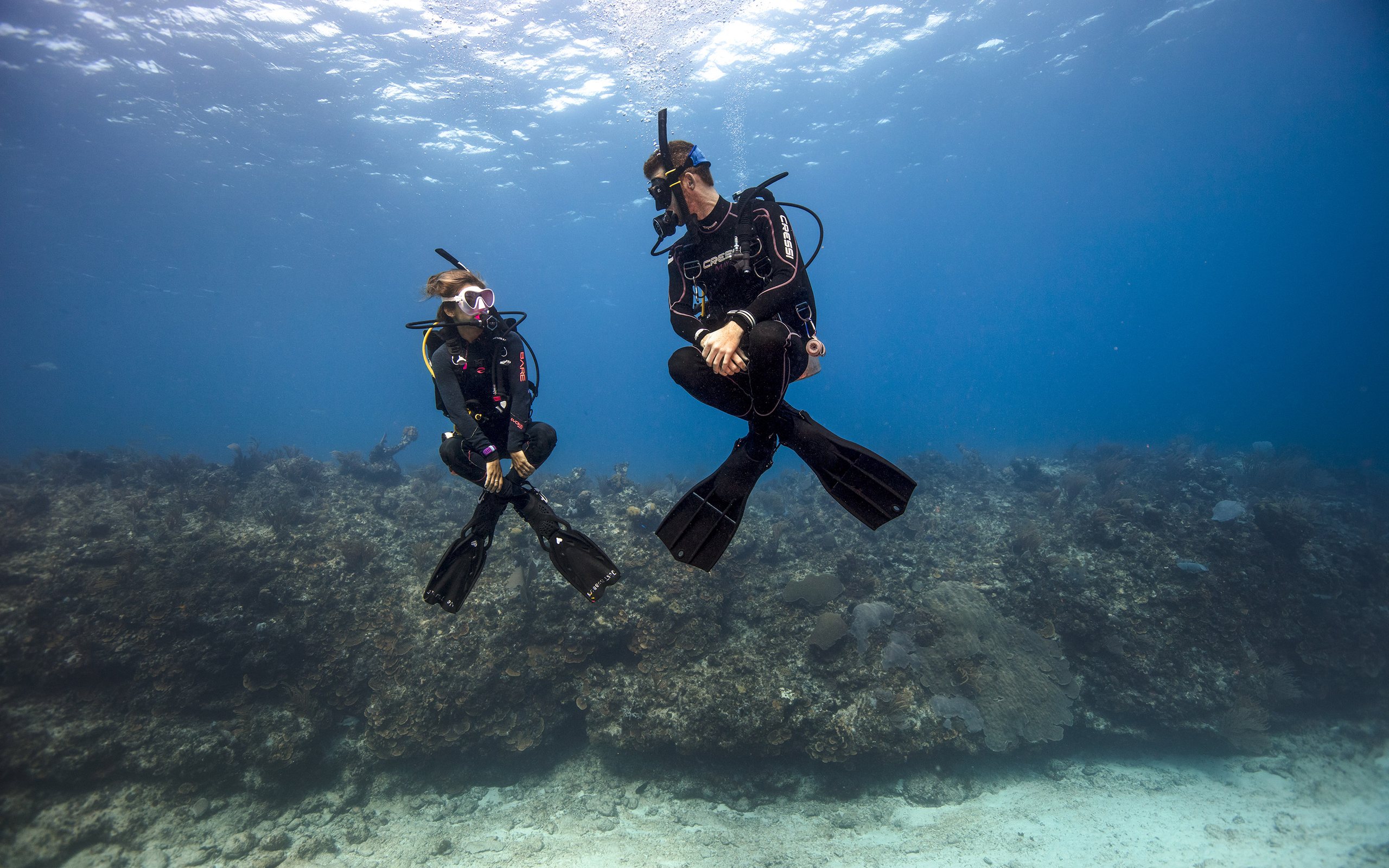
Still, level, effortless.
PADI Peak Performance Buoyancy: buoyancy as the foundation of everything

Course description
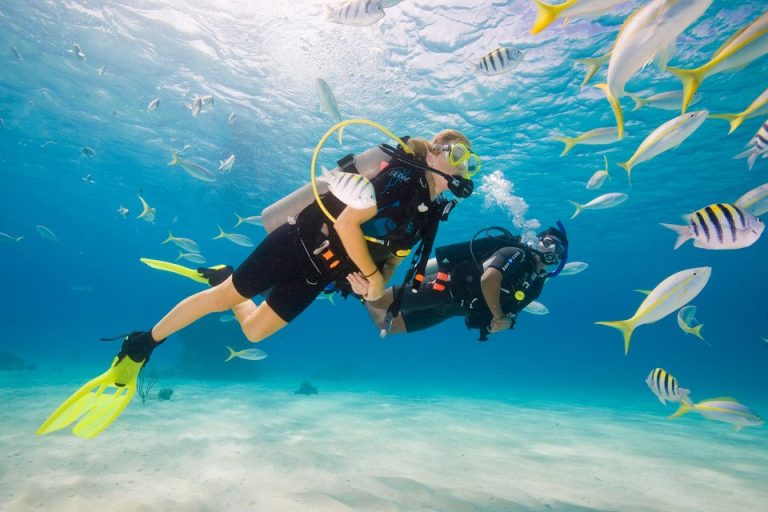
The PADI Peak Performance Buoyancy course is devoted to the skill that almost everything underwater depends on: precise buoyancy control. A diver who can hover in place at any depth uses less gas, tires less, does not damage the bottom and can focus on the plan, the buddy and the surroundings rather than constantly correcting position.
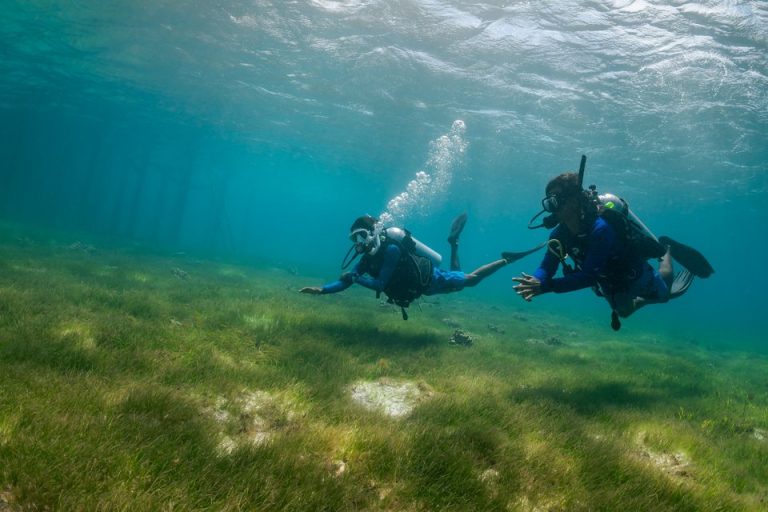
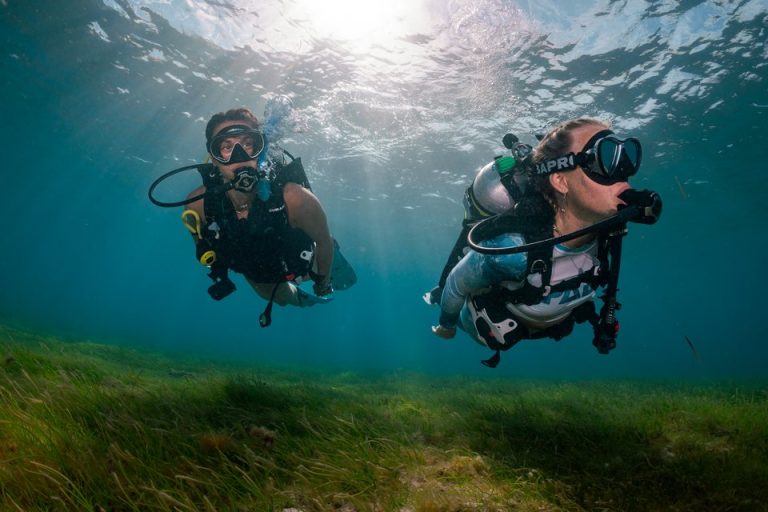
On the course we start with the right weight and its distribution, because most buoyancy problems come from too much lead or a badly balanced rig. Next we work on trim, meaning a horizontal position in the water, on breathing as a tool for small corrections, and on finning techniques that let you move forwards, backwards and turn on the spot without using your hands.
In Polish conditions good buoyancy matters especially. In lakes and quarries the sediment on the bottom is easily stirred up, and visibility then drops to zero in a few seconds. In a dry suit you have to manage two air spaces at once. That is why we run the course in the equipment the student actually dives in, and in conditions they know.
This is a course we recommend to anyone thinking about deep and wreck diving, about the PADI Cavern Diver course or about technical diving. The trim and buoyancy we practise here are exactly what we expect at the start of the TecRec courses.

Usually 1 day: the theory part, preparing and balancing your equipment, and two dives. For people who want more time to work on technique, we offer additional training dives.
2 training dives in open water, with the option of an additional confined water session. The buoyancy dive from the AOWD course can be credited as the first of them.
Within the limits of your certification. We run most exercises at a depth of a few metres, where changes in volume are greatest and buoyancy control is hardest.
A maximum of 4 students per instructor. On a buoyancy course every detail of position and movement matters, so the instructor needs time for individual feedback.
Air, and nitrox too if you hold a PADI nitrox certification. On the course we point out how the cylinder’s buoyancy changes as the gas is used, and how to take that into account when choosing weight.
Skills after the course:
- choosing and distributing weight,
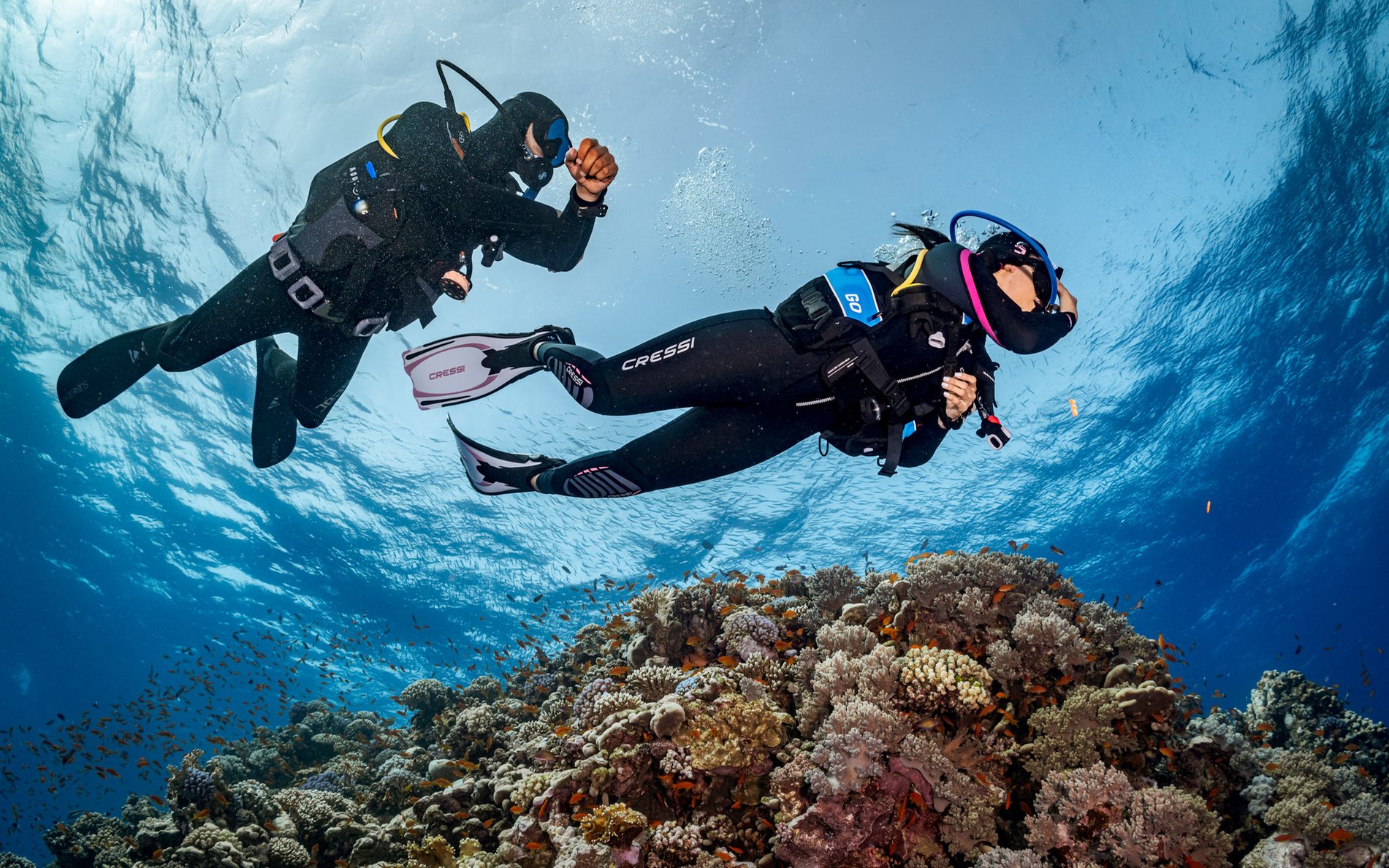
- keeping a horizontal trim while hovering and swimming,
- precise hovering at a constant depth,
- buoyancy control with your breathing,
- frog kick, backing up and turning on the spot,
- controlled descent and ascent without touching the bottom,
- a streamlined equipment configuration.
- minimum age: 10,
- PADI (Junior) Open Water Diver certification or equivalent,
- good health confirmed by a medical questionnaire,
- the course is open to divers at every stage, also straight after OWD.
- mask, fins (ideally stiff ones that allow a frog kick),
- the suit you normally dive in, wet or dry,
- jacket or wing,
- regulator with an octopus,
- dive computer,
- cylinder and weight, ideally in a system that lets you move the weight.
It is best to come to the course in your own equipment, because the settings we work out are for that equipment. Missing items can be rented at Long Deco.
Training fee
Price set individually.
Registration and certification fee
According to the current PADI price list.
Additional costs
Equipment rental, gases, entry to dive sites, travel.
Theory
The theory part covers:
- the physics of buoyancy: displacement, compressibility of neoprene and air,
- choosing weight and how to distribute it,
- trim and the centre of gravity of the rig,
- breathing as a buoyancy control tool,
- the effect of a dry suit and of the changing buoyancy of the cylinder,
- finning techniques adapted to the environment,
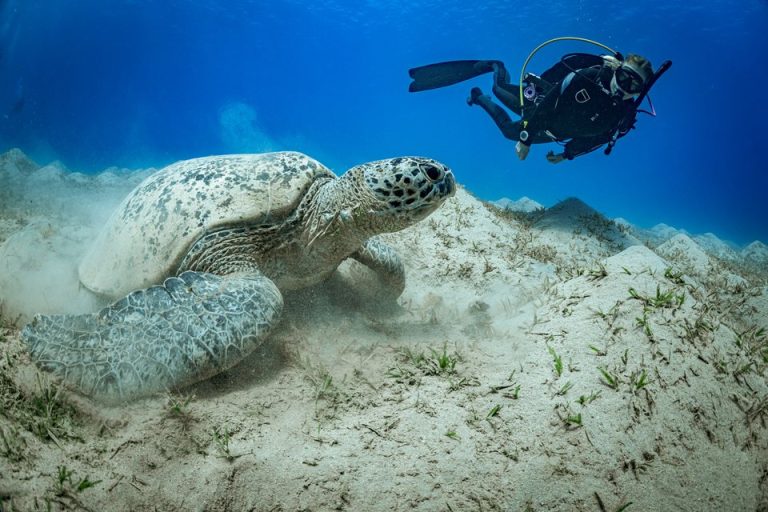
- buoyancy, protecting the bottom and visibility.
Practice
At the start of every dive we check the weight, and only then move on to the exercises. We repeat the exercises until the result is stable, not just to tick off a point.
- weight check at the surface and at the end of the dive,
- correcting weight distribution and equipment setup,
- hovering in a horizontal position for a set time,
- swimming at a constant depth along a marked course,
- breathing exercises: rising and sinking without using the inflator,
- frog kick, backing up and turning on the spot,
- a safety stop while hovering, without a line or a point of reference.
Weight first, then trim, technique last. Nobody can hold a horizontal position with a few kilograms of lead too many or all the weight at the hips.

FAQ

The next step on your path
- PADI Dry Suit Diver: buoyancy in cold water, in a dry suit,
- PADI Advanced Open Water Diver and PADI Deep Diver: deeper dives with good buoyancy control,
- PADI Self-Reliant Diver, PADI Sidemount Diver or PADI Wreck Diver: further specialties in which trim is of key importance,
- PADI Tec Basics: precise buoyancy in a technical configuration.
Buoyancy does not end with the certificate. Every equipment change (a new suit, a different cylinder, a wing instead of a jacket) means balancing the rig again.
Trips
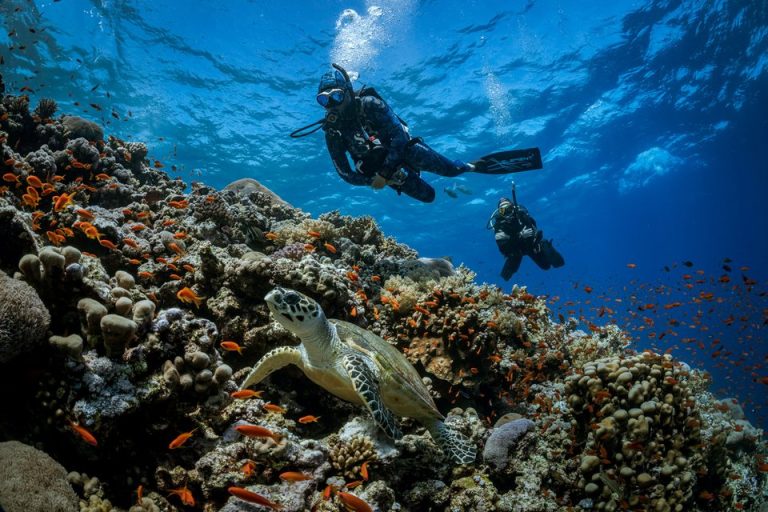
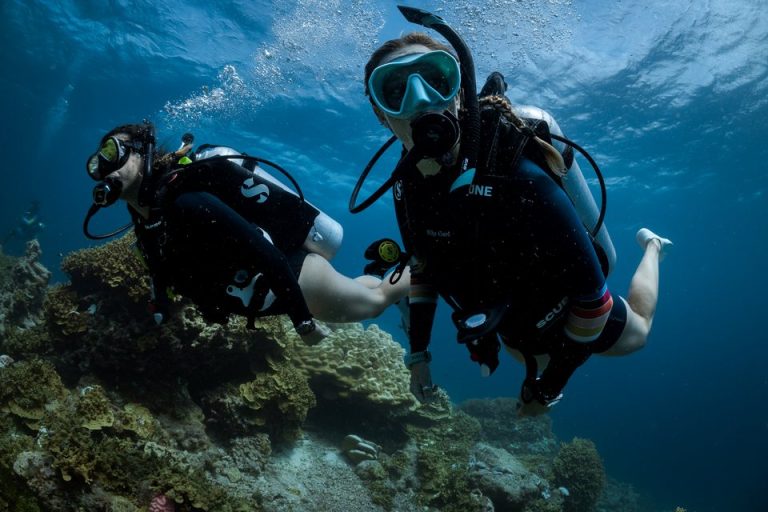
- the Red Sea: reefs where good buoyancy protects the corals,
- Malta and Gozo: dives in clear water, where every trim error shows,
- Croatia: boat dives and wall dives,
- Mexico: cenotes, where buoyancy control is a condition of diving at all,
- Polish lakes and quarries: training in places where sediment is easily stirred up.
Do a weight check before your first dive on a trip. A different wetsuit, salt water and an aluminium cylinder usually change the amount of lead you need by a few kilograms.