


Exploring a wreck with awareness
PADI Wreck Diver: more than touring a wreck

Course description
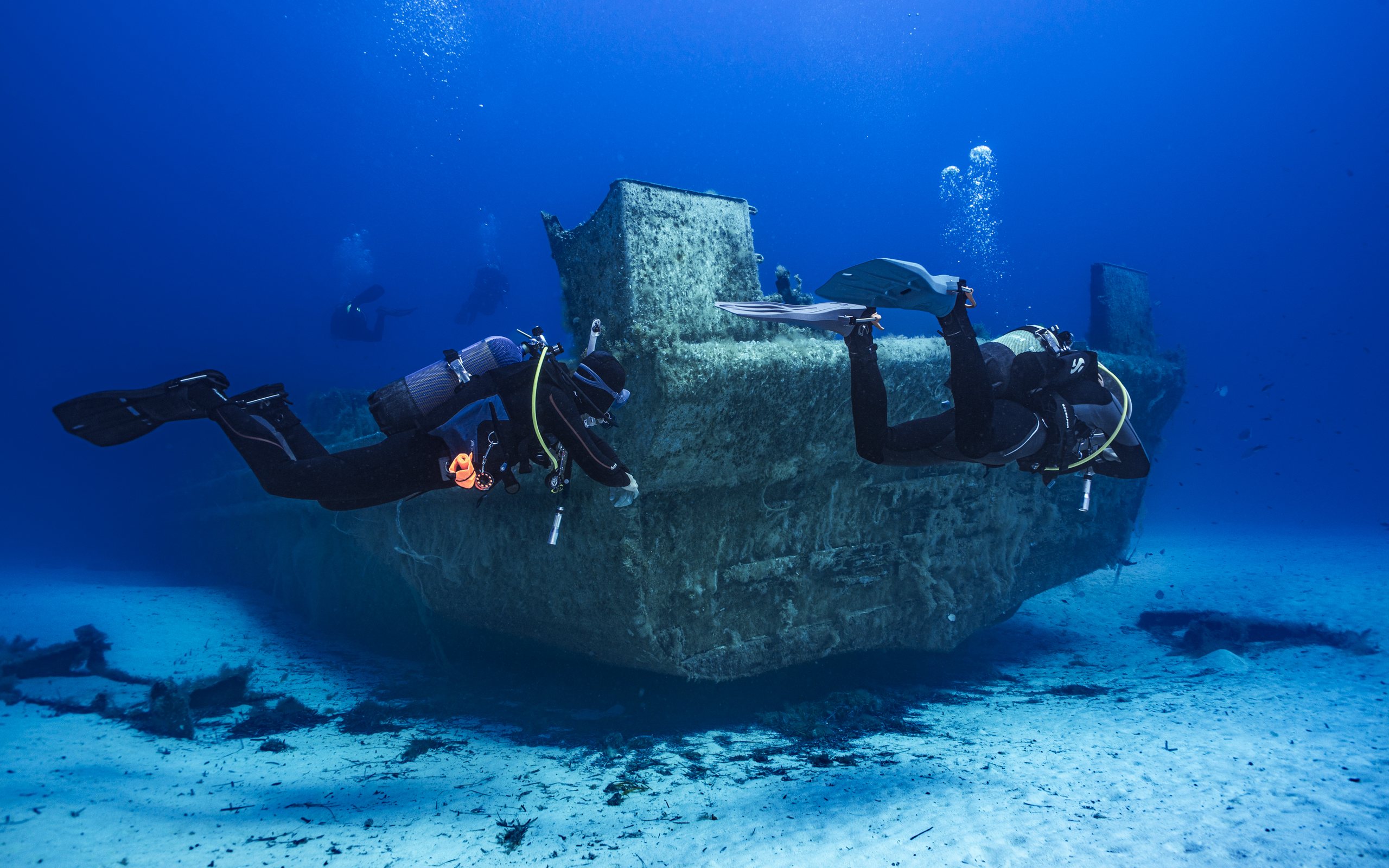
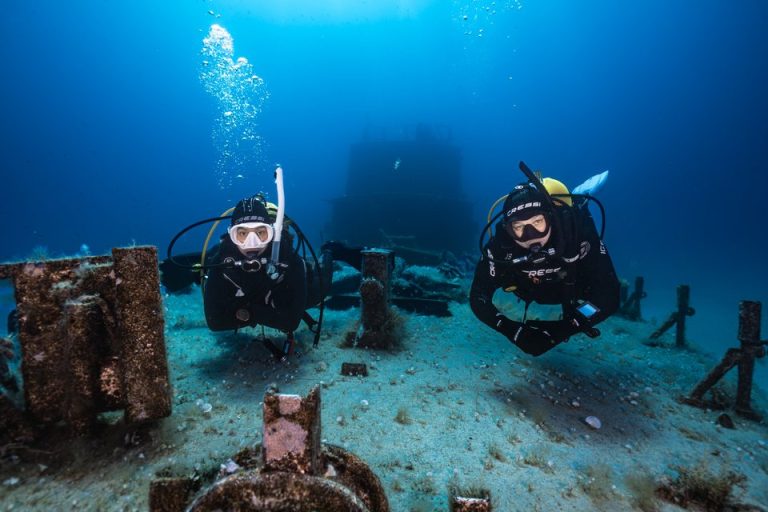
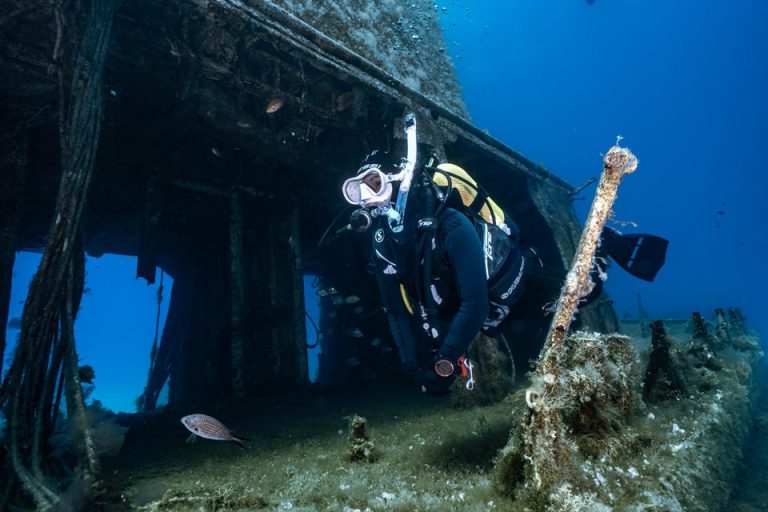
The PADI Wreck Diver course introduces diving in a wreck environment, a space that demands awareness, orientation and orderly action. A wreck is not only a place to explore but a structure in which every movement matters.
The programme focuses on navigation around the wreck, dive planning and understanding the layout of the structure. You learn to assess conditions, plan safe routes and keep your orientation relative to reference points and the exit.
An important element is the introduction to limited penetration, within the recreational range, meaning within the light zone and with direct access to the surface, using a guideline. The course teaches that exploring a wreck starts with understanding, not with going in.
We put strong emphasis on buoyancy control and managing space. Inside a wreck, one careless fin kick can reduce visibility to zero, and that is a real hazard, not a hypothesis.

The course can be completed in 2-3 training days, depending on conditions and how the dives are organised.
In practice the training is often spread out so there is time to work through navigation, orientation and work inside the wreck structure without rushing.
4 open water dives, each focused on a different aspect, from exploring the outside to an introduction to limited penetration.
Maximum depth: 30 metres.
A maximum of 4 students per instructor.
Air or nitrox, the latter being especially useful on deeper wrecks.
After completing the course you can:
- assess conditions and plan a dive on a specific wreck,
- navigate around the structure and keep your orientation relative to the exit point,
- control buoyancy near the structure without touching it,
- work with a guideline and a reel,
- carry out limited penetration within the recreational range,
- recognise hazards specific to wrecks: sharp edges, nets, unstable elements.
- Age: minimum 15 years;
- Certification: PADI Adventure Diver (or higher, e.g. Advanced Open Water Diver) or an equivalent certification from another organisation;
- Health: no contraindications to diving;
- Experience: good buoyancy control. It is not a formal requirement, but it is a real safety condition when working inside a structure.
Basics
- mask, fins, regulator with a pressure gauge,
- BCD, diving cylinder and weighting system,
- dive computer,
- thermal protection suited to the conditions.
Wreck-specific equipment
- a primary and a backup torch,
- a reel with line and a spool for the guideline,
- a surface marker buoy (SMB),
- two cutting tools placed independently: nets and fishing line are a real hazard on wrecks.
The configuration must be streamlined. Anything that dangles will sooner or later snag on something, and a wreck is not a good place to find that out.
Training fee
The price is set individually, depending on the location and logistics.
Registration and certification fee
Training materials and the certification fee, according to the current price list of the certifying organisation.
Additional costs
Equipment rental, breathing gases, boat logistics, travel, accommodation and meals.
Theory
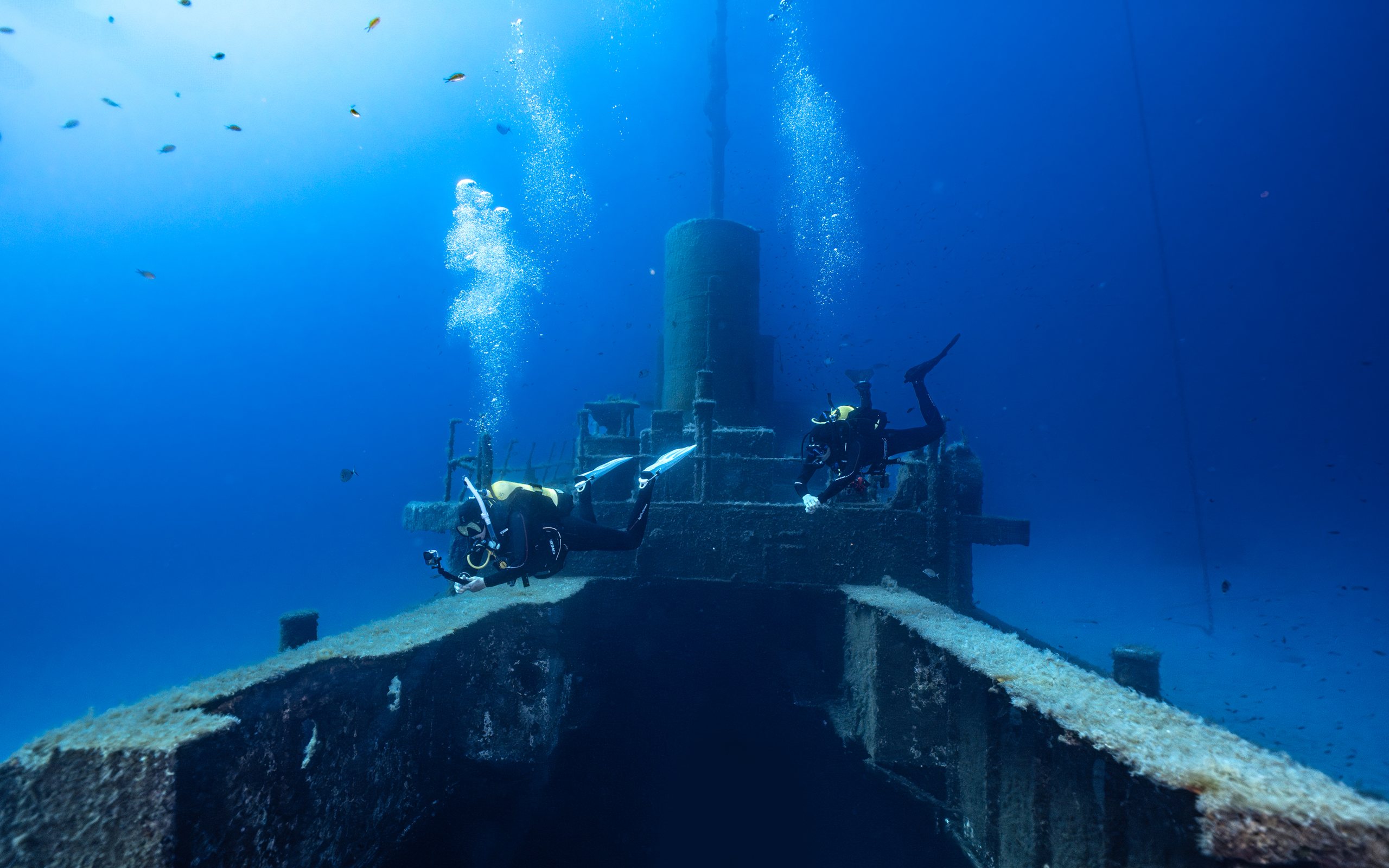
The theory part prepares you to move through a structure with awareness:
- reading the layout of a wreck and identifying reference points;
- planning the dive, including entry, exit and gas reserve;
- navigation and spatial orientation inside the structure;
- working with a guideline: laying it, following it, returning along it;
- hazards specific to wrecks: silt-outs, nets, sharp edges, unstable elements;
- the limits of recreational penetration and why going beyond them requires different training;
- legal and ethical aspects: wrecks can be war graves and protected sites.
Practice
Four dives of increasing complexity:
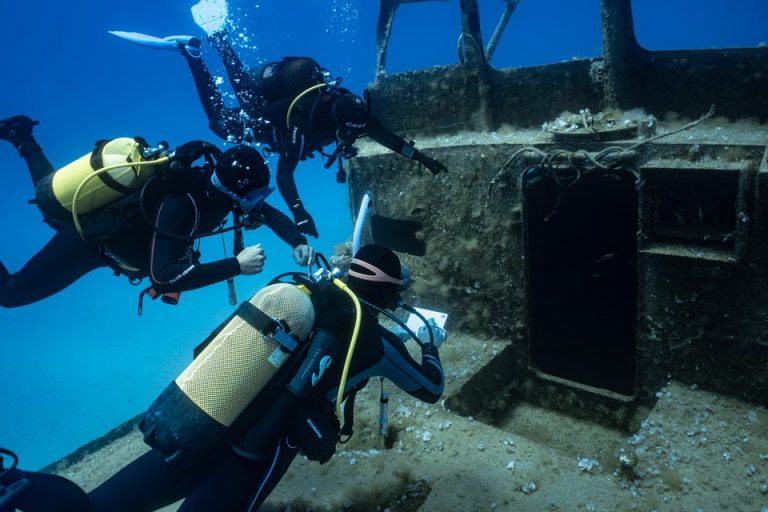
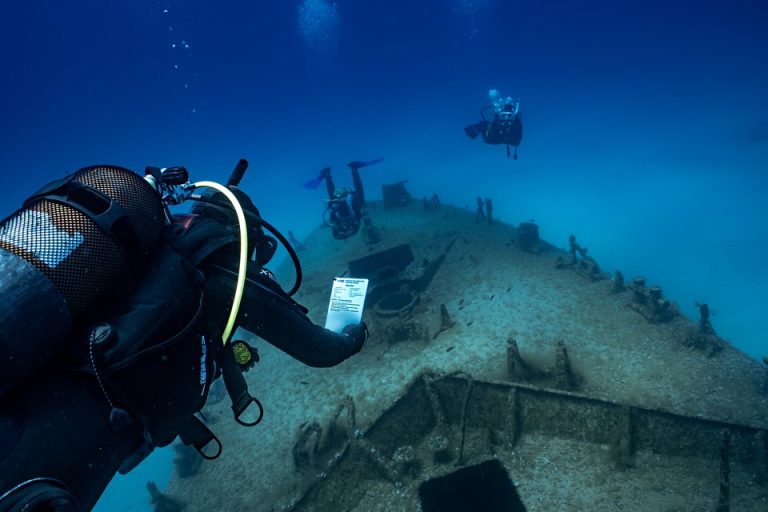
- orientation around the wreck, identifying reference points, drawing a sketch;
- navigating around the structure and holding position without touching it;
- working with a guideline: laying it and following it;
- limited penetration within the recreational range, carried out in a controlled way;
- propulsion techniques that limit silt disturbance;
- procedures for loss of visibility and exiting along the line.
The criterion is not entering the wreck itself, but how you do it: slowly, with a line, keeping visibility, and with an exit plan agreed before the descent.

FAQ

The next step on your path
Ways to progress after the wreck course:
- PADI Enriched Air Diver: on deeper wrecks it noticeably extends bottom time;
- deep diving specialty: many interesting wrecks lie below 30 metres;
- buoyancy refinement: it translates directly into safety inside a structure;
- PADI Tec Basics and Tec 40: if the sites you are interested in lie beyond the recreational range.
Wreck diving is the most common reason recreational divers move into technical diving. If you start looking at deeper wrecks after this course, that is the natural next step.
Trips
Wrecks are a destination that can define a whole trip:
- the Baltic: sites of great historical value, demanding conditions, boat logistics;
- trips abroad to waters with a rich wreck history;
- lakes and quarries with sunken objects: good for training without pressure;
- themed trips focused only on wrecks;
- documentation projects carried out in cooperation with institutions.
It is worth checking the legal status of a site before diving: some wrecks are war graves or protected sites with special rules. We keep the trip calendar separately.