


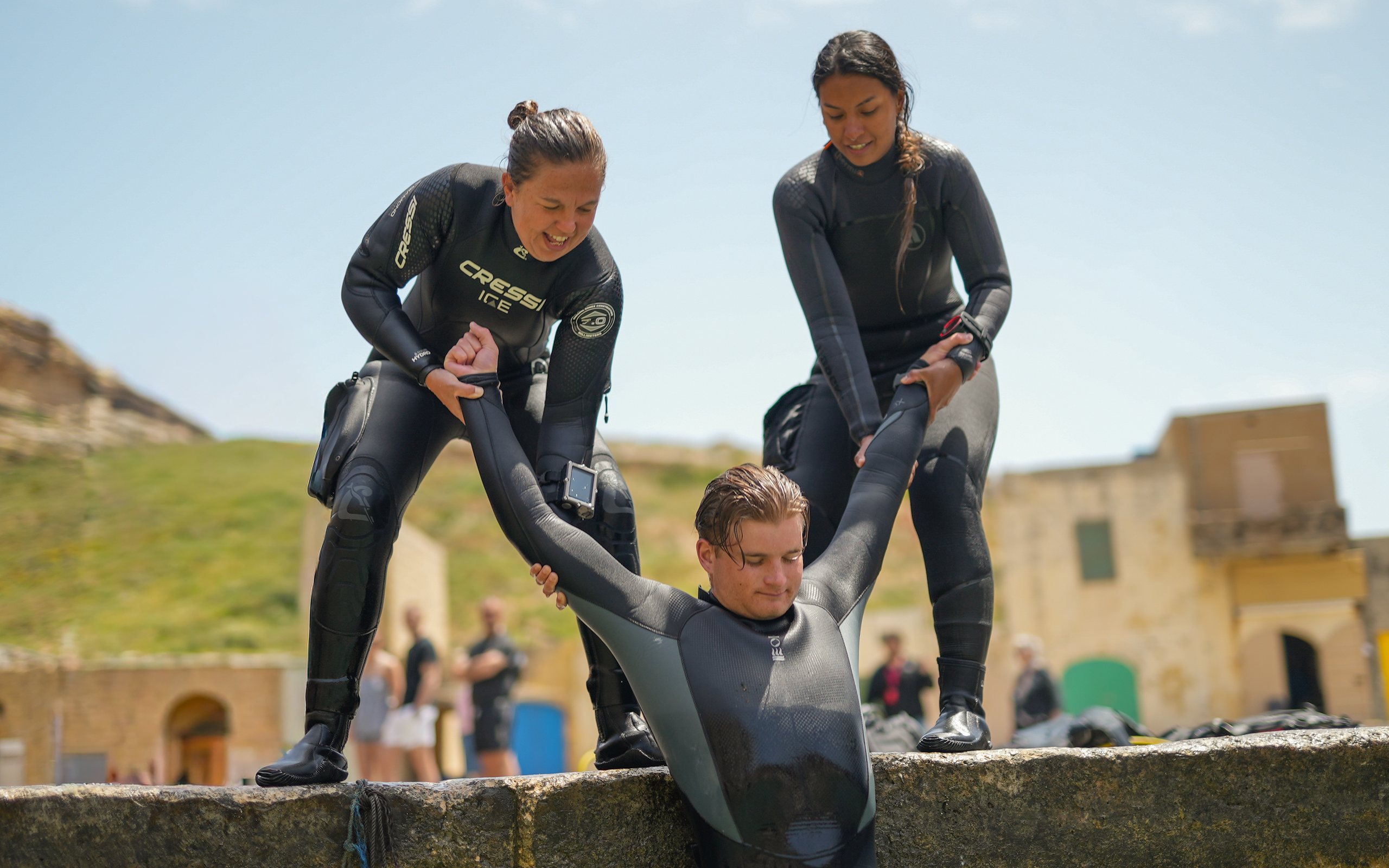
Rescue basics for divers
PADI Emergency First Response (EFR): CPR and AED

Course description
Emergency First Response is an international training programme that prepares you to act in life-threatening situations. The course covers recognising sudden cardiac arrest, performing cardiopulmonary resuscitation, using an automated external defibrillator, and handling choking in adults, children and infants.
The training focuses on practical action, reducing stress in a crisis and building real confidence. The programme has three parts: theory, skill development and situational scenarios, with the last two taking the vast majority of the time.
For people planning a professional path, a first aid course is a formal requirement for entering the Divemaster level and then the IDC. Pay attention to the scope, though: PADI requires both primary AND secondary first aid (Primary & Secondary Care), not just the CPR & AED module. Before signing up, it is worth confirming that the chosen version covers both areas.
Participants learn to recognise a life-threatening situation, assess the casualty’s response and breathing, and start the procedure immediately. The aim is not to memorise a scheme but to build an automatic response that works even when the situation is chaotic.

1 training day or a hybrid model: e-learning at home plus practical workshops on site.
Intensive practical workshops covering all required CPR and AED skills, done on manikins and training defibrillators.
A maximum of 8 people per instructor, which allows individual correction of technique and lasting retention of the skills.
Recommended every 24 months. On the PADI professional path, the training must have been completed within the last 24 months.
- Age: no minimum age, 12 years and over recommended;
- Health: no contraindications to taking part in practical exercises; the course requires working on your knees at the manikin;
- Certification: no prerequisites, the course is open to everyone;
- For the professional path: the training must be completed within 24 months before starting the professional course.
An EFR participant is the first link in the chain of survival. In sudden cardiac arrest, the person on the scene makes the key decision: act immediately or wait. The course prepares you to take on that responsibility consciously and without hesitation.
In practice this means recognising the danger, starting the chain of survival, beginning resuscitation without delay and continuing until the emergency services arrive.
For people on the professional path, the course also means being ready to secure the group and able to act in a crisis. A Divemaster and an instructor are responsible for the team’s safety on the surface too, and statistically more situations needing a reaction happen there than underwater.
Training fee
The price is set individually, depending on the training model: in person, hybrid or group.
Registration and certification fee
Training materials and certification, according to the current price list of the certifying organisation.
Additional costs
None. The training includes access to training equipment: manikins, training defibrillators and consumables.
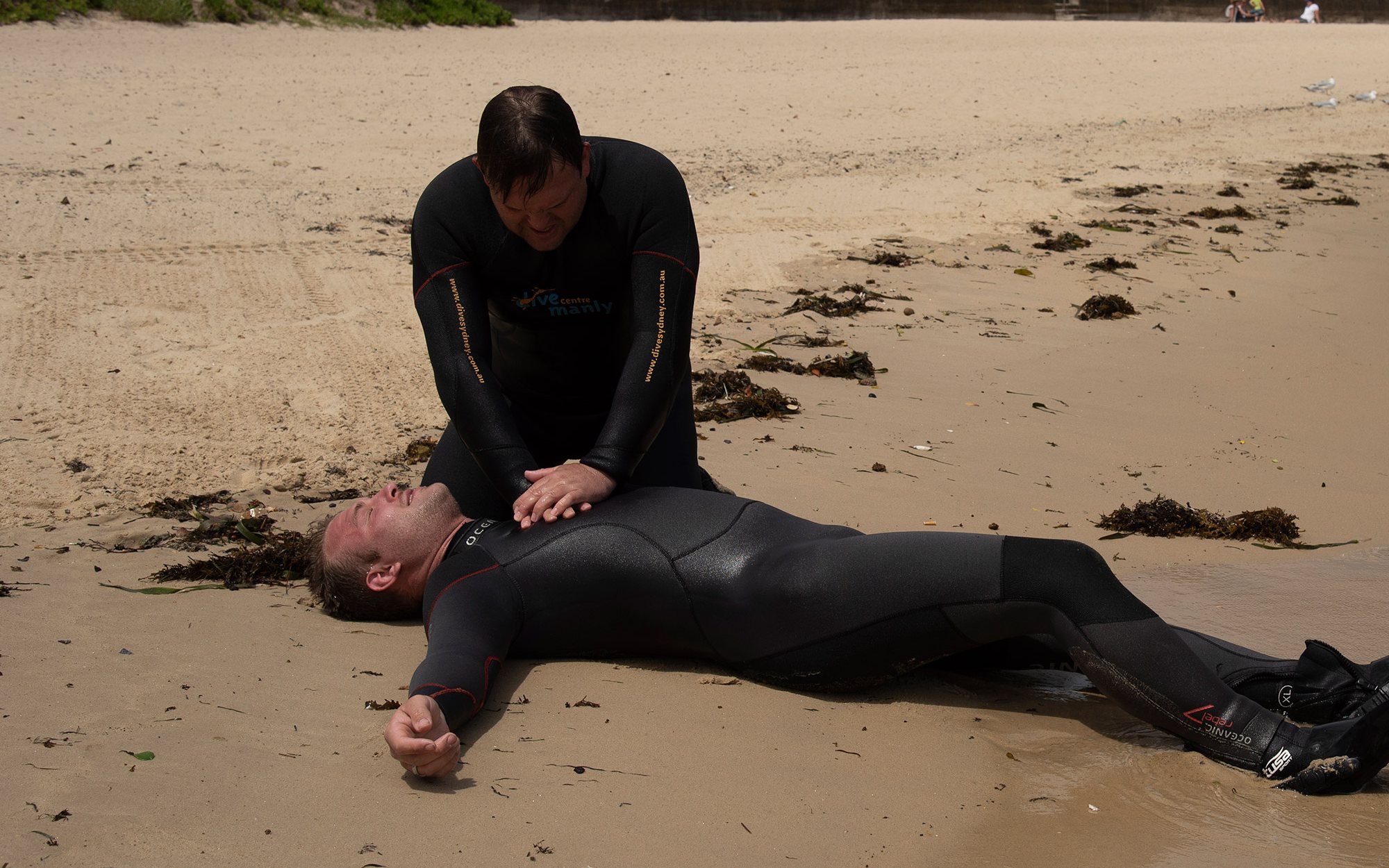

Scope of competence after the course
The participant finishes the course able to act, not just knowing what ought to be done:
- assessing the scene and your own safety,
- recognising sudden cardiac arrest and making an initial assessment of the casualty,
- correct compression rate and depth, and effective ventilation,
- minimising pauses in resuscitation, the factor with the strongest effect on survival,
- safe use of an AED and teamwork during defibrillation,
- handling choking in adults, children and infants.
The aim of the course is to build an automatic response and remove decision paralysis. In sudden cardiac arrest, the most common mistake is not poor technique but failing to react in the first minutes.
Theory
Theory is kept to the necessary minimum, with the emphasis on practice. The theory part, done online or with an instructor, covers:
- the chain of survival and the role of the bystander at the scene;
- the mechanism of sudden cardiac arrest;
- why early defibrillation matters and how time affects the chances of survival;
- differences in procedures for adults, children and infants;
- legal aspects of giving help, including the rule protecting the rescuer;
- managing stress and the responsibility of the rescuer.
Practice
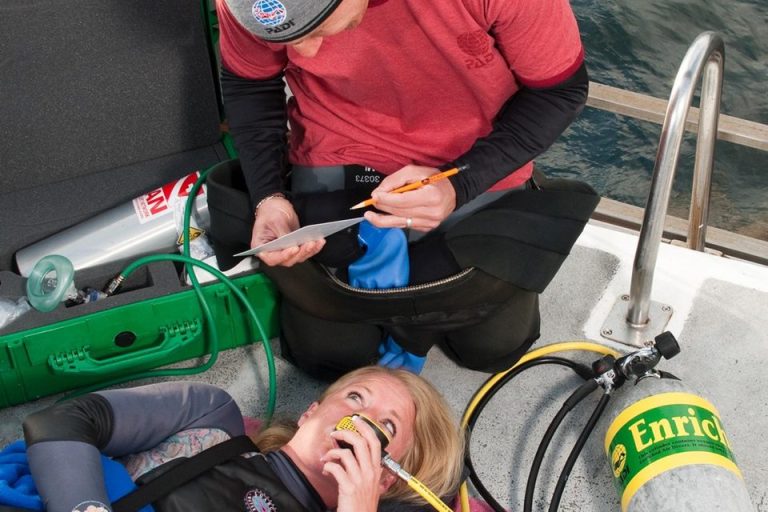
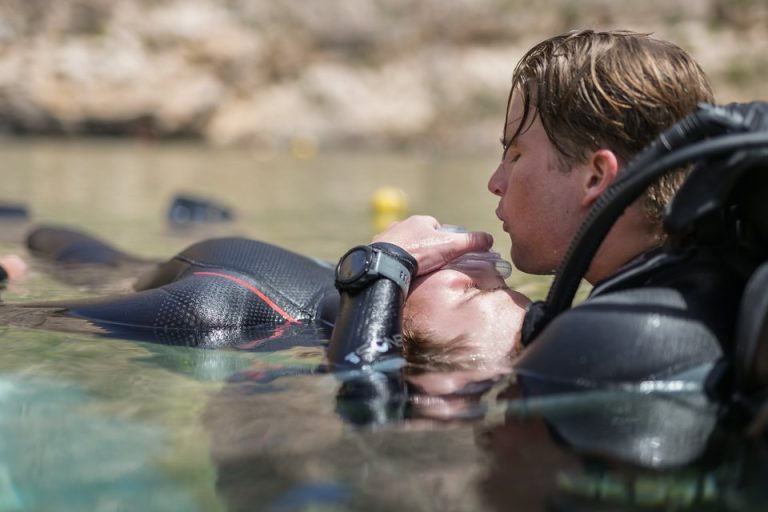
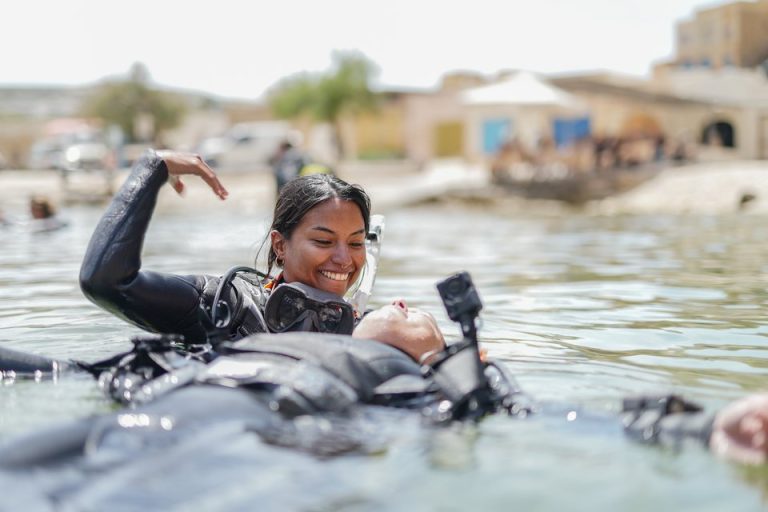
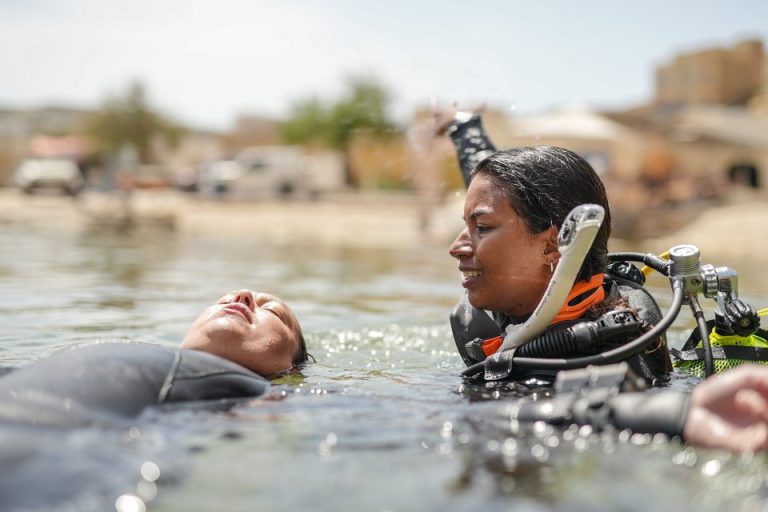
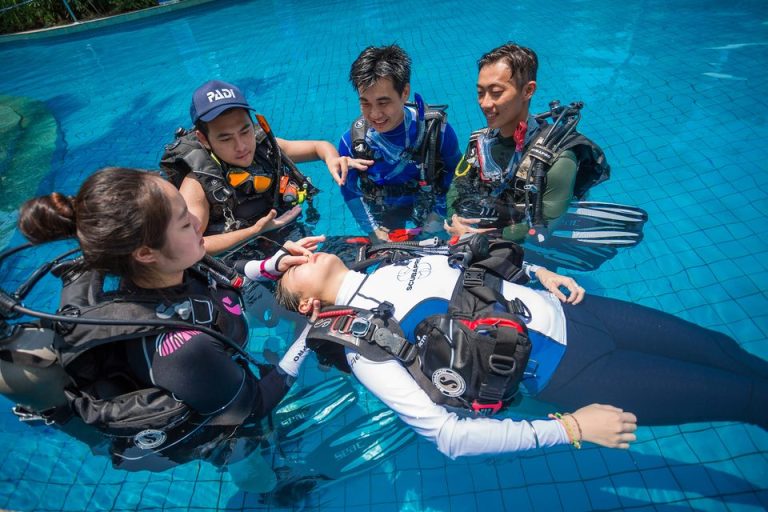
Exercises are done on manikins, in realistic scenarios in which participants make decisions on their own:
- assessing the scene and ensuring your own safety;
- initial assessment of the casualty: response, airway, breathing;
- adult CPR: compressions and rescue breaths;
- child and infant CPR, taking into account differences in technique, depth and rate;
- using an AED: electrode placement, safety rules, minimising pauses;
- handling choking;
- working in a two-person team and swapping rescuers without interrupting compressions.
Participants work both individually and as a team. Scenarios are run without warning, so that you practise not the procedure itself but the moment of starting it.

FAQ

The next step on your path
The direction depends on whether you are developing as a diver, professionally, or simply want to know more:
- DAN courses: oxygen therapy and first aid in diving accidents;
- PADI Rescue Diver: rescue in the water, a natural complement to your skills on land;
- PADI Divemaster: the first professional level; requires EFR Primary & Secondary Care (or equivalent);
- EFR Instructor: teaching first aid courses independently, required for PADI instructor certification.
Two typical paths: professional (EFR → Divemaster → EFR Instructor → IDC) and rescue (EFR → DAN oxygen and medical courses). They can be combined, and for staff working with groups both make sense.
Work and practice
The skills from the course can be used right away, in many settings:
- reacting with confidence in life-threatening situations, also outside diving;
- securing the group during trips and dives;
- supporting rescue actions until the emergency services arrive;
- using an AED in public places: defibrillators are now found in most public buildings;
- taking part in refresher workshops and simulations organised for staff.
Rescue skills fade quickly. Short, regular refreshers work noticeably better than one intensive course every two years.