


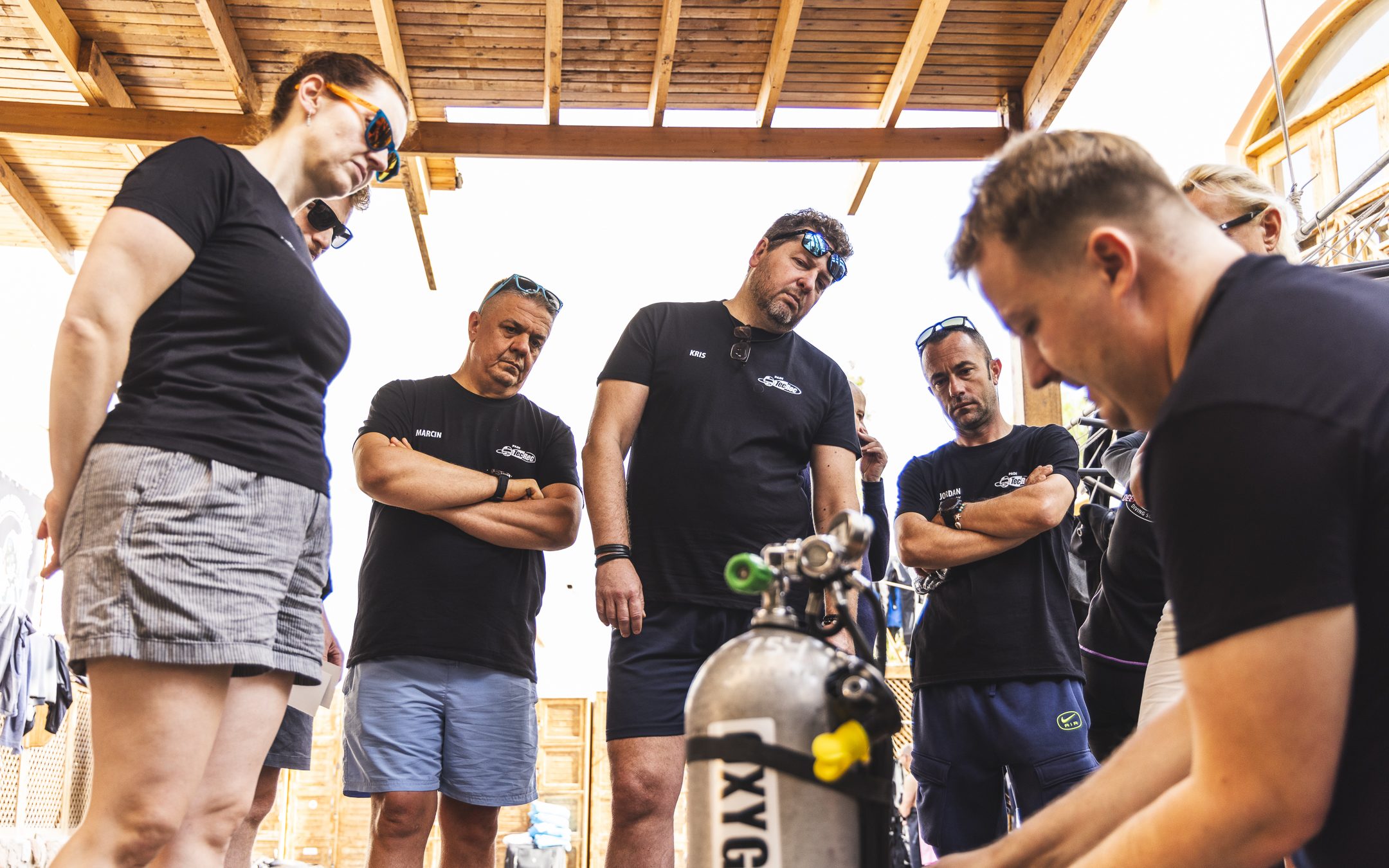
PADI decompression diving instructor
PADI Tec Instructor: technical diving instructor

Course description
The PADI Tec Instructor path is the move from being an experienced technical diver to teaching in a decompression and trimix environment. It is not a single course but a series of ratings earned in stages: Tec 40 Instructor, Tec 45 Instructor, Tec 50 Instructor, Tec Trimix 65 Instructor and Tec Trimix Instructor. Each stage widens the range of courses you can teach.
At Tec 40 Instructor level you teach the first introductory technical diving courses and the Discover Tec and Tec Basics programmes. The next stages, Tec 45 and Tec 50, develop your skills in working with several gases, planning complex profiles and running full decompression dives. The trimix levels cover deep training, which demands advanced planning, logistics and full control of the team.
The training develops teaching skills in technical diving. An instructor does not only pass on knowledge, but builds the student’s risk awareness and independence, because in a decompression environment a diver sooner or later is left alone with a decision.
Each stage requires not only earning the ratings, but above all building experience in real conditions, both in training and in projects. It is a path that takes time, consistency and decision-making maturity.

Depends on the level the candidate chooses and their current experience. Training is based on assisting on courses taught at the given level, so we set the schedule individually.
Teaching workshops, instructor presentations, sessions in confined and open water, simulated training situations and assisting on real technical courses.
A staged programme based on building technical and teaching competence step by step. Each stage requires skills to be confirmed in real conditions, not just formal requirements to be met.
Tec 40 Instructor, Tec 45 Instructor, Tec 50 Instructor (together called Tec Deep Instructor), Tec Trimix 65 Instructor and Tec Trimix Instructor. Tec Sidemount Instructor and Tec Gas Blender Instructor exist separately.
Requirements for the first level, Tec 40 Instructor:
- Age: 18 years completed;
- Status: PADI Master Scuba Diver Trainer (MSDT) or higher, in active teaching status;
- Specialties: PADI Enriched Air Instructor and PADI Deep Diver Instructor;
- Teaching practice: at least 25 issued PADI certifications;
- Technical certification: PADI Tec 45 Diver or an equivalent certificate from another organisation;
- Experience: at least 100 logged dives, including deep dives, nitrox dives and documented decompression dives in a full technical configuration;
- Current documents: a current medical statement and professional liability insurance.
Higher instructor levels require the matching diver-level certificates. For example, Tec 50 Instructor requires a Tec 50 Diver certificate, and the trimix levels require the appropriate trimix ratings. We confirm the detailed requirements for each level individually before training starts.
A technical instructor does not only teach procedures, but builds an attitude of responsibility and discipline. In practice this means developing students’ independence, passing on standards, shaping teamwork, building risk awareness and preparing students for real technical projects.
This is the level at which an instructor becomes a leader and a point of reference for the technical community. Students will repeat the habits the instructor passes on at deeper levels later, also when nobody is watching any more.
Training follows the current PADI TecRec standards for each instructor level and Long Deco’s internal operating procedures.
Training fee
The price is set individually, depending on the level, the location and logistics.
Registration and certification fee
PADI instructor materials and application fees for each level, according to the current price list of the certifying organisation.
Additional costs
Pool, breathing gases (at the trimix levels mainly helium), travel, accommodation, insurance and any local fees.

Scope of competence after the course
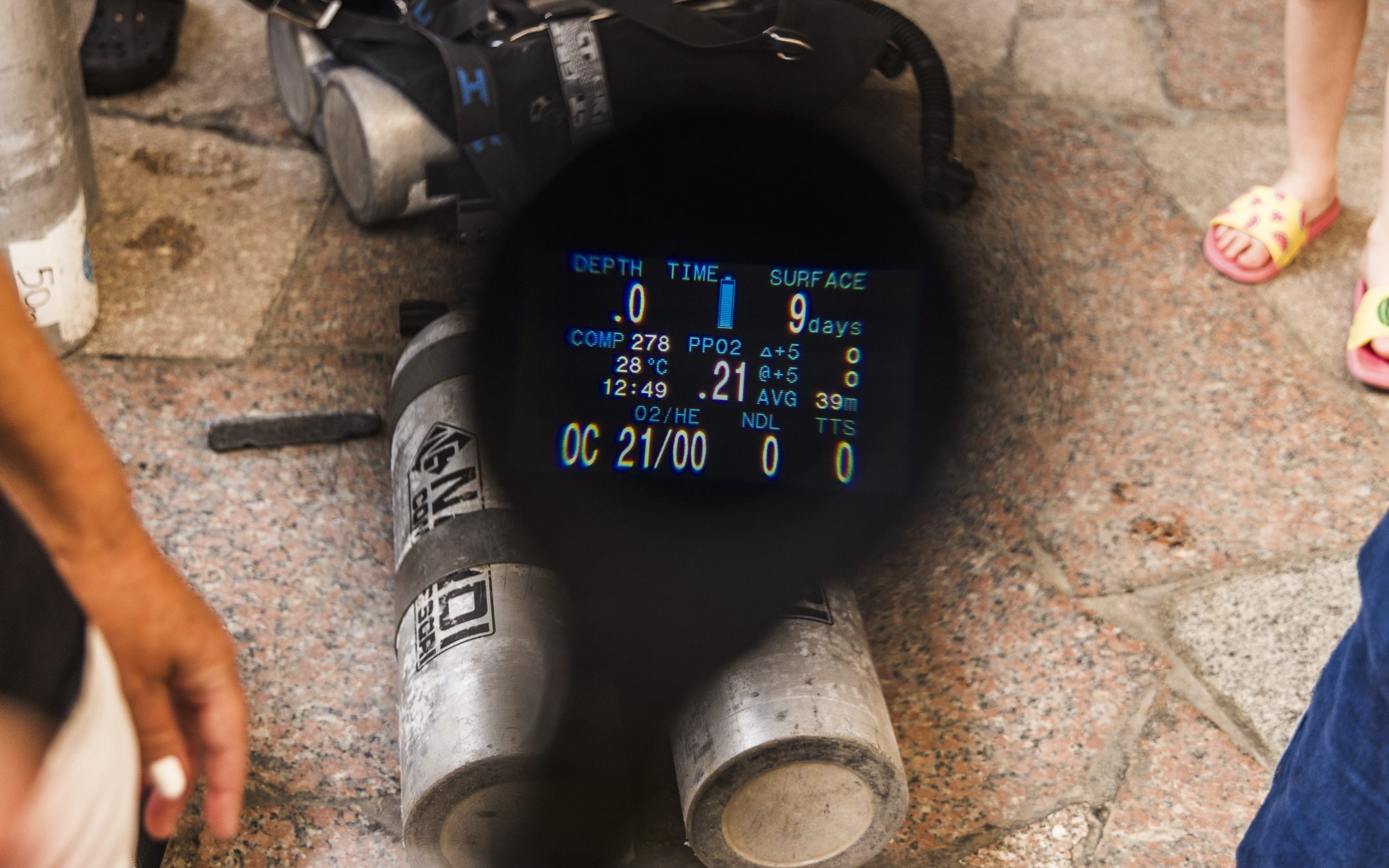
The scope of ratings depends on the level you reach:
- Tec 40 Instructor: teaching Discover Tec programmes and the PADI Tec Basics and Tec 40 Diver courses;
- Tec 45 Instructor: also Tec 45 Diver courses, covering accelerated decompression with one gas up to 100% oxygen;
- Tec 50 Instructor: the full range of open circuit decompression courses down to 50 metres, with two decompression gases;
- Tec Trimix 65 Instructor: trimix courses down to 65 metres;
- Tec Trimix Instructor: the full range of open circuit TecRec courses, including Tec Trimix Diver.
Separate paths include Tec Sidemount Instructor and Tec Gas Blender Instructor. The latter does not require a technical diver certificate. A PADI Enriched Air Instructor rating and documented gas blending experience are enough.
Theory
The theory part combines advanced diving topics with teaching methodology in a technical environment:
- planning decompression dives and critically analysing profiles, at a level that lets you spot an error in a student’s plan;
- gas management and choosing breathing mixes;
- safety margins and preparing emergency scenarios;
- TecRec standards for each level and how to apply them in practice;
- structuring technical classes, delivering lectures and assessing students’ knowledge;
- student selection: judging whether a person is ready for a given level, and how to tell them when they are not.
Practice
The practical part focuses on running training in real decompression conditions:
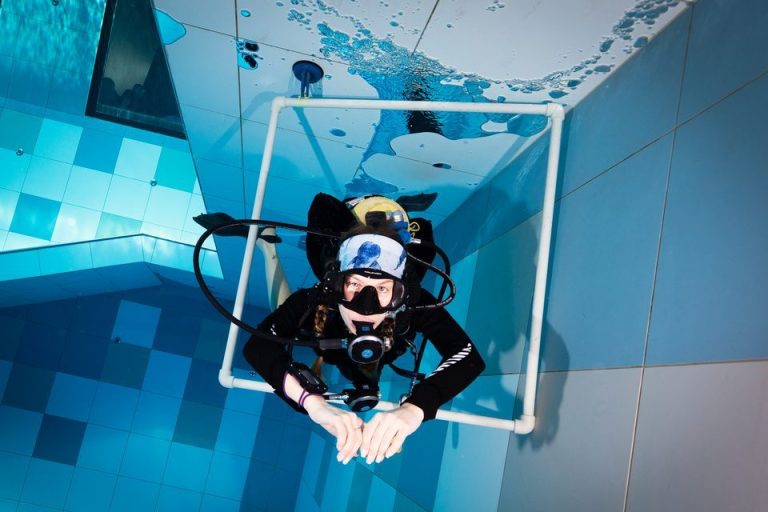
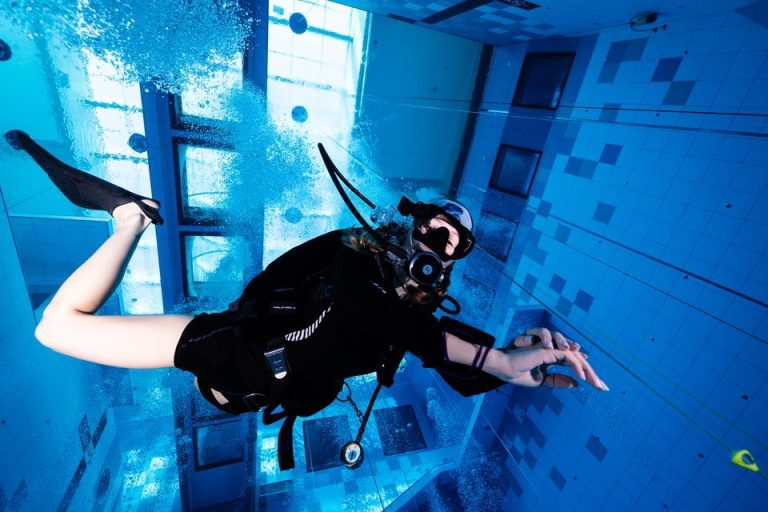
- demonstrating technical skills at a teaching level while keeping full control of position;
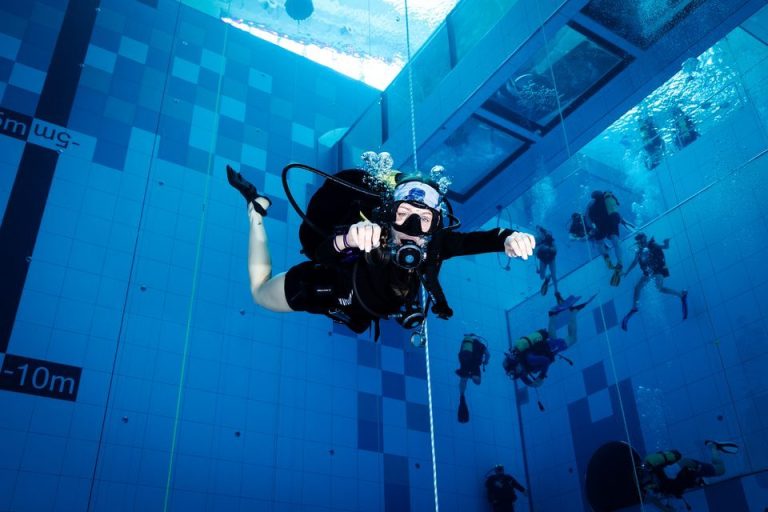
- supervising students during dives with a real decompression obligation;
- responding to problem situations without losing control of the team;
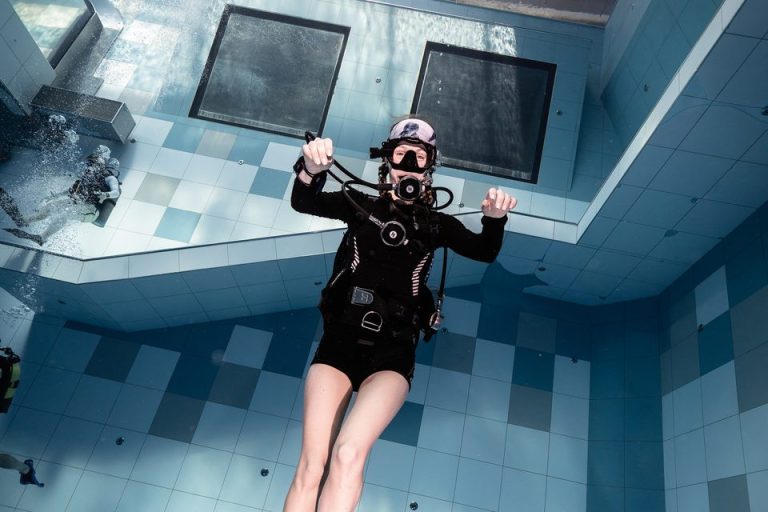
- underwater communication and clear signals under full task load;
- planning training dives, running briefings and debriefings;
- assessing students’ skills and deciding whether they are ready for the next stage;
- assisting on real technical courses at the given level.
A technical instructor must be able not only to perform a task at a high level, but above all to control the course of someone else’s dive. This is a completely different skill from your own ability in the water, and the place where good technical divers most often run into difficulty.

FAQ
Further training
Next levels and directions of development on the technical path:
- further TecRec levels, from Tec 40 Instructor to Tec Trimix Instructor;
- PADI Tec Sidemount Instructor: teaching technical courses in the sidemount configuration;
- PADI Tec Gas Blender Instructor: training gas blenders, requires Enriched Air Instructor ratings and gas blending experience;
- the closed circuit path: instructor levels for rebreathers;
- PADI IDC Staff Instructor: if you develop the mentoring path in parallel.
Each further technical level requires the matching diver-level certificate and documented experience. It is worth planning your diving and instructor development in parallel, not one after the other.
Trips
Technical trips are the natural working environment of an instructor at this level:
- teaching technical courses during training trips;
- taking part in projects and expeditions as staff;
- assisting on higher-level courses run by more experienced staff;
- seasonal work at centres that serve technical diving;
- teaching in different environments: cold water, wrecks, deep sites.
The technical training market is smaller than the recreational one, but less seasonal and clearly less competitive. Experience in several environments is especially valuable here. We keep the trip calendar separately.
Professional practice
Work in which ratings turn into a technical instructor’s skill set:
- teaching technical courses as part of the Long Deco offer;
- assisting on courses at levels above your own ratings, the fastest way to the next level;
- taking part in technical projects as staff or as a team diver;
- mentoring technical divers between courses;
- helping to shape the centre’s operating procedures and safety standards.
On the technical path, assisting on higher-level courses is both learning and a formal requirement. It is worth planning it deliberately instead of waiting for an opportunity.