


Full PADI instructor qualifications
PADI Open Water Scuba Instructor: Diving Instructor

Course description
PADI Open Water Scuba Instructor is the second part of the Instructor Development Course and direct preparation for the Instructor Examination. It is the last stage before full professional qualifications.
The programme develops and verifies the teaching skills gained at Assistant Instructor level. Participants learn to plan, run and assess complete diving courses on their own, to PADI standards, from the first contact with a student to issuing the certification.
OWSI is the moment of moving from partial responsibility to the full role of an instructor. The course teaches not only how to pass on knowledge correctly, but also how to manage the whole training process, including records, assessment and the decision that someone is not yet ready for certification. In practice, that last one turns out to be the hardest.
An important distinction: the OWSI course does not end with instructor qualifications. Qualifications come only from passing the external Instructor Examination, run by a team of PADI examiners. OWSI prepares you for it and is a condition of admission.

Usually 5-6 days of the OWSI part within the IDC, preceded by intensive self-study with the training materials. The IE exam takes place separately and lasts two days.
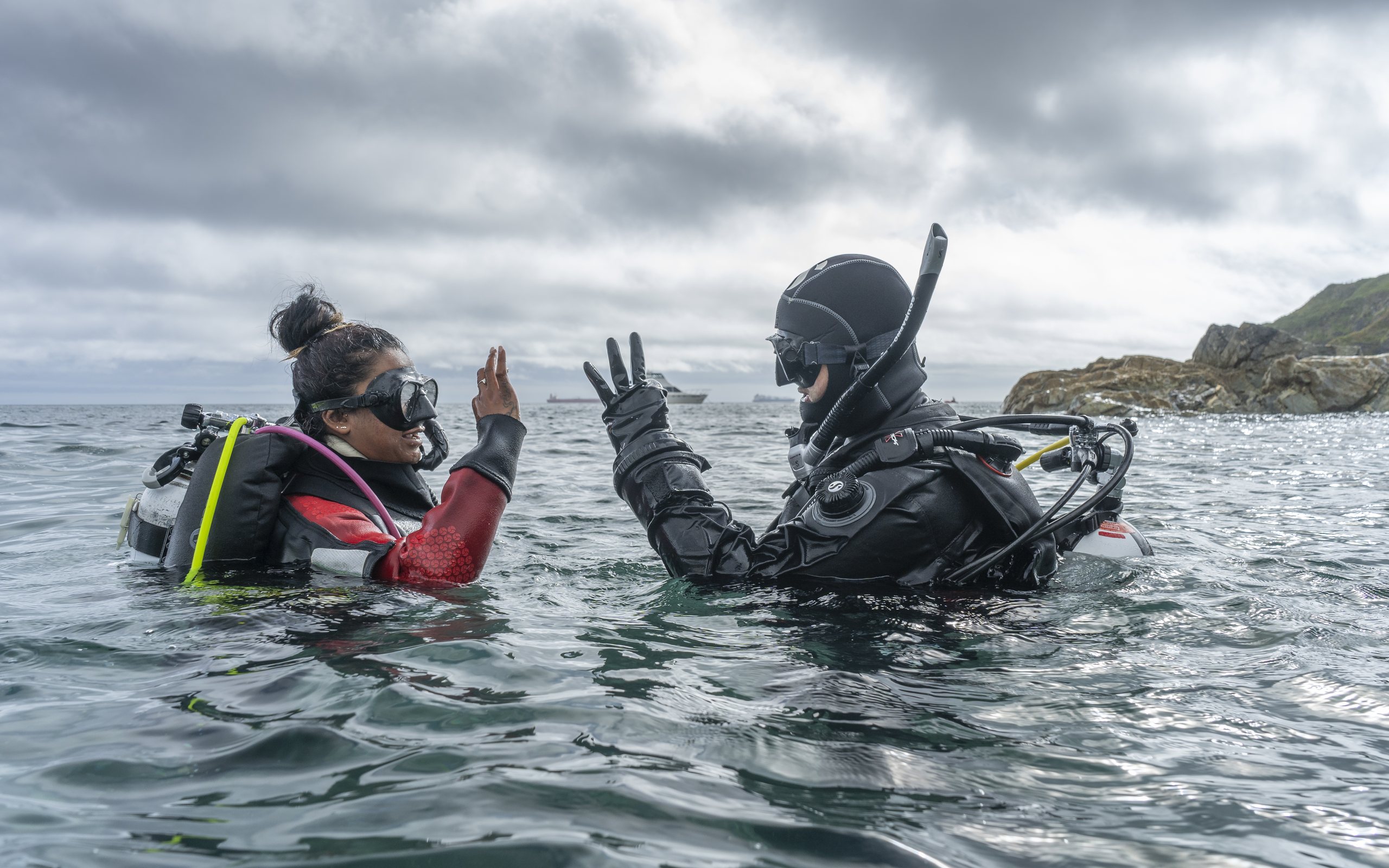
Intensive teaching workshops, instructor presentations, sessions in confined and open water, and simulations of real training situations.
An instructor course focused on full responsibility for the course, teaching independently, assessing and certifying students, and working to the standards.
Small training groups, allowing ongoing assessment of competence and individual feedback after each presentation.
Instructor Examination (IE): a two-day external exam run by a team of PADI examiners, independently of the training centre.
- Age: 18 years completed;
- Certification: PADI Divemaster or PADI Assistant Instructor, or an equivalent leadership qualification from another organisation;
- Diving time: certified diver status for at least 6 months;
- First aid: EFR Primary & Secondary Care training (or equivalent) within the last 24 months, and PADI EFR Instructor, which is required to obtain instructor certification and can be completed alongside the training;
- Experience: a minimum of 60 logged dives to start the IDC, including documented experience in night, deep and navigation diving; a minimum of 100 logged dives before taking the IE exam;
- Health: a current medical statement (signed by a doctor within the last 12 months);
- Insurance: current professional insurance.
Instructors holding qualifications from another training organisation can in many cases go directly into the OWSI programme, skipping the AI part. We assess qualifications individually.
A PADI instructor is fully responsible for students’ safety and for the course meeting the standards. The course clearly defines the scope of independence, legal responsibility, the duty to keep records and to work within the PADI system.
In practice it also means a skill that is rarely talked about: telling a student that they are not ready yet, and holding up under the disappointment on the other side. Certification confirms competence. It is not a paid service.
Training fee
The price is set individually, depending on where the course takes place, the training format and logistics.
Registration and certification fee
PADI training materials (the IDC Crew-Pak), the IE exam fee and application fees, according to the current price list of the certifying organisation. The IE fee is paid directly to PADI and is independent of the course price.
Additional costs
Pool, breathing gases, travel and accommodation (also for the IE exam, which takes place at a designated location), insurance and any local fees.
Costs after the course
Working as an instructor requires active PADI membership, renewed every year, and professional liability insurance.

Scope of competence after the course
After completing OWSI and passing the IE exam, you are qualified to independently teach and certify these courses:
- PADI Open Water Diver,
- PADI Advanced Open Water Diver,
- PADI Rescue Diver,
- PADI Divemaster,
- introductory programmes, including Discover Scuba Diving,
- selected youth programmes and selected specialties, within the scope set by the standards.
Teaching the other specialty courses requires separate Specialty Instructor qualifications, and teaching first aid courses requires EFR Instructor qualifications. An instructor works independently or within a dive centre and is fully responsible for students’ safety and for the course meeting the standards.
Theory
The theory part covers the full range of knowledge tested at the IE exam:
- PADI standards and procedures: moving freely through the documentation, not knowing it by heart;
- diving theory: physics, physiology, equipment, tables and environment. The exam has five parts, and each is passed separately;
- the structure of recreational courses and the logic of the PADI education system;
- methods for teaching adults and building an effective presentation;
- assessing students’ knowledge and skills, and the criteria for passing;
- risk management, the instructor’s legal responsibility and keeping records.
Instructor-level diving theory is the most common reason for failing the IE exam, and it is also the only element you can prepare in full before the course starts. We begin self-study with the materials well in advance, not on the first day of the IDC.
Practice
Practical sessions follow the format of the IE exam:
- delivering theory presentations with full structure and checks of understanding;
- demonstrating and assessing skills in confined water;
- teaching in open water with several skills combined;
- recognising and correcting student errors, including errors introduced on purpose;
- simulated problems and emergencies during the course;
- demonstration-level diving skills and a rescue exercise.


FAQ
Further training
The PADI professional path after gaining instructor qualifications:
- PADI Specialty Instructor: qualification to teach specialty courses;
- PADI Master Scuba Diver Trainer: after 25 certifications and 5 instructor specialties;
- PADI IDC Staff Instructor: training future instructors;
- the technical path: PADI Tec Instructor, for instructors developing in technical diving.
Instructor specialties are most often completed right after the IDC, as part of the training leading to MSDT. It is the fastest way to widen your offer and improve your chances of getting hired.
Trips
Travel and seasonal work is the fastest way to build instructor experience:
- teaching courses on Long Deco training trips;
- seasonal work in dive centres in Poland and abroad;
- instructor internships and skills development programmes;
- joining trips as a member of the teaching staff;
- working in different environments: warm and cold water, boat and shore, different types of students.
In this profession, experience gained in several different environments is worth more than the same number of courses run in one place. We keep the trip calendar separately.
Professional practice
Work where fresh qualifications turn into a craft:
- teaching recreational courses independently at Long Deco;
- working in a teaching team with larger groups of students;
- building a certification portfolio, needed for the MSDT level;
- mentoring from experienced staff in your first season after the IE;
- running introductory programmes and youth sessions.
It is worth spending your first season after the IE under the eye of an experienced instructor. After the exam you know the standards very well, but you do not know difficult students at all.