


You see more than just yourself
PADI Rescue Diver: safety and awareness

Course description
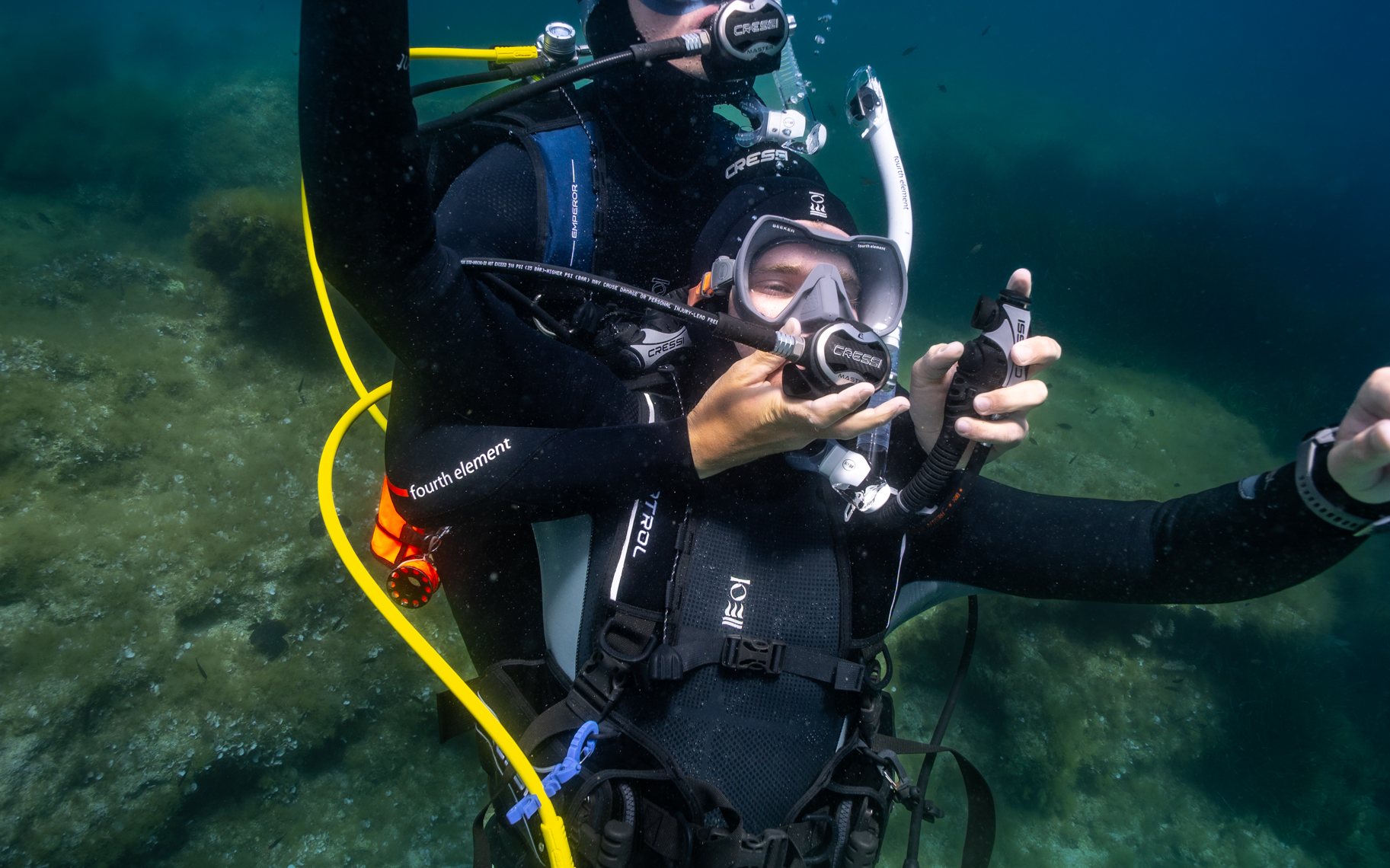
PADI Rescue Diver is the stage at which the way you think about diving changes: from concentrating on your own skills to awareness of the whole team and the surroundings. The course teaches you to anticipate problems and react before the situation gets out of control.
The programme focuses on recognising hazards, managing stress and making decisions in situations that need a quick, orderly response. Participants learn both how to prevent accidents and how to cope with emergencies, underwater and at the surface.
An important element is understanding the behaviour of other divers and being able to pick up signs of stress or fatigue. That lets you react earlier, and the most effective rescue is the one that never had to happen.
This is the course graduates most often name as the best on the whole recreational path, and also the most demanding. Not physically but mentally: for the first time, you are responsible for someone else.

2-3 training days. In practice often spread over several days, so the scenarios can be worked through calmly and repeated.
A course based on scenarios, not on a set number of dives. What matters is working through specific skills in the water and at the surface.
A maximum of 6 students per instructor, depending on the nature of the exercises and the conditions.
Air
After completing the course you can:
- recognise signs of stress and fatigue in other divers before they turn into a problem,
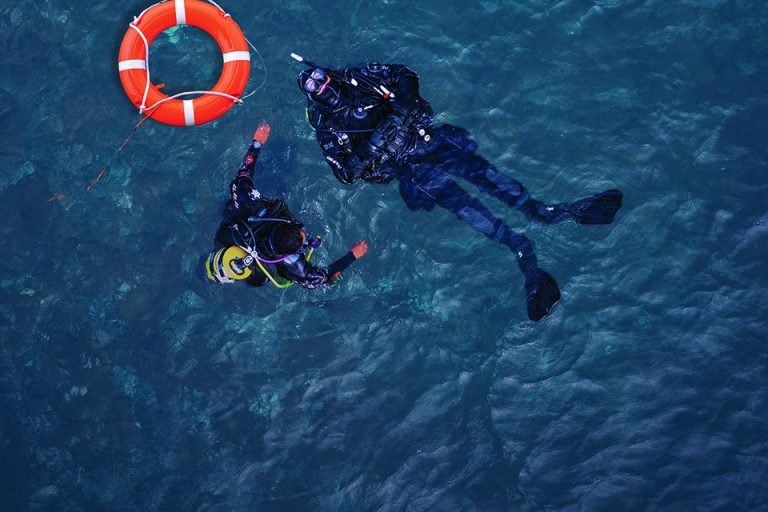
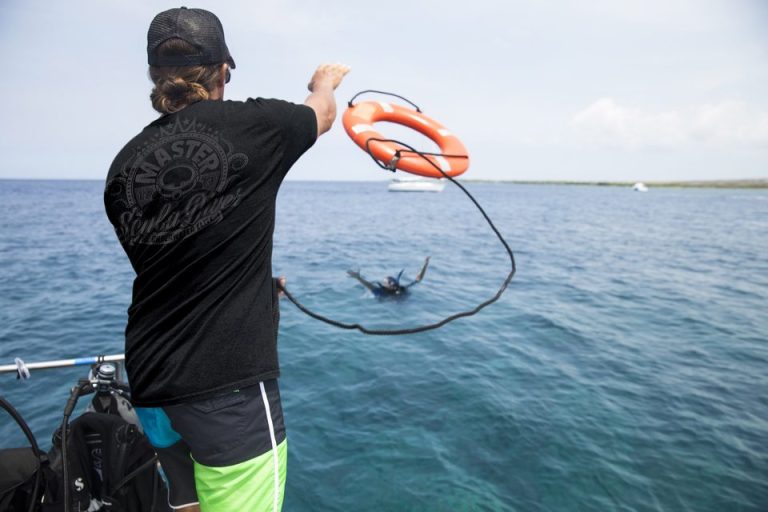
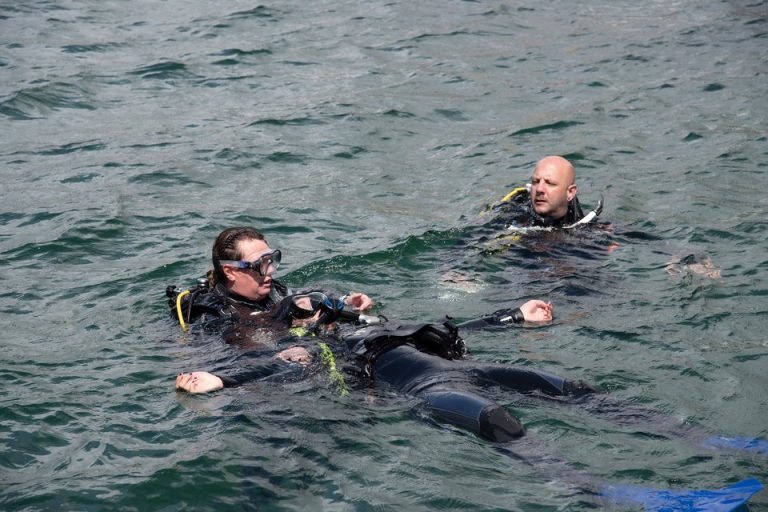
- help a tired or panicked diver at the surface,
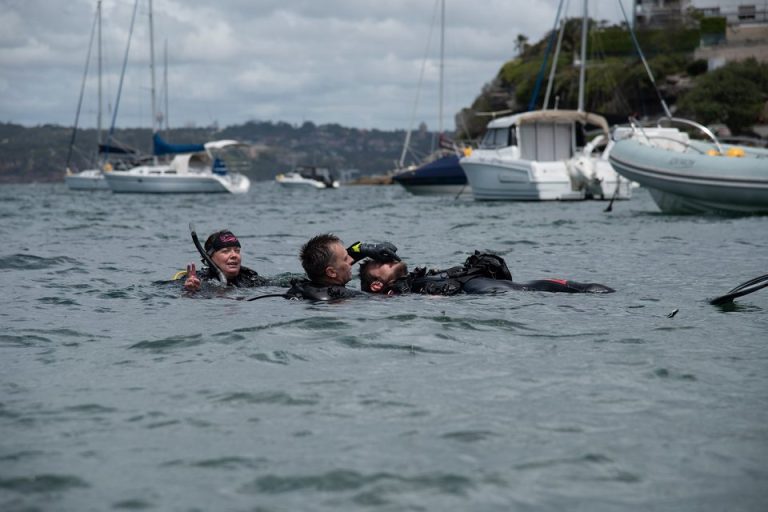
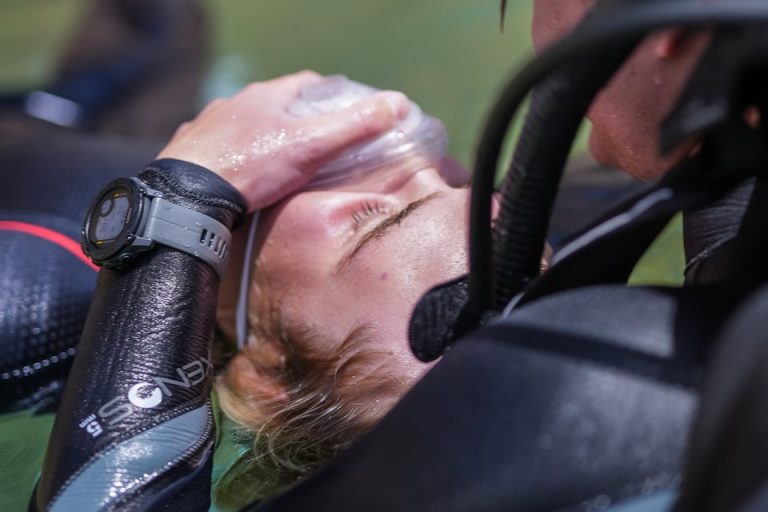
- bring up and tow an unconscious diver and give rescue breaths in the water,
- organise a search for a missing diver,
- manage an emergency: divide roles, call for help, prepare the handover to the emergency services,
- prepare an emergency plan for a specific dive site.
The Rescue Diver course is a prerequisite for the Divemaster level, and the emergency plan prepared on this course counts towards the equivalent requirement in the Divemaster course.
- Age: minimum 12 years (Junior Rescue Diver certification up to the age of 14);
- Certification: PADI Advanced Open Water Diver, or Adventure Diver with the navigation dive completed, or an equivalent certification from another organisation;
- First aid: completed primary and secondary first aid training (EFR Primary & Secondary Care or equivalent) within the last 24 months, which can be done alongside the course;
- Health: no contraindications to diving.
Basics
- mask, snorkel and fins,
- regulator with a pressure gauge,
- jacket (BCD),
- diving cylinder and weight system,
- dive computer,
- thermal protection suitable for the conditions.
Important for rescue exercises
- surface marker buoy (SMB) with a reel,
- cutting tool,
- pocket mask for rescue breaths.
The snorkel, often skipped at earlier levels, turns out to be really useful on this course: it makes a real difference when towing a casualty at the surface. The oxygen kit and first aid kit are provided by the centre.
Training fee
The price is set individually, depending on the location and logistics.
Registration and certification fee
Training materials and the certification fee, according to the current price list of the certifying organisation.
Additional costs
A first aid course (if you do not have a current one), equipment rental, breathing gases, site entry fees, travel and accommodation.
Theory
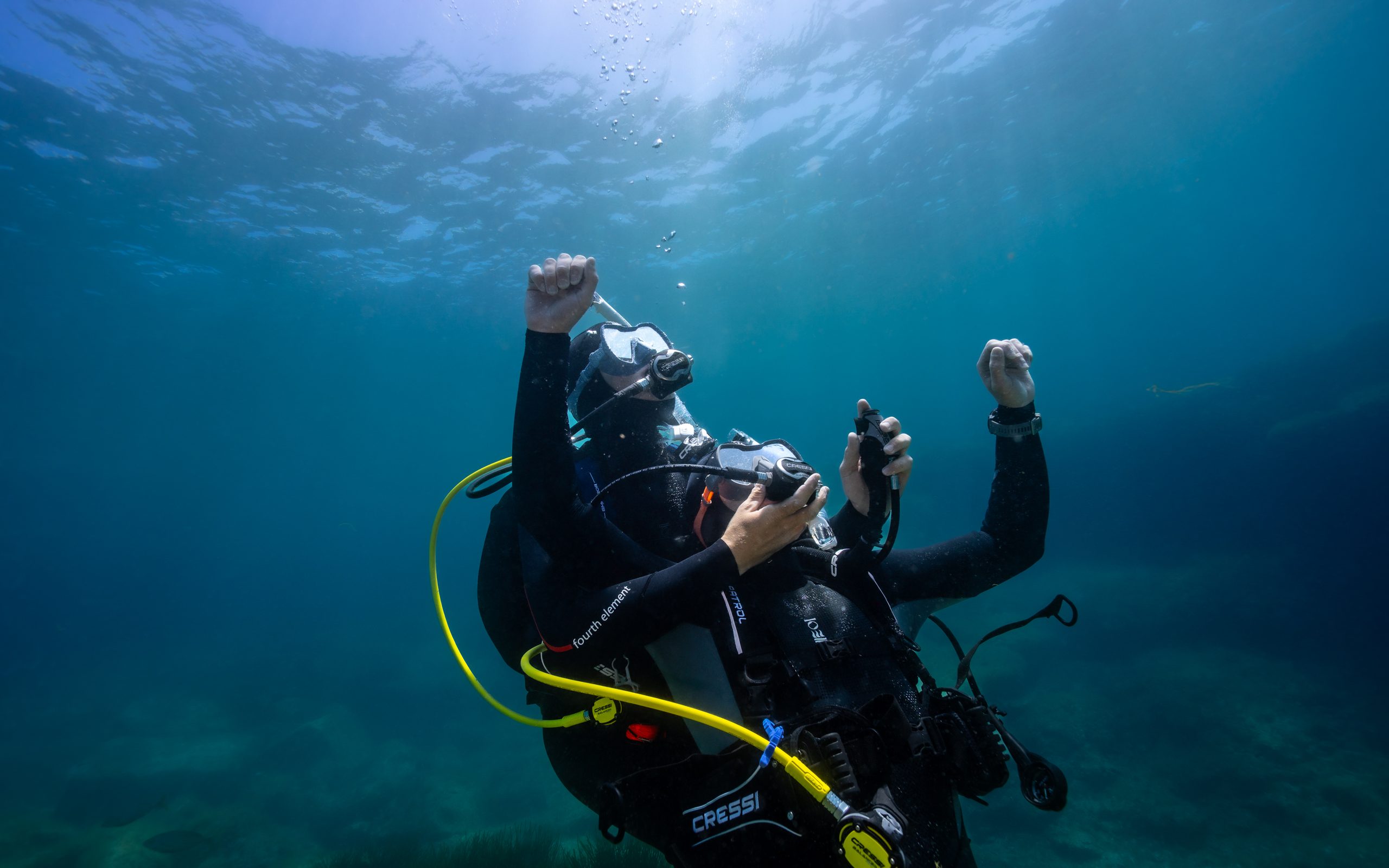
The theory part focuses on the mechanisms that lead to accidents and the ways to prevent them:
- psychology and physiology of diving stress;
- recognising signs of fatigue, overload and panic;
- the chain of events leading to an accident and the points where it can be broken;
- risk assessment and emergency planning for a specific site;
- action plans for emergency scenarios;
- rescue equipment: oxygen kit, first aid kit, means of communication.
Practice
The core of the course: realistic scenarios in the water and at the surface:
- self-rescue and dealing with your own problem;
- helping a tired diver at the surface;
- dealing with a panicked diver, underwater and at the surface;
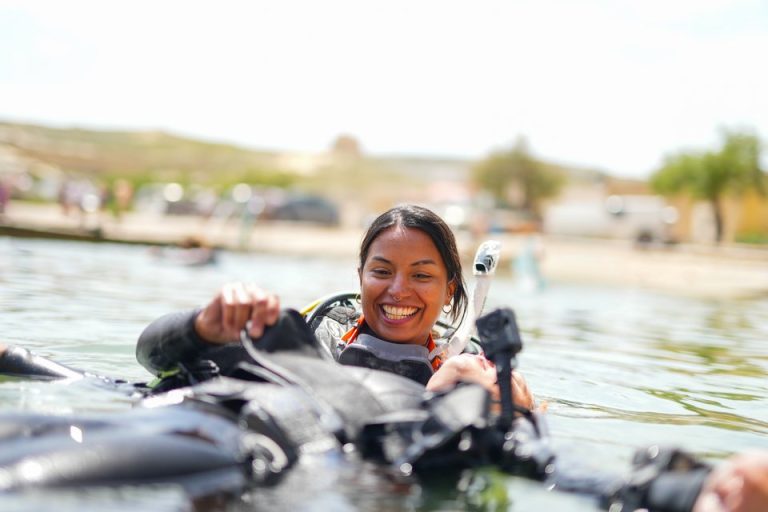
- bringing up an unconscious diver and towing;
- rescue breaths given in the water while towing;
- exiting with the casualty onto the shore or a boat, removing equipment;
- searching for a missing diver;
- managing the incident: dividing roles, calling for help, handing over to the emergency services.
We run the scenarios without warning and repeat them until the response becomes orderly. Chaos on the first attempt is normal, and that is exactly the point of this course.

FAQ

The next step on your path
The development path after the Rescue Diver course branches in several directions:
- PADI Divemaster: the first professional level, the entry to the professional path;
- PADI Master Scuba Diver: the highest recreational level, after 5 specialties and 50 dives;
- DAN courses: oxygen therapy and first aid in diving accidents, a natural extension of your competence;
- the technical path, if you are interested in diving beyond recreational limits.
Rescue is the point at which it is worth deciding consciously whether the professional path interests you. Until now, all the courses led in the same direction.
Trips
After Rescue, trips take on a different character:
- joining trips with a real awareness of what is happening in the group;
- informal support for the staff with less experienced groups;
- working with different buddies and adapting to changing conditions;
- taking part in safety briefings and emergency planning;
- dives in conditions that demand more attention: current, limited visibility, cold water.
Calm and the ability to respond are built outside the training environment. We keep the trip calendar separately.