


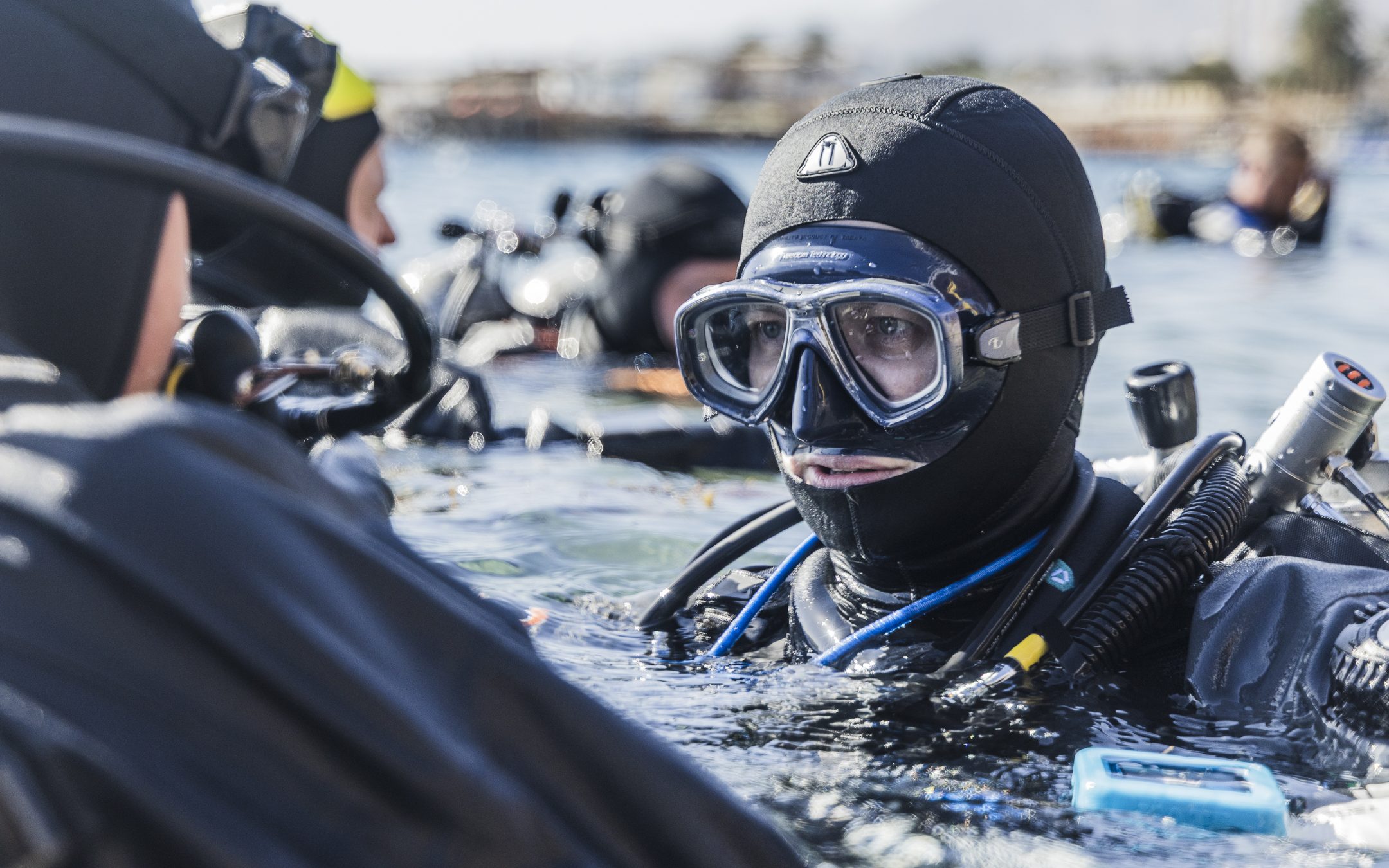
The first level of PADI technical diving
PADI Tec 40: technical diving

Course description
PADI Tec 40 is the first full level of technical training and the bridge between recreational diving without decompression stops and technical diving. The course moves the diver from the logic of the “no-decompression limit” to the logic of a planned decompression obligation, within a deliberately limited range, so that new procedures are introduced one at a time and not all at once.
The scope of the qualification is precisely defined: dives to 40 metres with total decompression time not exceeding 10 minutes, with one decompression cylinder with oxygen content up to 50%. At this level the decompression gas is used to increase conservatism, not to shorten decompression: the plan assumes breathing the bottom gas for the whole dive. Accelerated decompression is the subject of the next level, PADI Tec 45.
The programme includes equipment configuration workshops, dive planning with decompression software and training dives of increasing complexity. Participants work on real profiles, managing bottom time, gas reserve and decompression obligation, and they practise emergency procedures: gas loss, uncontrolled gas flow from a regulator (free flow), a valve failure and an interrupted stop.
Each stage of training ends with a detailed debrief covering how the dive went, the decisions made underwater and how the team worked together. The aim of the course is not only the certificate, but building habits that carry over to the next levels of technical training.

3-4 training days (theory, practical sessions, dives).
7 theory sections, 4 practical sessions (skill drills), 4 training dives of increasing complexity.
4 training dives. Under the standard, the first session can be done in confined water (a pool or a shallow body of water), which makes it possible to start the course outside the season.
Maximum depth: 40 metres.
Up to 10 minutes of total decompression time, with no accelerated decompression.
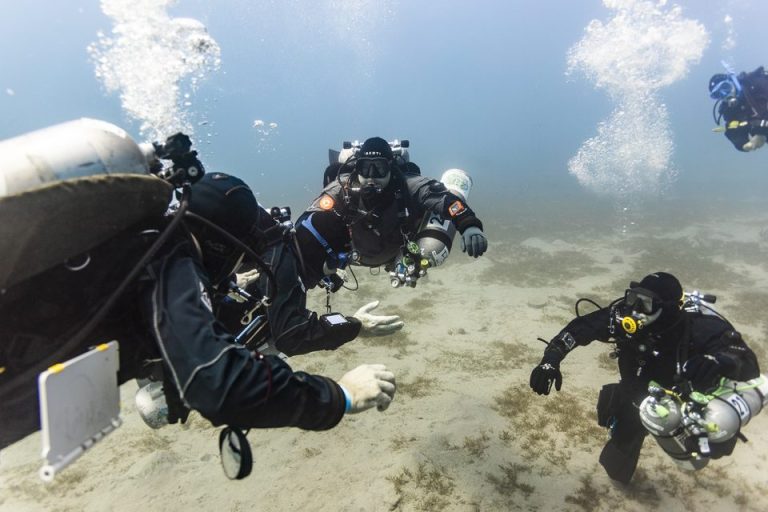
A maximum of 3 people per instructor. In practice we most often teach teams of 2.
Bottom gas: air or nitrox. Decompression gas: one, with oxygen content up to 50% (EANx50).
The PADI Tec 40 certificate qualifies you to plan and carry out dives on your own:
- to a depth of 40 metres,
- with total decompression time up to 10 minutes,
- with one decompression cylinder with gas containing up to 50% oxygen,
- in a team of suitably qualified divers.
Tec 40 training counts towards the PADI Tec 45 and PADI Tec 50 courses. It is the first part of the full PADI Tec Deep Diver programme.
- Age: 18 years old;
- Certification: PADI Advanced Open Water Diver or an equivalent certificate from another organisation (confirming training above entry level, including deep diving and navigation);
- Nitrox: PADI Enriched Air Diver or equivalent;
- Depth: PADI Deep Diver or a documented minimum of 10 dives to a depth of 30 metres or more;
- Experience: a minimum of 30 dives recorded in a logbook;
- Health: a current medical statement (signed by a doctor within the last 12 months) clearing you to dive.
The PADI Rescue Diver certificate is not required, but it is recommended: skills in responding to emergencies make the course considerably easier. We assess qualifications from other federations individually.
Main configuration
- a twinset (twin cylinders with an isolation manifold) or a sidemount set: two independent cylinders,
- a wing with buoyancy suited to the configuration, plus a backplate and harness,
- two independent regulators: a primary on a long hose (about 2 m) and a backup on a short hose, worn on a bungee under the neck,
- a pressure gauge on each first stage.
Decompression cylinder (stage)
- one decompression cylinder prepared for use with a higher-oxygen gas (oxygen cleaning, suitable lubricants and seals),
- a separate regulator with a pressure gauge,
- a cylinder harness with double-ended bolt snaps,
- a clear label of the mix and maximum operating depth (MOD).
Instruments and safety equipment
- two independent instruments for monitoring time and depth: two computers that handle decompression and gas switching, or a computer and a depth gauge with a timer together with a backup plan on a slate,
- a decompression surface marker buoy (DSMB) and a reel or spool of a length suited to the planned depth,
- two cutting tools, placed independently,
- a slate for underwater notes with the dive plan,
- a spare mask,
- a compass,
- a main torch and a backup torch for dives in limited visibility.
Additionally recommended
- thermal protection suited to the conditions: for longer exposures a dry suit with suitable undergarment is strongly recommended,
- access to the decompression software used during planning,
- your own oxygen analyser.
Training fee
The price is set individually, depending on where the course takes place and on logistics.
Registration and certification fee
According to the current price list of the certifying organisation.
Training materials
The PADI Tec package (e-learning), charged separately.
Additional costs
Breathing gases, dive logistics, technical equipment rental, travel, accommodation and meals.
Theory
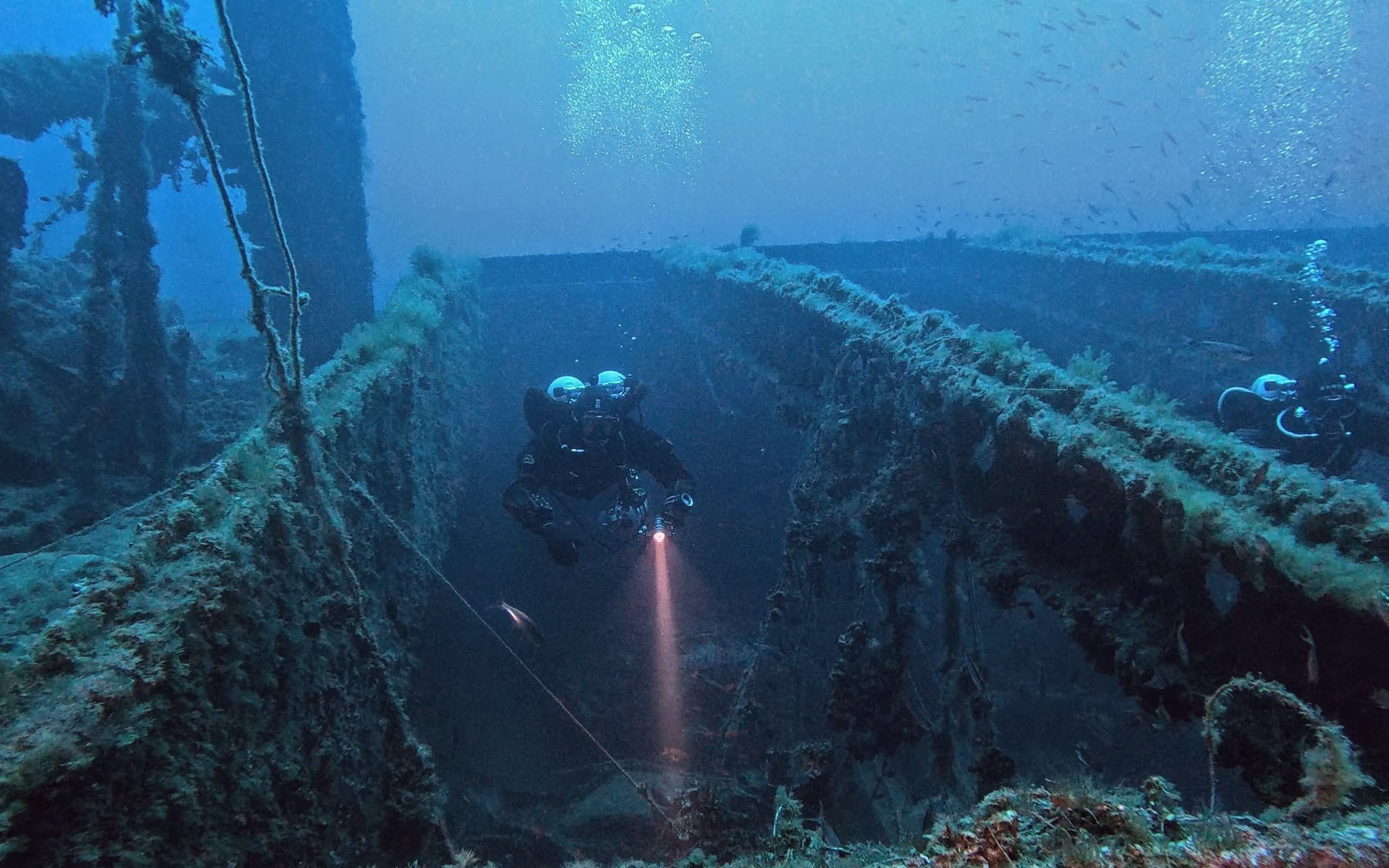
The theory part has seven sections and prepares you to plan limited-decompression dives on your own.
- decompression theory: tissue on-gassing and off-gassing, decompression models, the assumptions and limits of the algorithms used;
- dive planning with decompression software and interpreting the generated profiles;
- gas planning: consumption, reserves, the rule of thirds and its modifications, calculating an emergency reserve for the team;
- oxygen exposure: MOD, central nervous system and pulmonary toxicity, controlling the oxygen dose;
- gas switch procedures, including cylinder verification and confirming contents within the team;
- emergency procedures: gas loss, uncontrolled gas flow from a regulator (free flow), manifold leak, interrupted decompression;
- team diving: sharing tasks, communication, responsibility that comes with a decompression obligation.
Practice
The practical part takes the diver from the equipment workshop to a decompression dive they have planned themselves.
- configuration workshops: preparing a technical setup, choosing hose lengths, trim weighting and placement of equipment;
- buoyancy and trim control: a stable horizontal position, working in midwater without a reference point, propulsion techniques;
- clipping on, carrying and handling a decompression cylinder;
- the gas switch performed in a fixed, repeatable sequence;
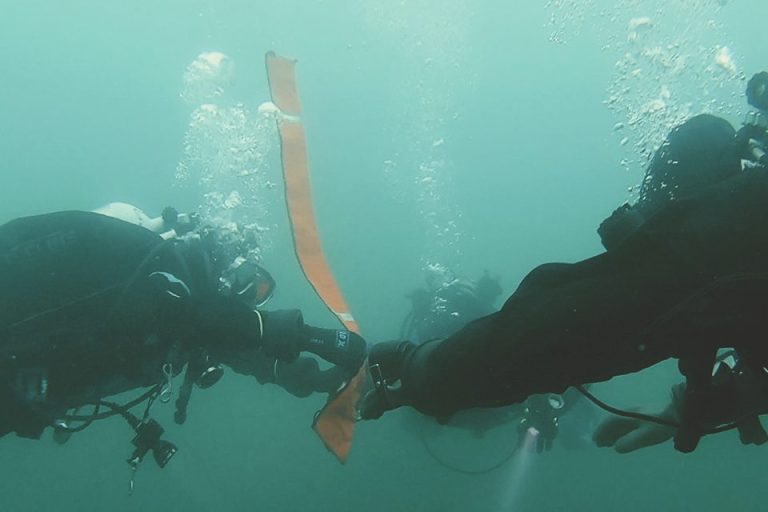
- holding decompression stops with a set accuracy, also with a surface marker buoy deployed;
- emergency drills under increasing task load;
- dives with a real decompression obligation, carried out according to a plan prepared beforehand.
The pass criterion is not that a drill was done once, but that it can be repeated: the skill must be performed correctly, calmly, and with position control and situational awareness kept.

FAQ
Projects
Dives with a specific task to carry out are the most effective way to make the course procedures a habit:
- consolidation dives: the first dives after the course at familiar sites, with staff supervision but no longer in a training format;
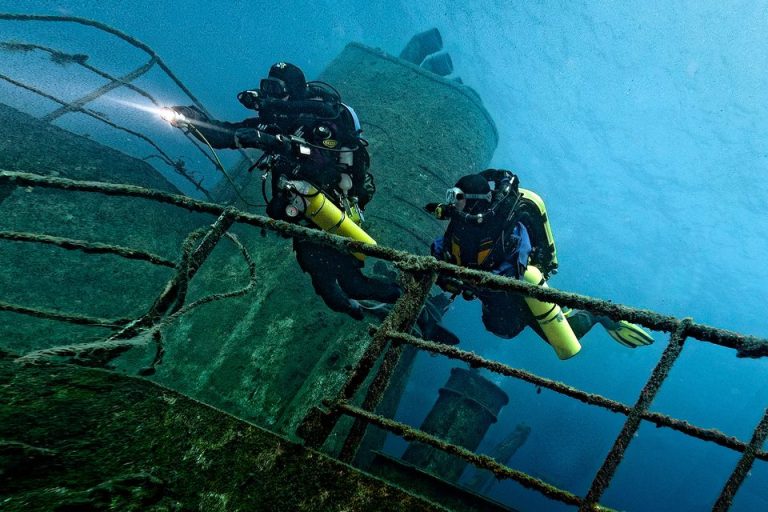
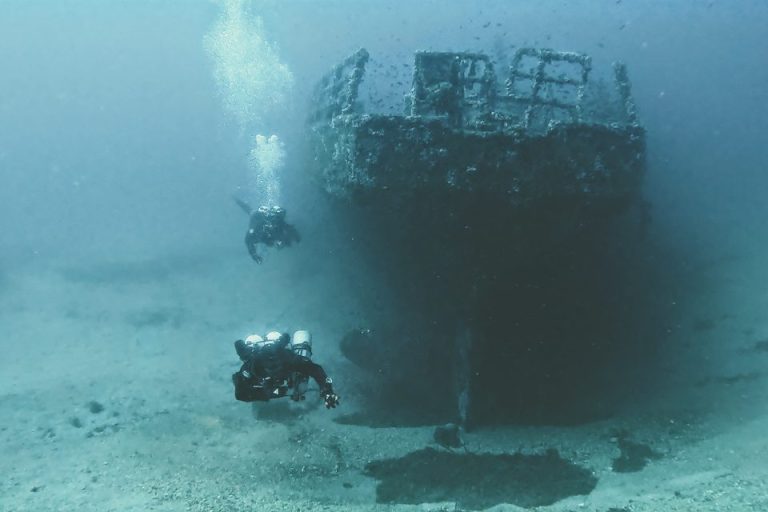
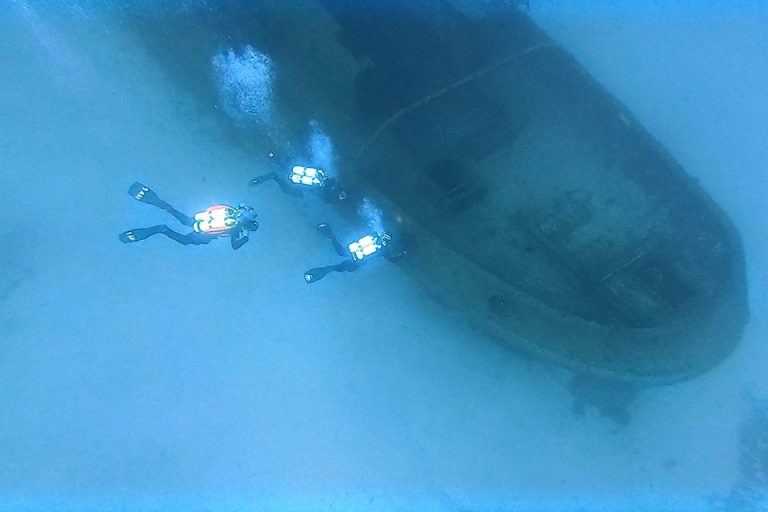
- wreck projects: documenting, identifying and measuring sites;
- underwater photography and photogrammetry: working with a camera under decompression;
- exploration and mapping: working with a line, sketches, planning gas reserves;
- research and conservation work with institutions that look after underwater heritage.
We pick team members by level of training, not by order of sign-up. If a project is too early for a diver, we suggest an intermediate path.
Trips
Several days in a row with the same team build experience faster than the same number of dives spread over a whole season:
- trips in Poland: lakes and flooded quarries, weekend format, demanding thermal conditions and limited visibility;
- the Baltic: wrecks and boat logistics, though some sites lie deeper than 40 metres, outside the Tec 40 limits;
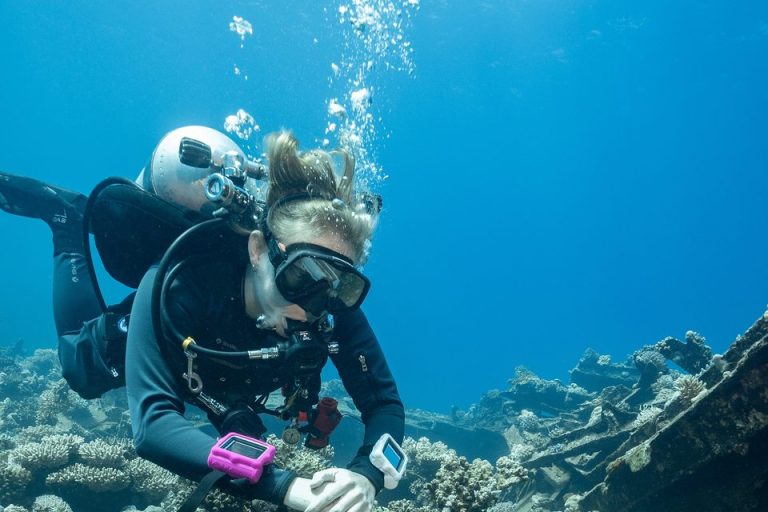
- trips abroad: warm water and good visibility, sites within the limits of the course;
- small teams, a dive plan of rising complexity and gas supply arranged before departure;
- an emergency plan covering the nearest hyperbaric chamber, and staff supervision on site.
Before a trip, plan an equipment service, a check dive in the target configuration and insurance that covers decompression diving. We keep the trip calendar separately.
Further training
The natural next step after Tec 40. The order depends on which way you want to develop your diving:
- PADI Tec 45: accelerated decompression, decompression gases up to 100% oxygen, dives to 45 metres;
- PADI Tec 50: dives to 50 metres with two decompression gases and full decompression self-sufficiency;
- PADI Tec 40 Trimix: normoxic trimix in the same depth range, if reducing narcosis is the priority;
- PADI Tec Sidemount: if you took the course in a backmount configuration and want to master both.
Tec 40 training counts towards the Tec 45 and Tec 50 courses, so moving to the next level does not mean repeating the material.