


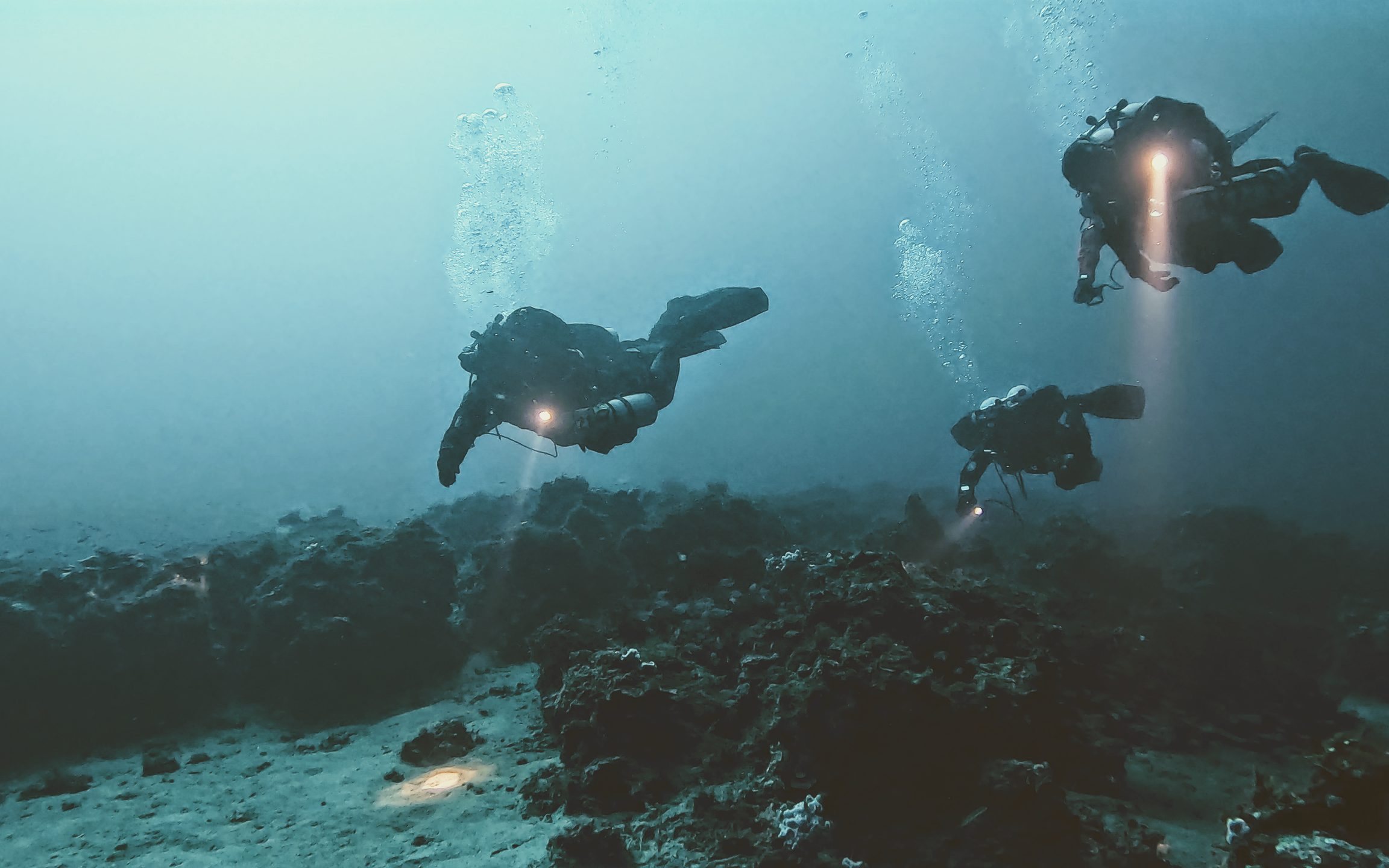
Two cylinders, one calm trim.
PADI Sidemount Diver: sidemount course and a tidy configuration

Course description
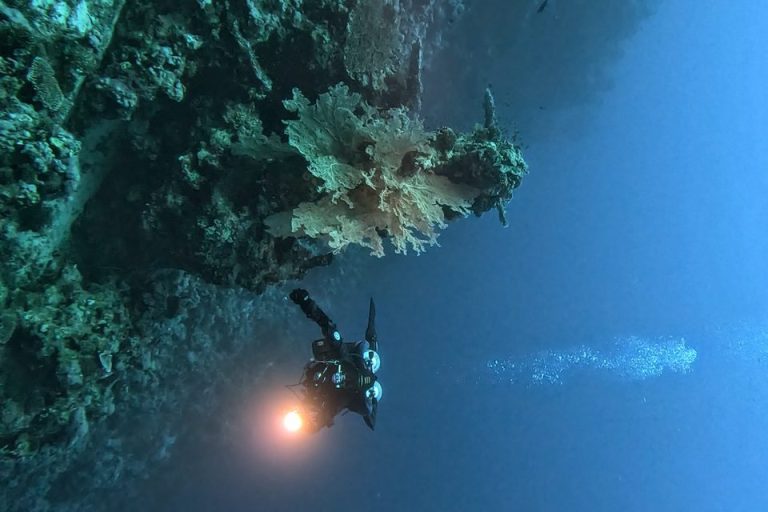
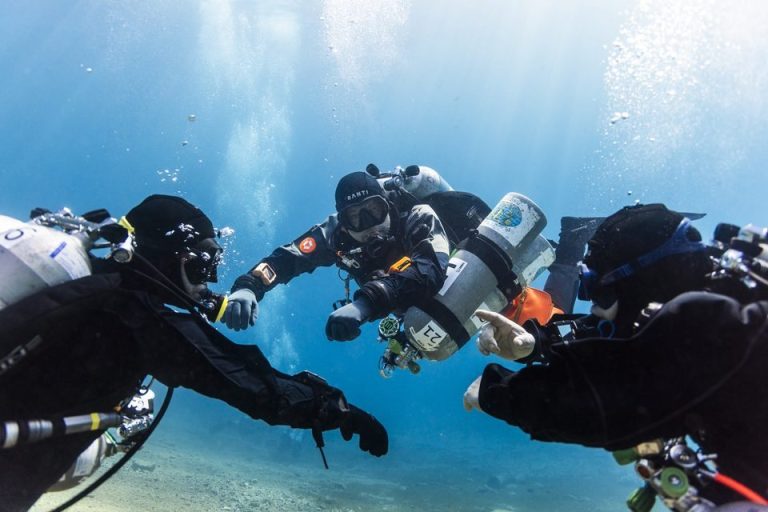
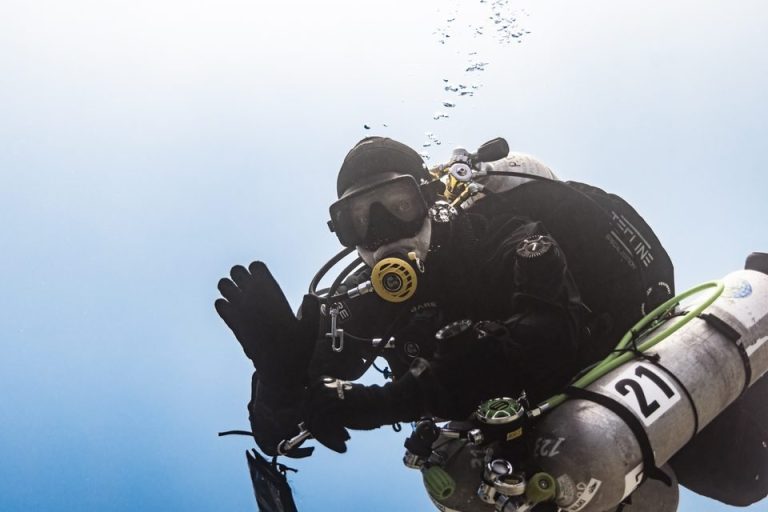
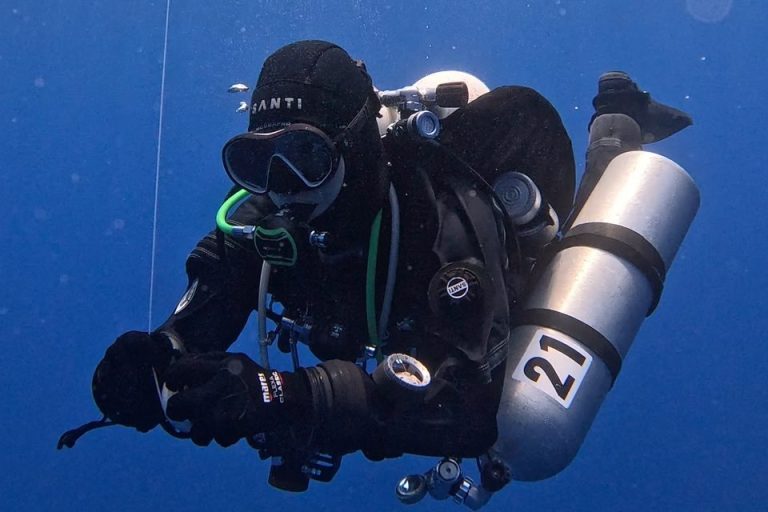
PADI Sidemount Diver is a recreational sidemount course, an introduction to diving with cylinders hung at the sides of the body instead of on the back. The side configuration gives more freedom of movement, easier access to the valves, less strain on the spine when entering the water and a streamlined profile that helps keep trim flat.
On the course we focus on what matters most in sidemount diving: fitting the harness, hanging the cylinders correctly and weighting the rig so that the diver lies level in the water without constant correction. We teach gas management with two independent sources, switching regulators according to a plan and the emergency procedures specific to this configuration.
We run the course in a one-cylinder or a two-cylinder variant, depending on the student’s experience and goal. In Polish conditions sidemount works well for shore dives in lakes and quarries, where cylinders can be carried into the water separately, and with a thicker dry suit the side configuration often turns out to be more comfortable than the traditional one.
PADI Sidemount Diver is a recreational course. For people who want to use sidemount for decompression dives or in an overhead environment, we suggest the PADI Tec Sidemount Diver course as the next stage, which Long Deco runs as part of the TecRec programme.

Usually 2 days: a theory part and equipment workshop, a confined-water session and open-water dives. We spend a lot of time fitting the equipment, because the rest of the course depends on it.
A session in confined water or shallow open water, followed by 3 training dives in open water.
Within your current certification, no deeper than 40 metres. We practise procedures at shallower depths, where it is easier to focus on technique.
A maximum of 4 students per instructor. Every sidemount rig needs individual fitting, so a small group is a condition of good work here, not an extra.
Air, and nitrox if you hold the PADI nitrox certification. In a two-cylinder configuration both contain the same bottom gas and act as two independent sources.
Skills after the course:
- fitting the harness and hanging the cylinders in the side configuration,
- weighting the rig and keeping flat trim,
- entering and leaving the water with cylinders put on separately,
- gas management with two independent cylinders,
- switching regulators according to plan,
- emergency procedures: closing a valve, passing a regulator to a buddy,
- taking cylinders off and putting them on in the water.
- minimum age: 15 years,
- PADI Open Water Diver certification or equivalent,
- good health confirmed by a medical questionnaire,
- good buoyancy control is recommended; the Peak Performance Buoyancy course is good preparation.
Specialist equipment
- sidemount harness with a wing,
- one or two cylinders with hanging hardware (bands, clips),
- two regulators with hoses in a sidemount configuration and pressure gauges,
- dive computer.
Standard kit
- mask, fins,
- exposure suit suited to the water temperature,
- weights in an amount agreed with the instructor,
- knife or cutting tool.
You can rent a sidemount harness and a full set of regulators from Long Deco. If you plan to buy your own equipment, it is better to do it after the course, once you know which layout suits you best.
Training fee
Price set individually.
Registration and certification fee
According to the current PADI price list.
Additional costs
Sidemount equipment rental, gases, entry to dive sites, travel and accommodation.
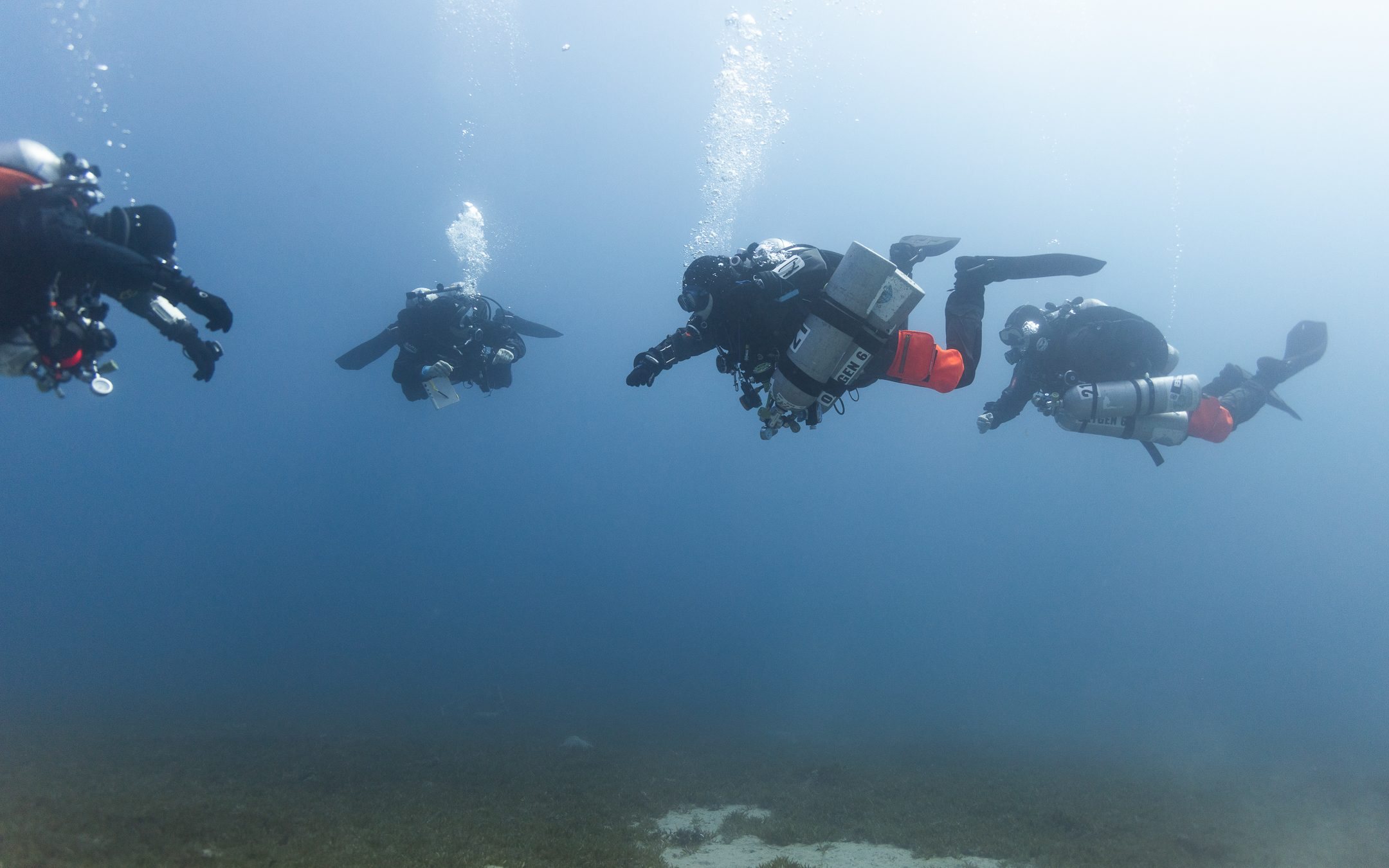
Theory
The theory part covers:
- advantages and limits of the side configuration,
- sidemount harness design and fitting,
- setting up regulators, hoses and pressure gauges,
- buoyancy and trim at different cylinder pressures,
- gas planning and management with two sources,
- emergency procedures specific to sidemount,
- carrying cylinders, entering the water and shore-dive logistics.
Practice
Practice starts on land with harness fitting and ends with a dive that the student sets up and leads alone.
- equipment workshop: harness adjustment, mounting cylinder hardware, hose routing,
- shallow-water session: putting cylinders on and taking them off, setting the weighting,
- correcting trim and cylinder position during the dive,
- switching regulators and checking pressure in both cylinders,
- closing and opening a valve, responding to a leak,
- handing the long hose to a buddy and swimming together,
- a final dive planned and led by the student.
A sidemount rig is fitted on land but judged in the water. If the cylinders do not lie evenly along the body, we do not fix it by hand during the dive. We go back and change the configuration.

FAQ

The next step on your path
- PADI Peak Performance Buoyancy and PADI Self-Reliant Diver: refining trim and self-reliance,
- PADI Deep Diver or PADI Cavern Diver: using sidemount in practice in a new environment,
- PADI Tec Basics: technical diving skills and procedures,
- PADI Tec Sidemount Diver: the side configuration in decompression dives with stage cylinders.
Sidemount is a configuration, not a level of training. Certifications for deeper and longer dives come from further courses, and the side configuration is only a tool you can use in them.
Trips
- Mexico: cenotes, where sidemount is the standard configuration,
- France and Spain: diving in karst springs and caves for students continuing their training,
- Red Sea: boat and shore dives with easy water entry,
- Polish lakes and quarries: shore dives where cylinders are carried in separately,
- the Baltic and wrecks: a better profile for working in confined spaces, for experienced divers.
Take your own cylinder bands and clips on the trip. Many dive bases have cylinders available, but you need to bring the hanging hardware yourself.