


The sidemount configuration in technical diving
PADI Tec Sidemount Diver: sidemount in technical diving

Course description
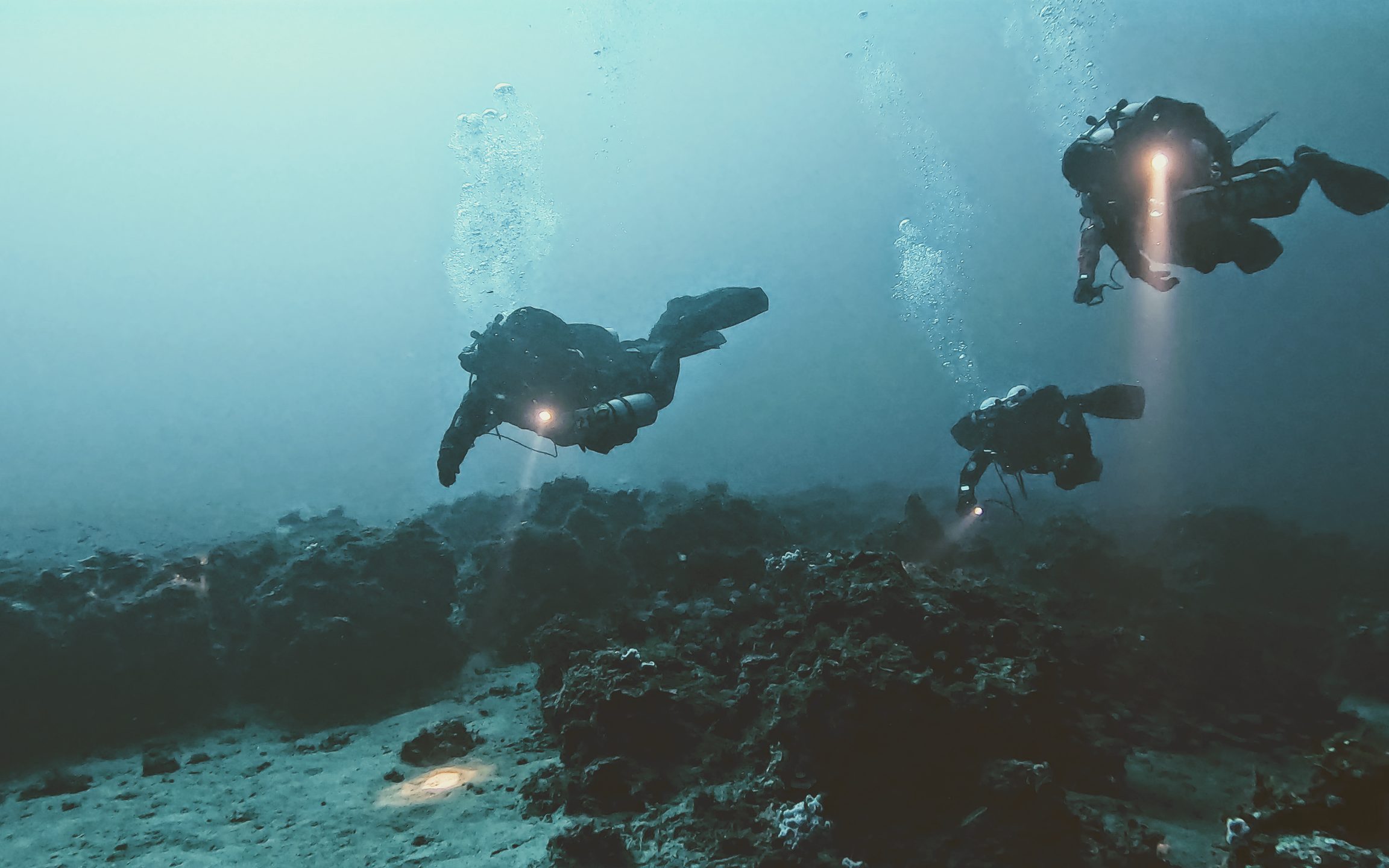
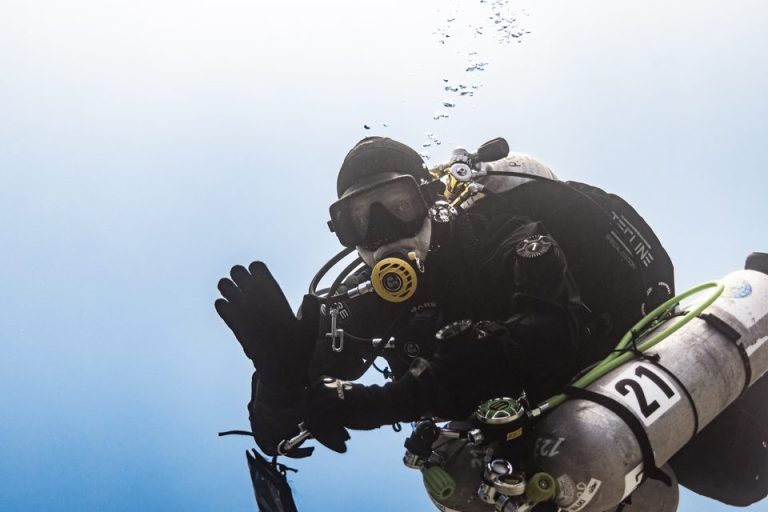
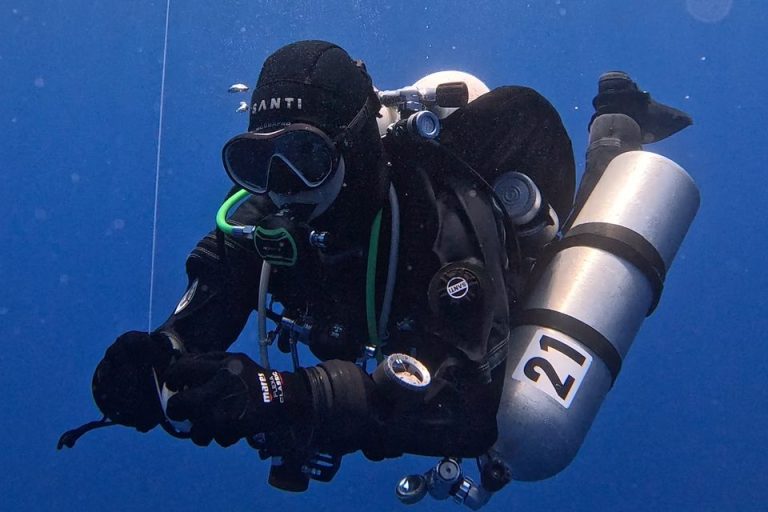
PADI Tec Sidemount Diver prepares you to use the sidemount configuration in technical diving. The cylinders sit at the diver’s sides instead of on the back, which gives direct access to the valves and first stages, more freedom in managing several cylinders and the option of removing a cylinder underwater.
It is worth being clear about the scope straight away: Tec Sidemount is not a decompression course and does not, on its own, qualify you for dives with decompression. It teaches a configuration in which you can then dive within the limits of the certifications you already hold, and if you are only entering technical diving, a configuration in which you can take the further TecRec courses: Tec 40, Tec 45 and Tec 50.
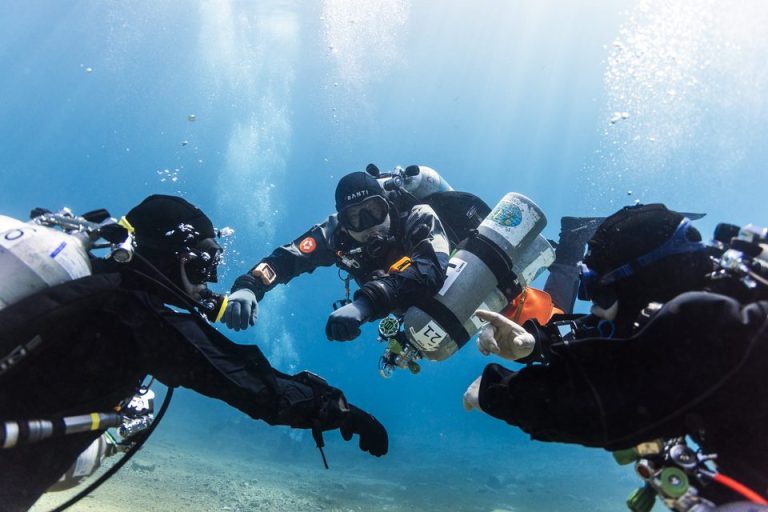
During the course, participants learn harness configuration, managing several cylinders, gas switch procedures and buoyancy and trim control in a side-mounted setup. We put a strong emphasis on ergonomics: a badly weighted sidemount is worse than a well-built twinset, and the difference lies in the details of the attachments and the placement of equipment.
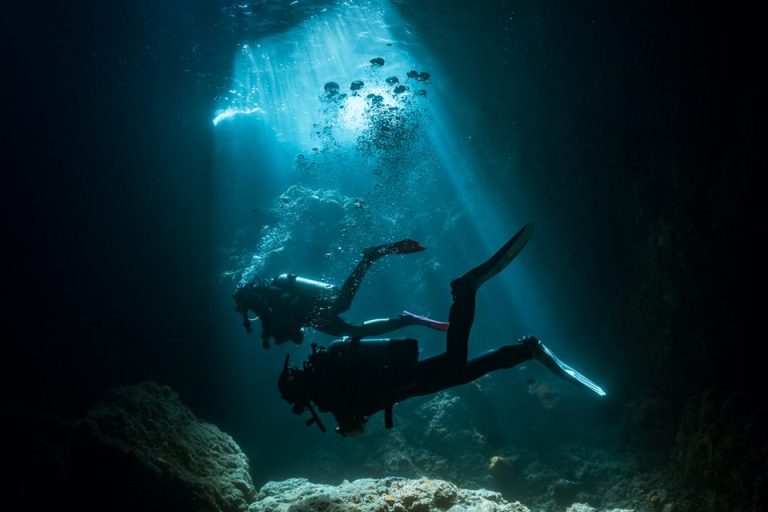
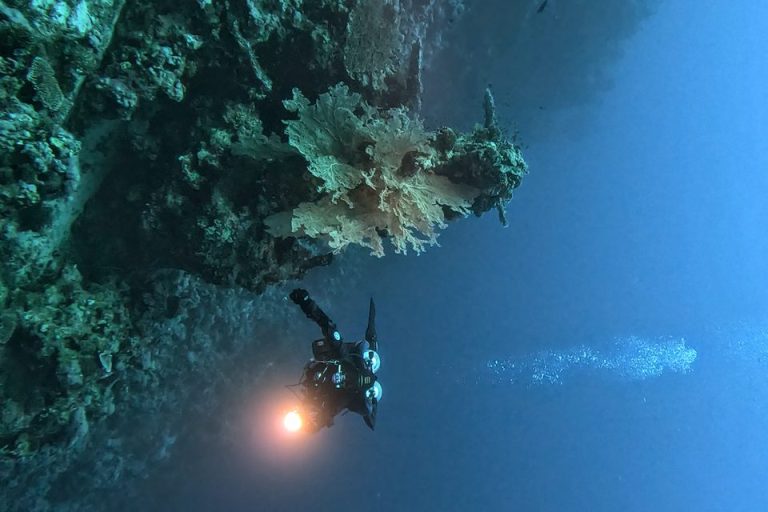
The configuration works especially well where mobility and access to equipment matter: in caves, in wrecks, in confined spaces and on difficult water entries. It is also a real alternative for people for whom carrying a twinset is a problem.

2-3 training days, depending on how the equipment is fitted and the pace of the team. If taken together with a Tec 40, Tec 45 or Tec 50 course, the time grows accordingly.
A confined water session and a minimum of 4 training dives. We start with two main cylinders and add more.
Dives are within the limits of the certifications the participant already holds. The course does not give decompression qualifications on its own.
Air or nitrox, depending on the dive profile and the participant’s certifications.
A maximum of 2 people per instructor. The sidemount configuration needs very individual fitting of the equipment.
You can take the course together with PADI Tec 40, Tec 45 or Tec 50, so you gain your whole technical level in sidemount from the start.
A PADI Tec Sidemount Diver certification confirms your ability to:
- configure and weight a sidemount set correctly,
- dive in the sidemount configuration within the limits of your existing certifications,
- manage several cylinders, including stage and decompression cylinders,
- take further PADI TecRec courses in the sidemount configuration.
- Age: 18 years completed;
- Certification: PADI Advanced Open Water Diver or an equivalent certification from another organisation;
- Nitrox: PADI Enriched Air Diver, recommended;
- Experience: a minimum of 30 dives recorded in a logbook;
- Health: a current medical statement clearing you to dive.
The prerequisites are relatively low because the course does not introduce decompression. If you plan to combine it with a technical course straight away, the requirements of that course apply. For Tec 45 and above, that includes a Rescue Diver certification.
Main configuration
- a sidemount harness with a bungee attachment system and a wing chosen for the configuration,
- two main cylinders of similar capacity, with one left and one right valve recommended,
- an independent regulator for each cylinder, each with its own pressure gauge,
- one second stage on a longer hose (approx. 1.5-2 m) for sharing gas, the other on a short hose with a neck bungee,
- a wing inflator hose and, with a dry suit, an inflation hose,
- a weighting system fitted to the configuration, allowing you to trim the set.
Additional cylinders
- a stage or decompression cylinder with a harness and double-ended bolt snaps,
- a separate regulator with a pressure gauge,
- a legible label with the mix and the maximum operating depth (MOD).
Instruments and safety equipment
- a dive computer and a backup instrument for tracking time and depth,
- a DSMB and a reel or spool,
- two cutting tools,
- a spare mask,
- an underwater slate,
- a primary light and a backup one in limited visibility.
Also recommended
- spare bungee cords of different thickness, a consumable that can fail during a dive,
- a dry suit with an undergarment suited to the conditions,
- a basic set of tools and consumables.
Training fee
The price is set individually, depending on the training location and dive logistics.
Registration and certification fee
According to the current price list of the certifying organisation.
Training materials
The PADI Sidemount and Tec Sidemount Diver manual, charged separately.
Additional costs
Breathing gases, sidemount equipment rental, dive logistics, travel, accommodation and meals.
Theory
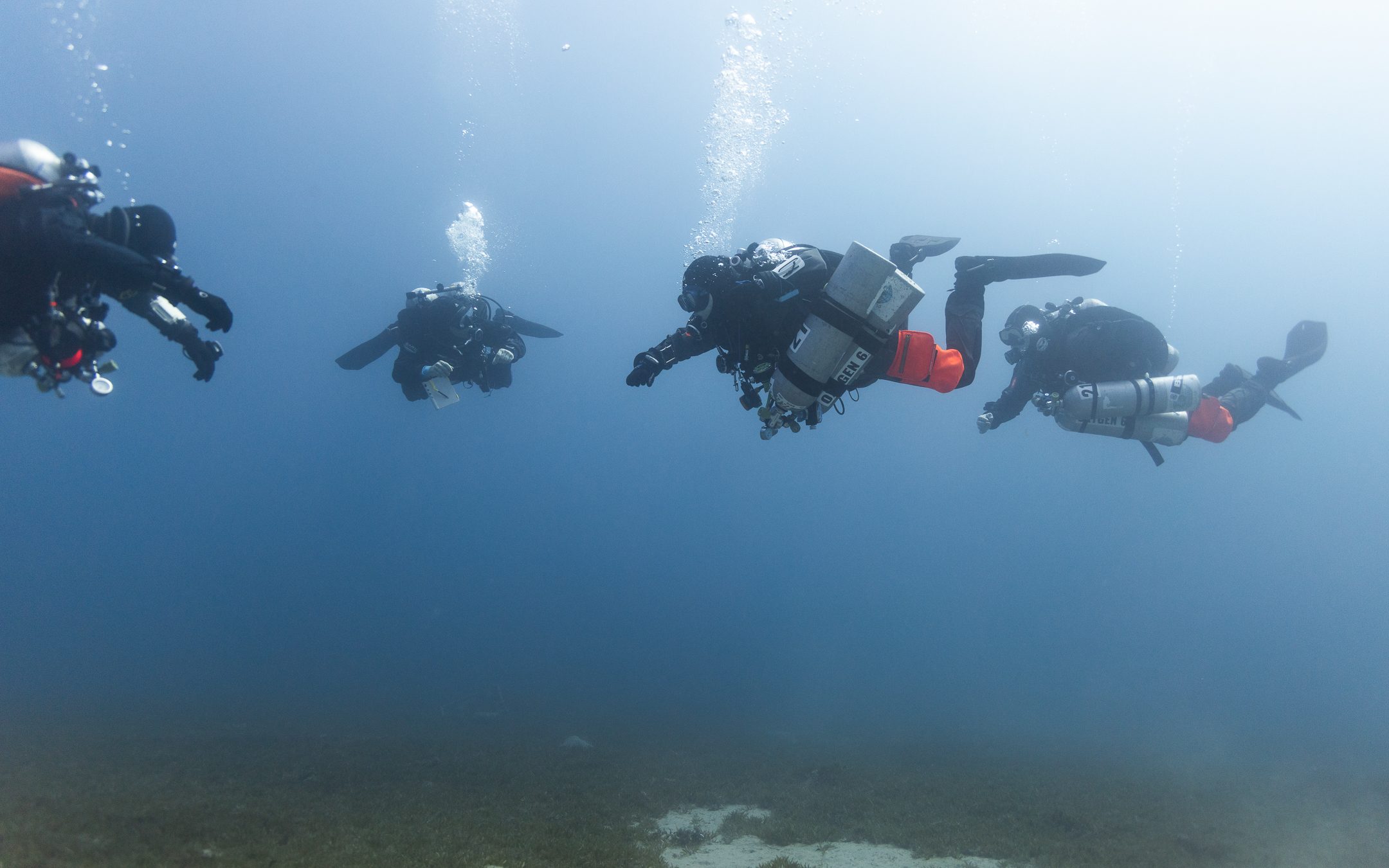
The theory part focuses on what works differently in sidemount than in backmount:
- the differences between backmount and sidemount configurations and what they mean for dive planning;
- harness configuration rules: attachment points, hose routing, placement of equipment;
- gas planning with independent cylinders, and why it needs a different approach than a twinset with a manifold;
- the rules of alternating between cylinders and keeping similar pressure in both;
- managing stage and decompression cylinders in a side-mounted setup;
- redundancy of breathing systems and procedures for responding to equipment failures;
- weighting and trim: why sidemount needs individual adjustment and how to do it.
Practice
The practical sessions lead from an equipment workshop to relaxed work with three cylinders:
- fitting and weighting the harness, the part we spend the most time on at the start;
- attaching and removing cylinders at the surface and underwater;
- buoyancy and trim control as your weighting changes while you use up gas;
- alternating between cylinders and keeping similar pressure in them;
- gas switch procedures with stage and decompression cylinders;
- sharing gas while moving, and emergency procedures, including a simulated bungee failure;
- moving freely with one cylinder removed, the basis of work in confined spaces.
We carry out the exercises step by step, until you can repeat them reliably. Sidemount needs more precision in configuration than backmount, which is why we spend much of the first day on fitting the equipment.

FAQ
Projects
Dives with a specific task to complete. Sidemount works best where mobility matters:
- consolidation dives: your first dives in the new configuration, with staff supervision;
- wreck projects: documentation and measurements, also in places with limited space;
- underwater photography and photogrammetry: working with a camera with a streamlined profile;
- exploration and mapping: line and spool work, surveying sites;
- research and conservation cooperation with institutions that look after underwater heritage.
We put teams together by level of training, not by the order of sign-ups. If a given project is too early for a diver, we propose an intermediate path.
Trips
A few days in a row with the same team builds experience faster than the same number of dives spread over a whole season:
- domestic trips: lakes and flooded quarries, good for refining your configuration without pressure;
- trips abroad: warm water and good visibility, comfortable conditions for the first dives in a new setup;
- cave trips: the environment where the advantage of sidemount is greatest;
- small teams, a dive plan of growing complexity and a briefing before every dive;
- staff support on site, including servicing and minor equipment repairs.
Before a trip, plan an equipment check, a check dive in your target configuration and a full set of spare parts. With sidemount, that means above all spare bungee cords. We keep the trip calendar separately.
Further training
The natural continuation after Tec Sidemount. The order depends on what you want to use this configuration for:
- PADI Tec 40: the first technical level, decompression dives to 40 metres, taken in sidemount;
- PADI Tec 45 and Tec 50: the next decompression levels, if you already have Tec 40;
- cave training: the natural environment of this configuration;
- wreck training, including penetration of confined spaces.
If you do not have any technical level yet, a sensible order is Tec Sidemount followed by Tec 40, or both courses taken together.