


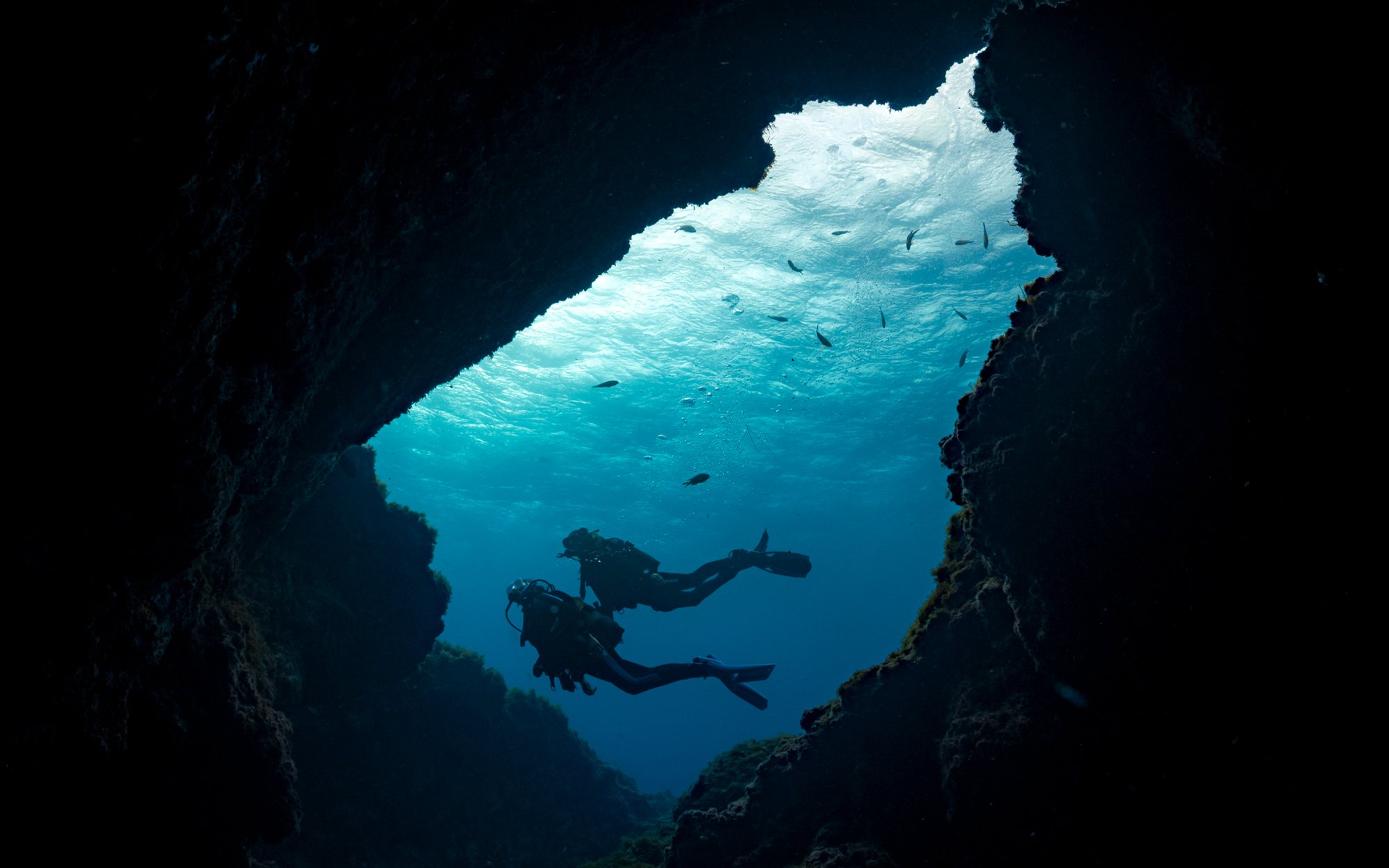
Under a ceiling, within reach of daylight.
PADI Cavern Diver: the first step towards cave diving

Course description
The PADI Cavern Diver course is the first, safe stage on the way to cave diving: it teaches diving in caverns and cave entrances, that is, in the zone that daylight still reaches. There is a ceiling above the diver, so the way to the surface no longer leads straight up, but back to the exit. This one change gives planning, gas management and teamwork a completely different meaning.
On the course we teach work with the reel and guideline, the rule of thirds in gas planning, communication by light and touch, and finning techniques that do not stir up silt. We practise procedures for loss of visibility, a lost buddy and equipment failure, so that in any situation the way to the exit can be found calmly and without rushing. The course requires stable buoyancy and trim, so for those who want to refine them first we recommend the PADI Peak Performance Buoyancy course.
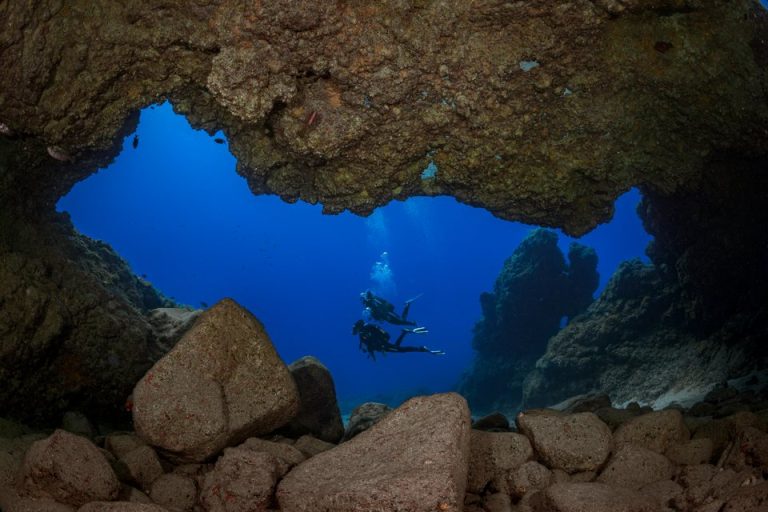
There are no natural caverns in Poland where course dives can be done, so we run the theory, the reel workshop and the guideline exercises in Poland, in lakes and quarries, and the cavern dives on trips, for example to Mexican cenotes or springs in France. Poor visibility in Polish waters turns out to be good training for line work anyway.
Cavern Diver is not a cave course and does not qualify you to dive beyond the daylight zone. It is a course that shows what the discipline of diving in an overhead environment looks like, and lets you decide knowingly whether to continue training towards technical and cave diving.

Usually 2 diving days, preceded by theory and a land workshop with the reel. When the course is done on a trip, it is best to do the theory and land exercises in Poland before departure.
4 training dives in caverns, preceded by guideline exercises on land and in open water.
Maximum 30 metres, in the daylight zone, with a total distance from the surface (depth plus horizontal distance) of no more than 40 metres. We dive only where two divers can swim side by side.
Maximum 4 students per instructor, and usually fewer in the cavern itself. In an environment with a ceiling the instructor must see every student and be able to react immediately.
Air, and with a PADI nitrox certification also nitrox. Gas planning is based on the rule of thirds: one third for the way in, one third for the way back, one third as a reserve for the team.
Skills after the course:
- planning a cavern dive by the rule of thirds,
- reel work: tying in the guideline, securing it, winding it in,
- swimming along the guideline in limited visibility,
- finning techniques that do not stir up silt,
- communication by light and touch,
- procedures for a lost buddy and a lost guideline,
- equipment configuration with a redundant light source.
- minimum age: 18,
- PADI Adventure Diver certification or equivalent; at Long Deco we recommend AOWD and experience in a dry suit or in dives with poor visibility,
- good health confirmed by a medical questionnaire,
- stable buoyancy and trim; the Peak Performance Buoyancy course is good preparation.
Specialist equipment
- main light and two backup lights,
- reel with guideline,
- direction markers (arrows) and personal markers,
- two independent regulators or a regulator with a long hose,
- knife or cutting tool in an easily accessible place.
Standard kit
- mask (a spare is recommended), stiff or jet fins,
- suit suited to the water temperature,
- wing or jacket with a streamlined configuration,
- dive computer,
- cylinder and weights.
Lights, reels and markers can be rented at Long Deco. Before the course we check the configuration with the student: in a cavern any loosely hanging hose can snag on the line.
Training fee
Price set individually.
Registration and certification fee
According to the current PADI price list.
Additional costs
Equipment rental, gases, entry fees for cenotes or dive sites, local transport, travel and accommodation.
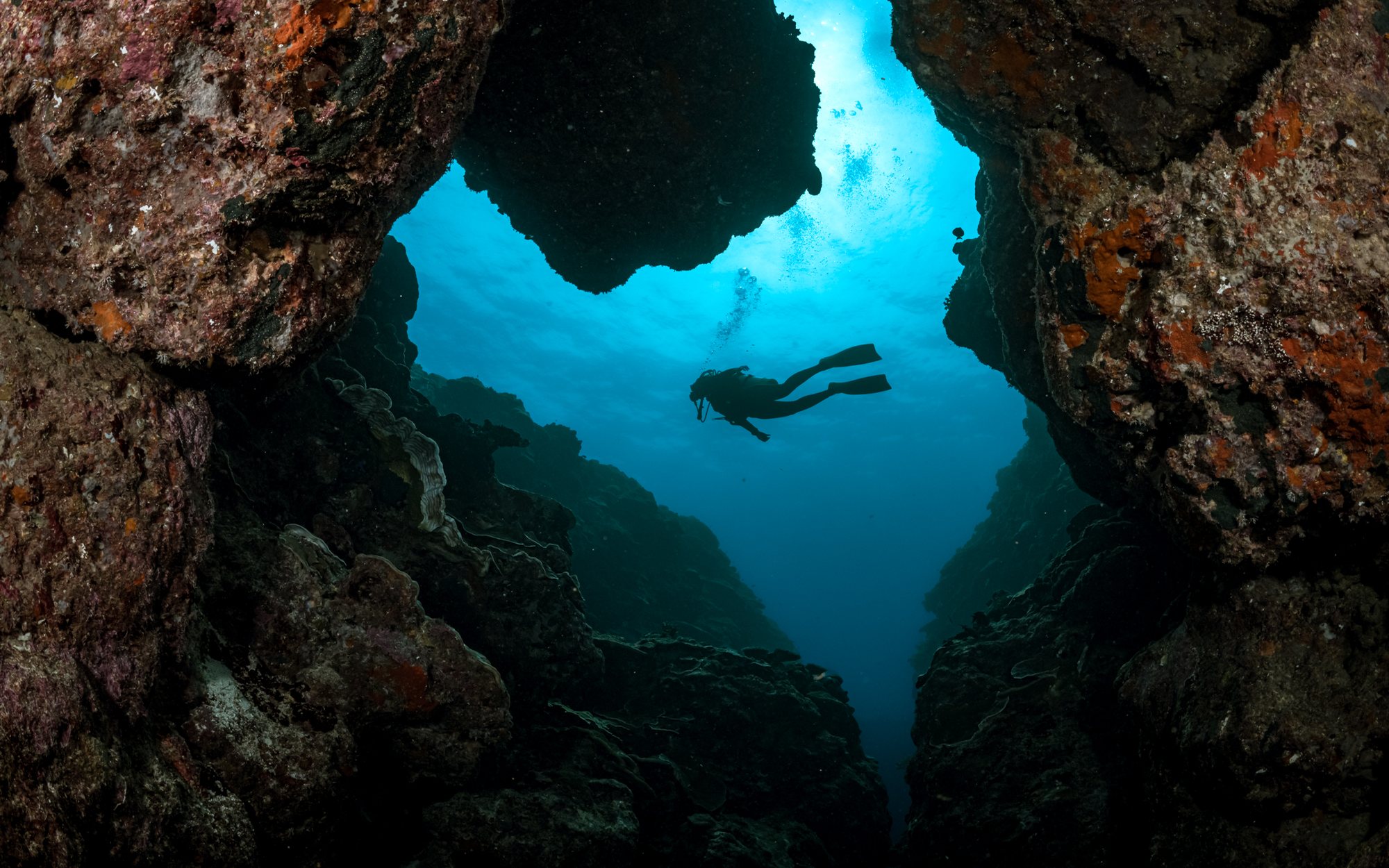
Theory
Theory on the Cavern Diver course is mostly about what not to do, and why. We analyse the causes of accidents in overhead environments and build the rules from them.
- the difference between a cavern and a cave, and the limits of cavern diving,
- accident analysis and safety rules in an overhead environment,
- gas planning by the rule of thirds,
- work with the guideline and markers,
- team communication: hand, light and touch signals,
- equipment configuration and light redundancy,
- protecting the cavern and cave environment.
Practice
Before we enter a cavern, the student practises reel work on land and in open water until the actions become fluent.
- land workshop: laying and recovering the guideline, tie-offs, touch communication with eyes closed,
- open-water exercises: running the guideline, frog kick and double frog kick,
- cavern dives along an existing guideline and with the student’s own guideline,
- simulated loss of visibility and return along the guideline,
- procedure for a lost buddy and finding the guideline,
- gas sharing while exiting along the line,
- planning and carrying out a dive by the rule of thirds.
Any diver can end a dive at any moment, without giving a reason. In a cavern this signal matters most, and nobody argues with it.

FAQ

The next step on your path
- PADI Wreck Diver: guideline work in a wreck environment,
- PADI Sidemount Diver and PADI Self-Reliant Diver: configuration and self-reliance that help in an overhead environment,
- PADI Tec Basics and PADI Tec 40: technical procedures, decompression and equipment redundancy,
- PADI Tec Sidemount Diver: side configuration in technical diving.
A cavern is an environment that is easy to overestimate, because you can see the light from the entrance. If you are thinking about caves after the course, first build technical experience, and only then look for cave training.
Trips
- Mexico, Yucatan: cenotes with marked routes in the daylight zone,
- France, Lot region: karst springs with clear water,
- Croatia: sea caves and caverns along the coast,
- Malta and Gozo: sea caverns and swim-throughs in the rock,
- Spain and Portugal: coastal caverns for experienced divers.
Cenotes and springs have local rules, and a guide is often required. Before a trip we check which certifications and which equipment configuration a given site accepts.