


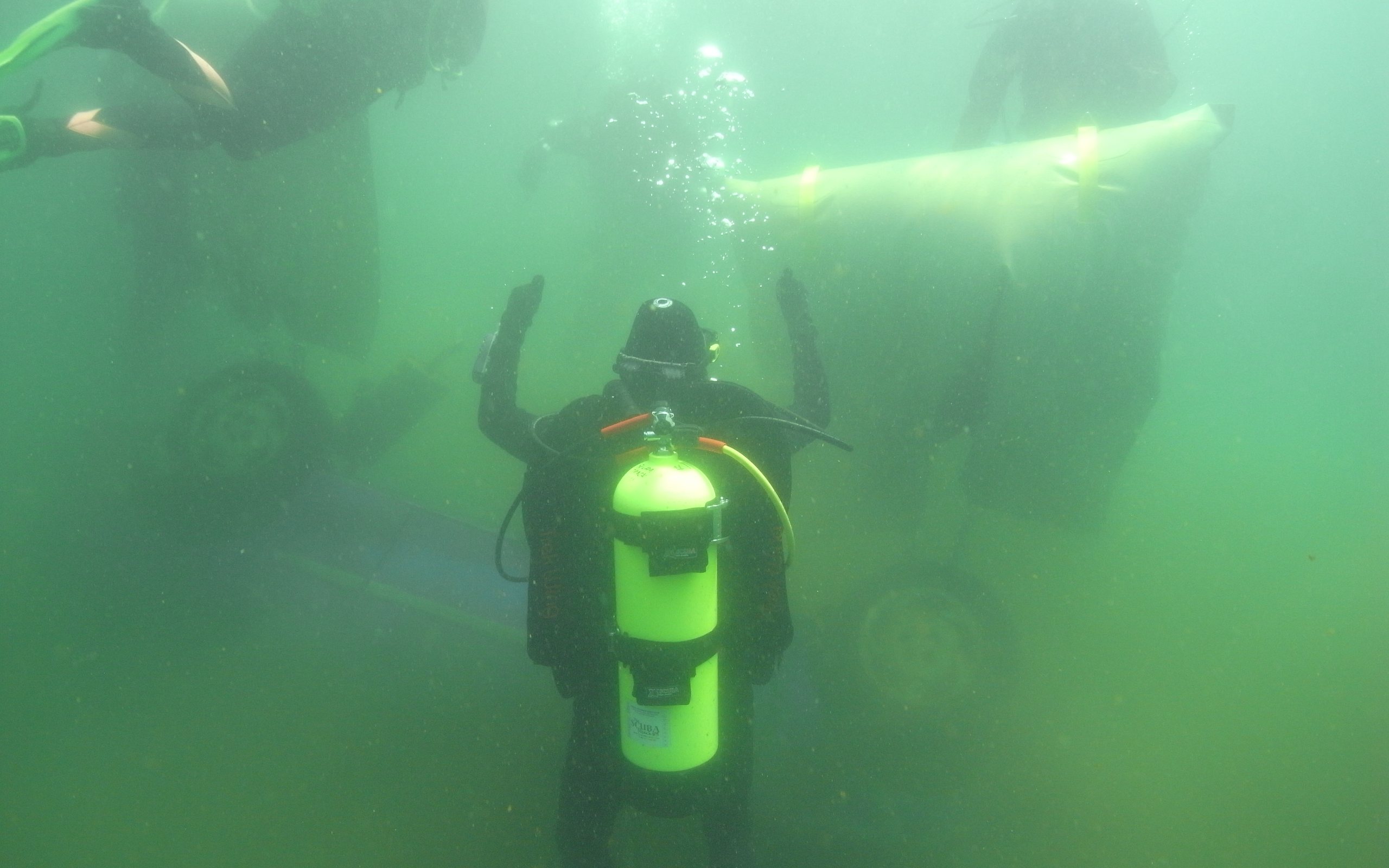
Search with a method, not with luck.
PADI Search and Recovery Diver: search and recovery with a plan

Course description
The PADI Search and Recovery Diver course teaches you how to find an object lost underwater by method rather than by chance, and how to bring it to the surface without risk to yourself or the team. Every diver sooner or later loses something: a camera, a torch, a computer, an anchor. This is a course about planning, working with a line and bringing a load up in a controlled way.
The programme has two parts: searching and recovery. The first covers systematic search patterns: searching in a circle with a line, in an expanding square, in a U pattern and along a guide line. You learn to choose a pattern to suit the bottom, the visibility and the size of the object you are looking for. The second part is recovery: tying knots, securing the load, working with a lift bag and controlling the rate of ascent.
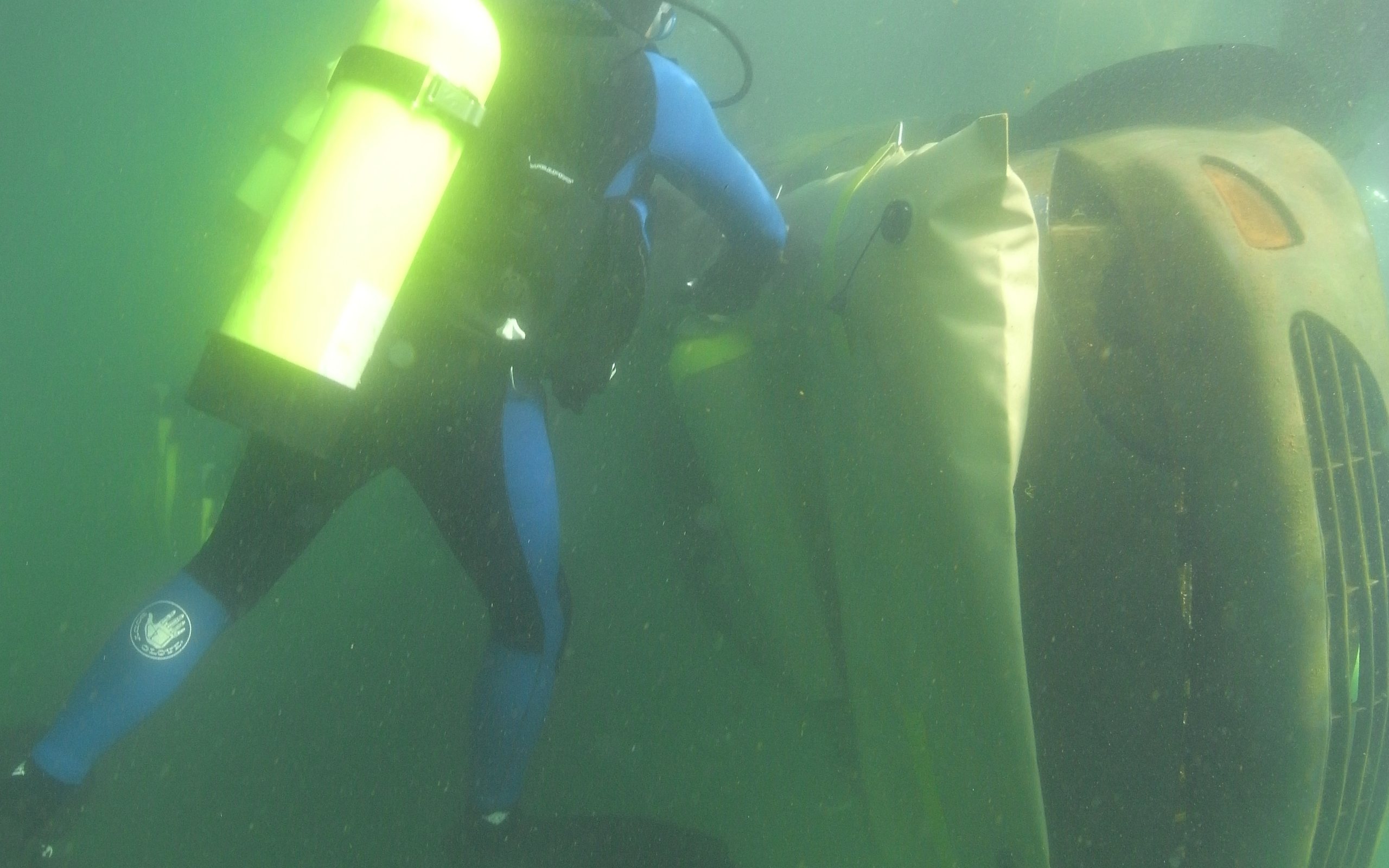
Lifting a load is in practice a buoyancy exercise. A lift bag expands during the ascent in the same way as a wing, and an uncontrolled load can pull a diver upwards. That is why on the course we stress a stable position (PADI Peak Performance Buoyancy is good preparation), neutral buoyancy while working with your hands, and the rule that a diver never swims to the surface together with the load.
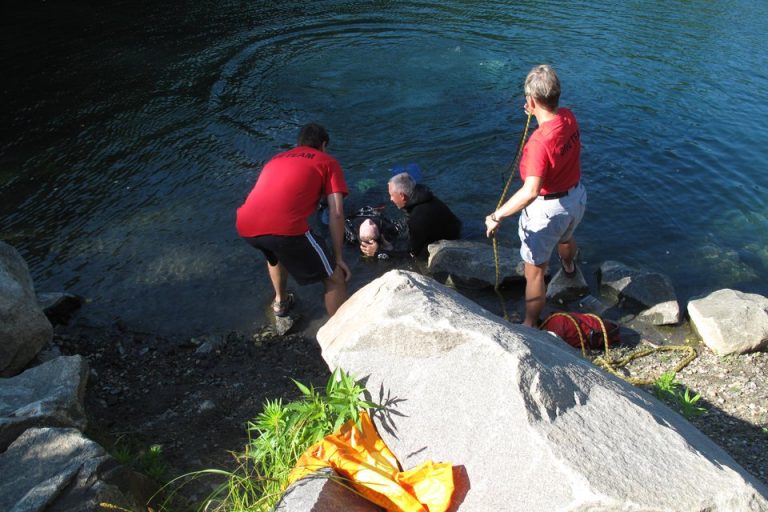
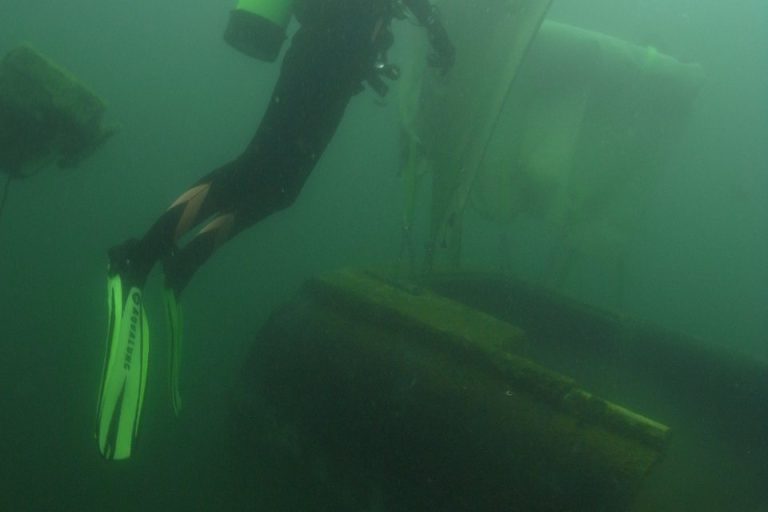
Polish lakes and quarries, with a soft, silty bottom and visibility often below a few metres, are a demanding but realistic place to learn. The skills from this course are useful when working on wrecks, handling descent lines and decompression stations, and anywhere a team has to act to a shared plan.

Usually 2 training days: theory (e-learning or classroom), preparation on land (knots, equipment, line communication) and four open water dives.
4 open water dives. The first dive of the course can be credited as an Adventure Dive in the PADI Advanced Open Water Diver course.
Training dives take place at moderate depths, usually down to 18 m. We plan the recovery exercises shallower, so that the ascent of the load is short and easy to control.
A maximum of 4 students per instructor. Many exercises are done in pairs, so a small group lets everyone take the role of searching diver and safety diver.
Air or nitrox for those with PADI nitrox certification. Physical work underwater increases gas consumption, so we calculate the gas plan with a larger reserve than usual.
Range of skills after the course:
- planning and organising a search as a team,
- choosing a search pattern to suit the bottom, visibility and the size of the object,
- searching in a circle, a square, a U pattern and along a line,
- tying the basic knots: bowline, figure eight, two half hitches, sheet bend,
- securing the load and choosing the lifting force of the bag,
- lifting an object in a controlled way with a lift bag,
- communication and line signals in limited visibility.
- minimum age: 12,
- PADI (Junior) Open Water Diver certification or an equivalent from another organisation,
- current health that allows diving (medical questionnaire, a doctor’s certificate if needed),
- stable buoyancy; prior knowledge of compass navigation is recommended (e.g. PADI Underwater Navigator).
Specialist equipment
- lift bag with suitable lifting force and a dump valve,
- spool or reel with line,
- compass,
- surface marker buoy to mark the search site,
- knife or shears for cutting the line.
Standard kit
- wetsuit or dry suit suited to the water temperature,
- BCD or wing, cylinder, regulator with an octopus,
- dive computer,
- mask, fins, torch, gloves.
Long Deco provides the lift bags, lines and weights for the exercises. The rest of the equipment can be hired; it is worth having your own gloves, because working with line wears them out quickly.
Training fee
The price is set individually, depending on the location, the date and the number of people.
Registration and certification fee
Registration and certification according to the current PADI price list.
Additional costs
Equipment hire, gases, entry to dive sites, boat logistics if needed, travel, accommodation.
Theory
The theory part covers:
- search planning: initial information, defining the area, dividing roles,
- search patterns and choosing them to suit the conditions,
- knots used in searching and recovery,
- the physics of lifting a load: buoyancy, gas expansion, lifting force,
- recovery methods: lift bag, line from the surface, buoyancy change,
- hazards: uncontrolled ascent, entanglement, overload, fatigue,
- limits of recreational diving in search operations.
Practice
Before the first dive we practise knots and line signals on land. Underwater, each student takes turns as the searching diver and the diver holding the line.
Dive 1: circular search
- laying the line from a central point and searching the circle,
- increasing the radius and marking the searched area,
- communicating with line signals.
Dive 2: compass search
- searching an area in an expanding square or a U pattern,
- measuring distance in kick cycles,
- marking the spot where the object was found.
Dive 3: lifting a small object
- securing the object with a knot,
- lifting the object a short distance with buoyancy control,
- returning the load to the bottom in a controlled way.
Dive 4: recovery with a lift bag
- planning the recovery and estimating the object’s weight,
- filling the bag and controlling the rate at which the load rises,
- carrying out a full search and recovery as a team.
Never attach yourself to the load or to the bag. Fill the bag gradually, from the side, and keep the dump valve within reach: if the load starts rising too fast, you let go of it and do not swim up with it.

FAQ

The next step on your path
- PADI Underwater Navigator and PADI DSMB Diver, if you want to refine your navigation and your work with a line and a buoy,
- PADI Rescue Diver, which teaches managing an emergency in a team,
- PADI Wreck Diver as preparation for working with a descent line and a decompression station,
- PADI Tec Basics, where planning, teamwork and buoyancy control reach the technical level.
Search and Recovery counts as a specialty towards Master Scuba Diver. Knowing how to tie knots and work with a lift bag comes in handy later on every dive with a descent line.
Trips
- boat dives, where you have to find the anchor or the descent line,
- wrecks, where lines and decompression stations are set up and taken down,
- club trips, where the team dives to a shared plan,
- quarries and lakes in Poland with limited visibility,
- situations when something has fallen from a boat or a jetty.
Take your own spool with line on the trip, and a knife or shears within reach of both hands. It is the simplest kit for marking the place where something was found or lost.