


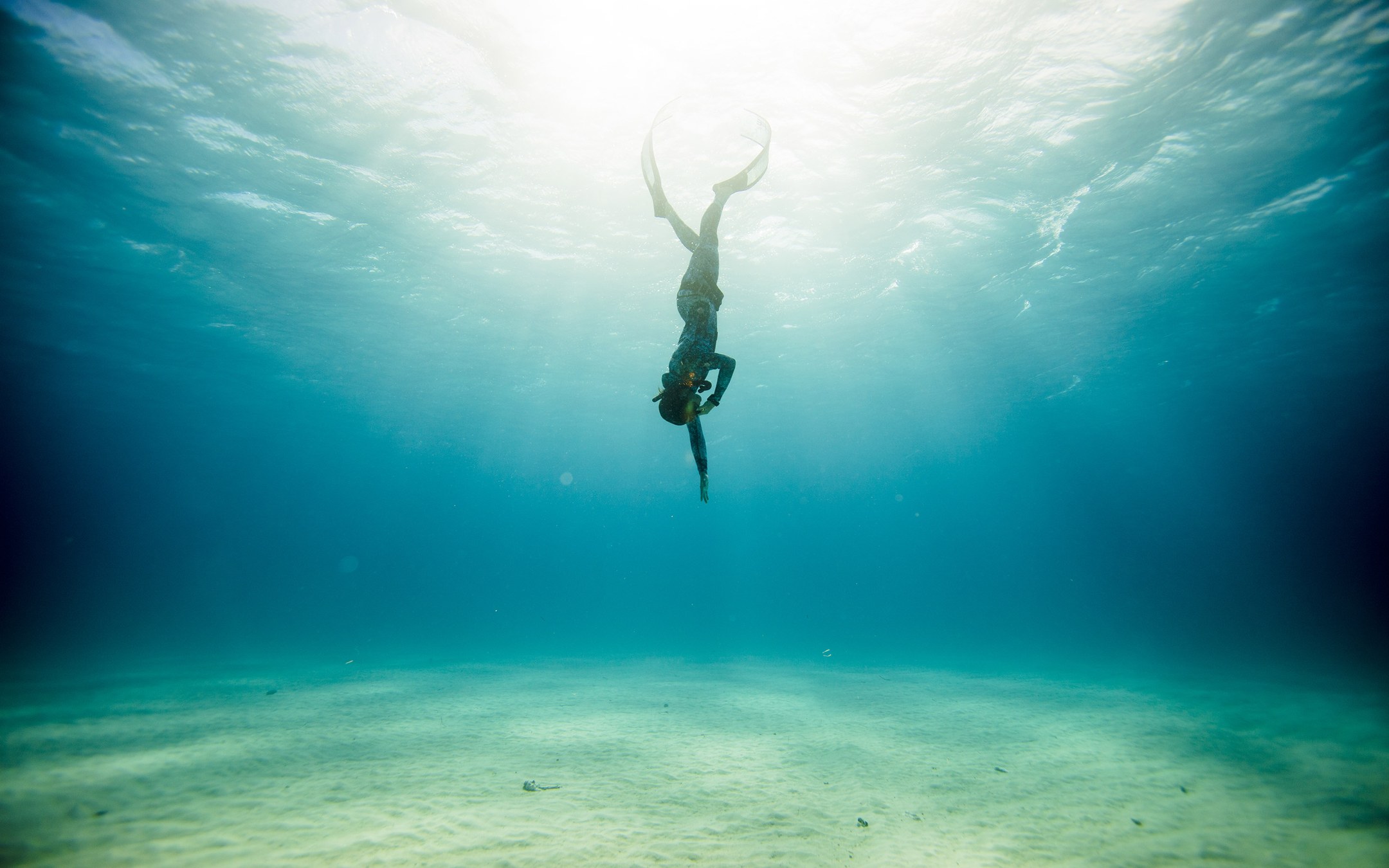
Down to sixteen metres in full control.
PADI Freediver: breath-hold diving to 16 metres

Course description
The PADI Freediver course builds on the Basic Freediver level and leads to single-breath dives to 16 metres. It teaches descent technique, equalisation at greater depths, dive planning and freediving rescue.
We devote a large part of the course to what affects safety most: relaxation, breath control and working as a pair. At greater depth, economy of movement and calm matter more than strength. We also practise buoyancy, choosing weight, the ascent and behaviour right after reaching the surface, which is the moment of highest risk.
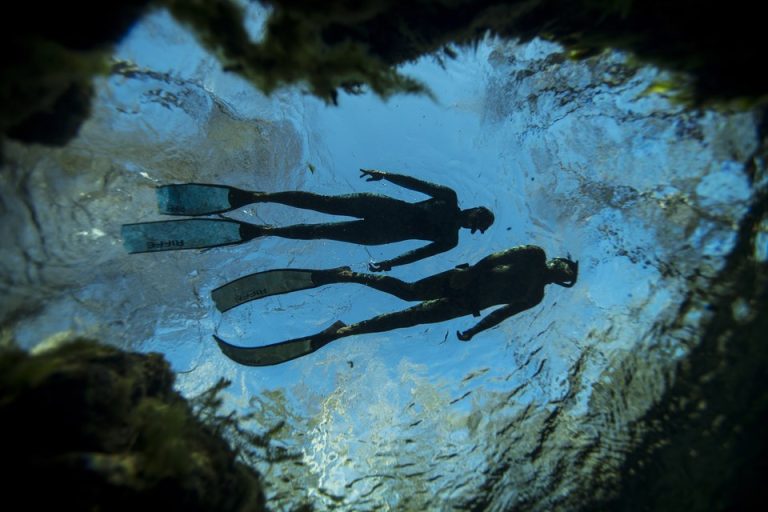
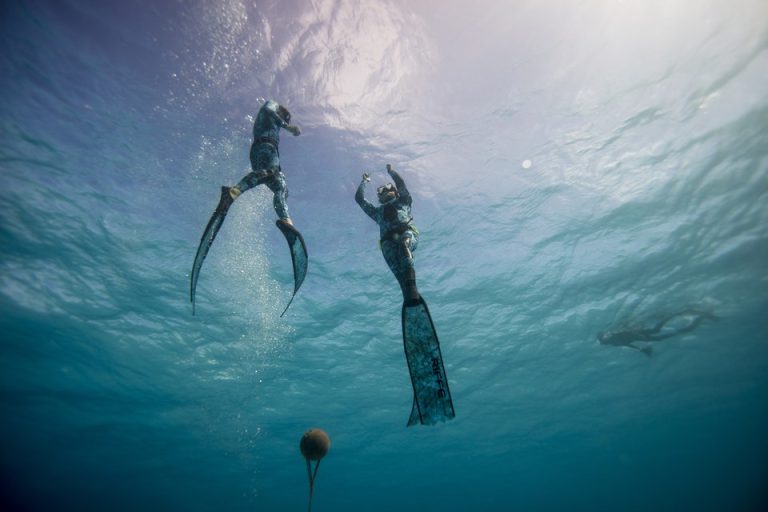
We run the sessions in a small group at the DeepSpot pool in Mszczonów, where the deep water is warm and has no current, and at a site agreed with the PADI Freediver instructor. Every time we dive as a pair, with line and buoy.
The course is for people who have completed PADI Basic Freediver or those who want to start right away and follow the full path. After the course you can dive as a pair to 16 metres, within your skills.

Usually 3 training days: a theory part (e-learning or classroom sessions), confined water sessions and open water sessions. We adjust dates to the group.
Confined water sessions (DeepSpot pool) and open water dives with a line. If you hold PADI Basic Freediver, the completed part carries over to this course.
To 16 metres. We increase the depth gradually, and every descent is preceded by a check of how you feel and of the plan.
A small group, usually up to 4 students per instructor. At greater depth, reaction time and constant contact with every participant matter.
Not applicable. Freediving is diving on a single breath, without a cylinder.
Skills after the course:
- descending and ascending along the line to 16 metres,
- equalisation at greater depths,
- buoyancy control and choosing weight for your own build,
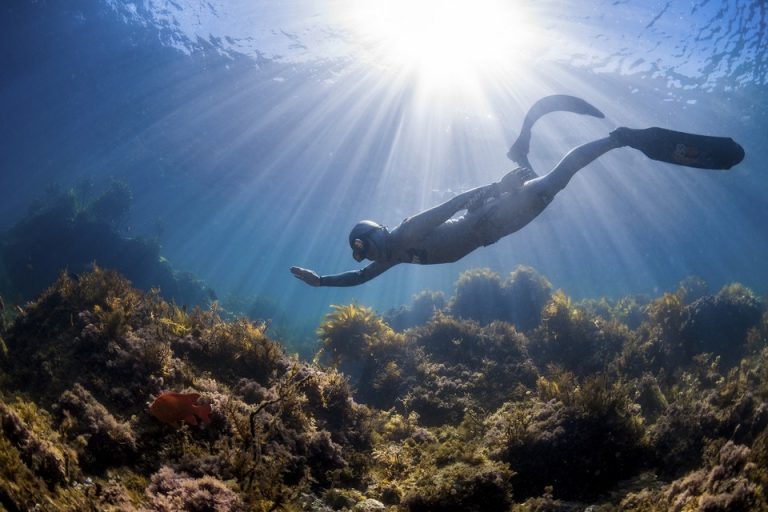
- economical swimming technique in long fins,
- planning the dive, rest and subsequent dives,
- freediving rescue: helping a buddy after a breath-hold and after loss of consciousness,
- diving as a pair to 16 m within your skills.
- minimum age: 15 years,
- the ability to swim freely and comfort in the water,
- good health confirmed by a medical questionnaire; in case of doubt, a medical certificate,
- PADI Basic Freediver certification or equivalent experience recommended.
Specialist equipment
- low-volume freediving mask,
- snorkel,
- long freediving fins,
- wetsuit suited to the water temperature,
- weight belt with weights,
- freediving computer or a watch with depth measurement.
Standard kit
- swimwear and a towel,
- knife or line cutters (to be agreed with the instructor).
Missing equipment can be rented at Long Deco. We choose weights and wetsuit together with the instructor in the first sessions.
Training fee
Price set individually.
Registration and certification fee
According to the current PADI price list.
Additional costs
Equipment rental, entry to venues (DeepSpot pool), possible travel and accommodation.
Theory
- breath-hold physiology at greater depths,
- equalisation and contraindications,
- dive planning, surface rest and a safe cycle of dives,
- the risk of losing consciousness and prevention,
- freediving rescue: recognition and assistance,
- freediving equipment, line and buoy.
Practice
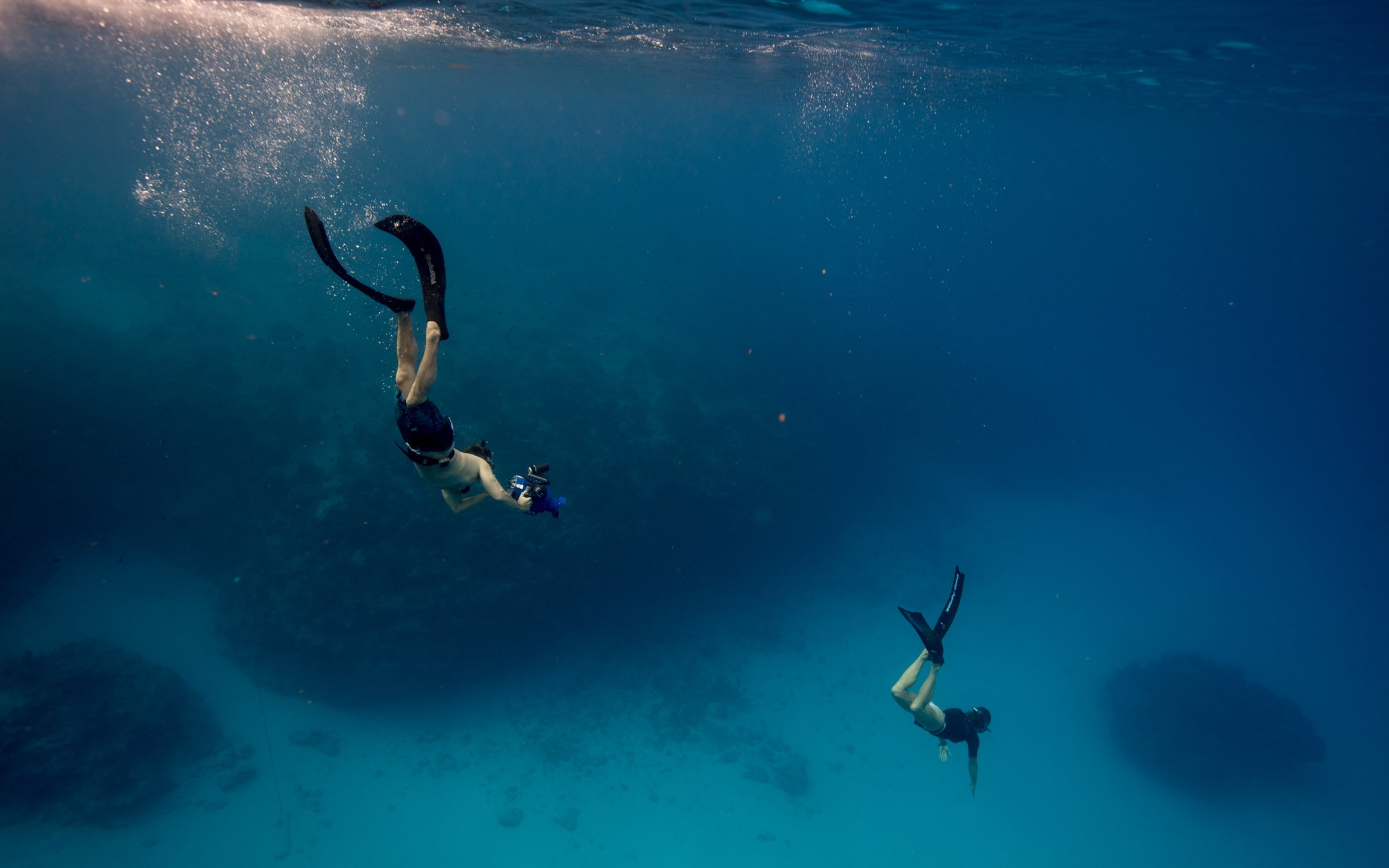
We build the course step by step: first technique and rescue in confined water, then descents to 16 metres.
Confined water: technique and rescue
- swimming in long fins and economy of movement,
- descents along the line, equalisation,
- freediving rescue exercises at the surface,
- working as a pair: observation and safety.
Open water: descents along the line
- dive planning and briefing,
- descents along the line, gradually to 16 metres,
- surface rest and checking how you feel,
- rescue at the surface after ascent.
Independent plan
- a dive planned by a pair of students,
- dive review and conclusions with the instructor.
There is one rule: we never dive alone, and we do not go into deeper water if the last dive was not comfortable.

FAQ

The next step on your path
- PADI Advanced Freediver: diving to 24 m,
- PADI Open Water Diver and PADI Advanced Open Water Diver: if you also want to dive with a cylinder,
- PADI Peak Performance Buoyancy: conscious buoyancy control is useful in both worlds.
After PADI Freediver, the natural next steps are further freediving levels or combining breath-hold with scuba diving. Choose the pace that keeps you calm underwater.
Trips
- DeepSpot Mszczonów: regular training and descents along the line,
- Egypt (Dahab and the Red Sea): deep water close to shore,
- Croatia and Malta: sea descents in warm water.
On trips we dive within the limits of the certification: to 16 m, as a pair, with line and buoy.