


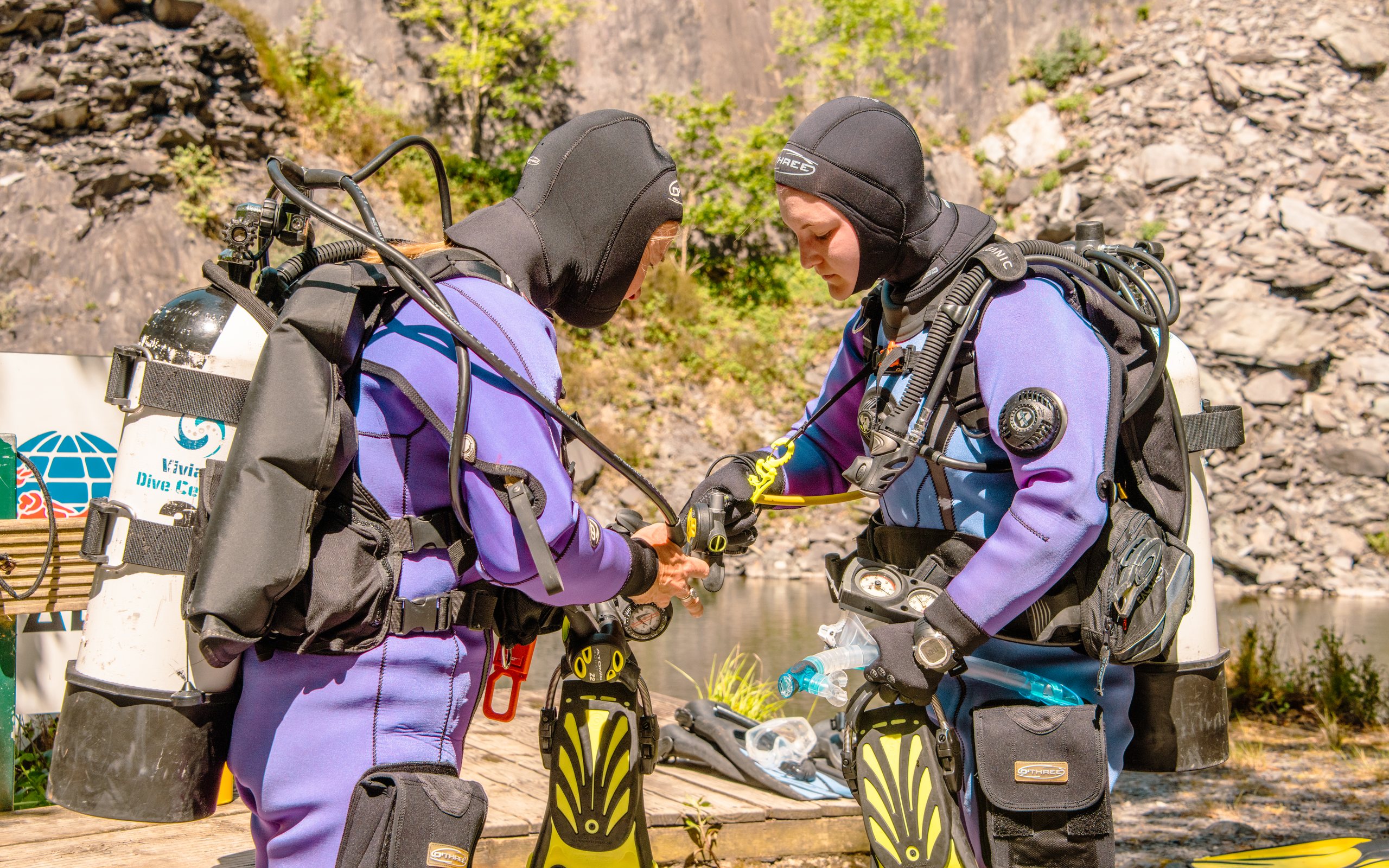
You know your equipment before you need it.
PADI Equipment Specialist: equipment you understand

Course description
PADI Equipment Specialist is a course for divers who want to know what happens inside their regulator, BCD or suit before a problem appears underwater. It does not give you the right to carry out inspections and does not replace an authorised dive equipment service centre. It does give you solid basics: how the equipment works, how to configure it, how to look after it and how to deal with typical faults at the dive site.
At Long Deco we treat this course as the foundation of a deliberate configuration. We discuss equipment in terms of how we actually dive: with an emphasis on streamlining, tidy hose routing, logical placement of components and redundancy. Every student works on their own set or on equipment they intend to buy, so they leave the course with specific changes to make.
Polish conditions are demanding for equipment. Cold water in lakes and quarries encourages regulator freezing, sand and silt get into valves, and long seasons without diving end in dried-out o-rings and flat batteries. That is why equipment maintenance takes up a good deal of the course: we teach how to prepare equipment for the season, how to store it and what to check before every trip.
The course does not include dives, so it combines well with other training or with a day when you are not going into the water anyway. It is also one of the specialties that count towards the PADI Master Scuba Diver rating and a natural preparation for the configuration required in Tec Basics.

One day of workshops, usually 6-8 hours, including theory and work on equipment. If you have many questions about your own configuration, the course can be split into two shorter meetings.
The course does not include dives. All the practice takes place on land, at a workshop bench and on the students’ equipment. If you want to test a changed configuration in the water, we can add a training dive outside the course programme.
A maximum of 4 students per instructor. When working on equipment, a small group means that everyone takes apart, assembles and sets up their own set, instead of just watching.
The course does not require breathing any gas. We do cover the rules for preparing equipment for nitrox: oxygen cleanliness, material compatibility and cylinder marking, which is useful for divers planning a nitrox or Tec 40 course.
Skills after the course:
- understanding the construction and operation of a first and second stage regulator,
- configuring a set on your own with streamlining and order in mind,
- replacing o-rings, mouthpieces and minor consumable parts,
- diagnosing typical faults before a dive and at the dive site,
- preparing equipment for cold water and reducing the risk of regulator freezing,
- rinsing, drying and storing equipment correctly,
- planning inspections and putting together a repair kit for a trip.
- minimum age: 10 years,
- PADI (Junior) Open Water Diver certificate or an equivalent from another organisation,
- the course does not require a medical certificate, because it does not include dives,
- ideally you already have your own equipment or plan to buy it.
Equipment to work with on the course
- your own regulator with a pressure gauge and inflator,
- BCD or wing with a backplate,
- a dry suit, if you use one,
- dive computer, torches and accessories.
We provide
- workshop tools,
- a set of o-rings and consumable parts for practice,
- training equipment to take apart.
If you do not have your own equipment yet, you work on Long Deco training sets. It is a good idea to take the course before buying, because it helps you choose equipment knowingly.
Training fee
Price set individually.
Registration and certification fee
According to the current price list of the certifying organisation.
Additional costs
Consumables used on your own equipment (o-rings, mouthpieces, lubricants) and possible travel.
Theory
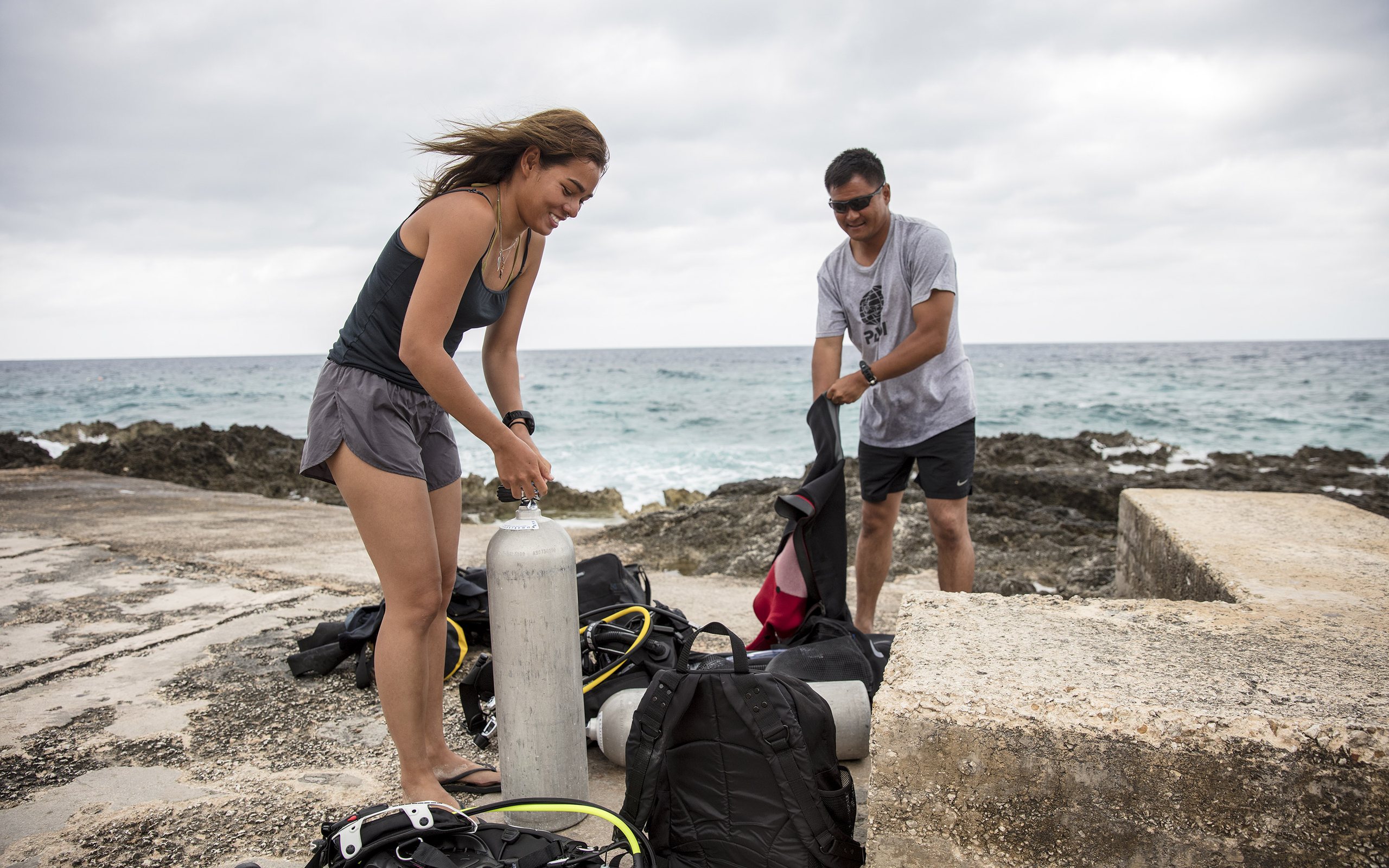
The theory is closely tied to practice here. We cover each topic on real equipment, not on diagrams.
- how a regulator works: diaphragm, piston, valves and pressure reduction stages,
- BCD, wing and backplate: buoyancy, weight distribution and the effect on trim,
- cylinders and valves: materials, markings, hydrostatic testing and inspections,
- wet and dry suits: valves, seals, neck and wrist seals,
- computers, pressure gauges, torches and batteries: handling and storage,
- equipment in cold water: regulator freezing and how to prevent it,
- oxygen cleanliness and preparing equipment for nitrox.
Practice
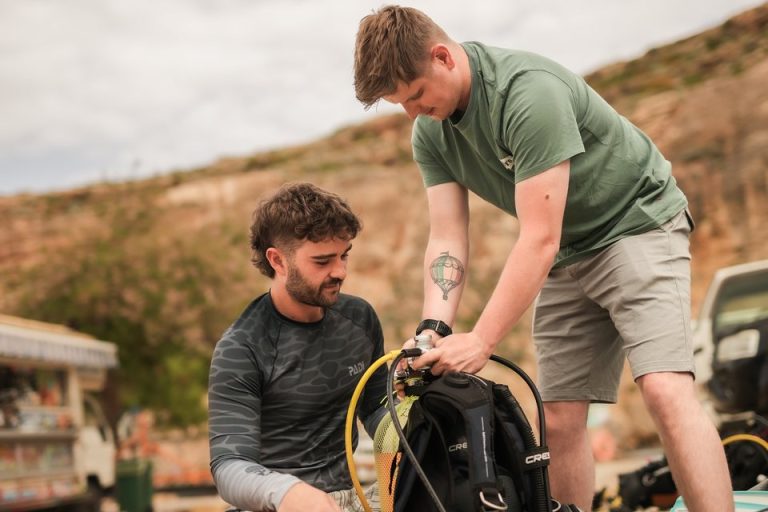
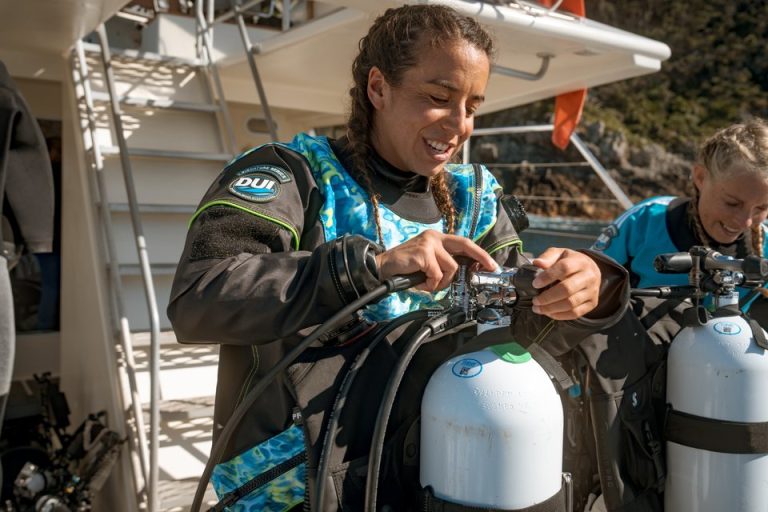
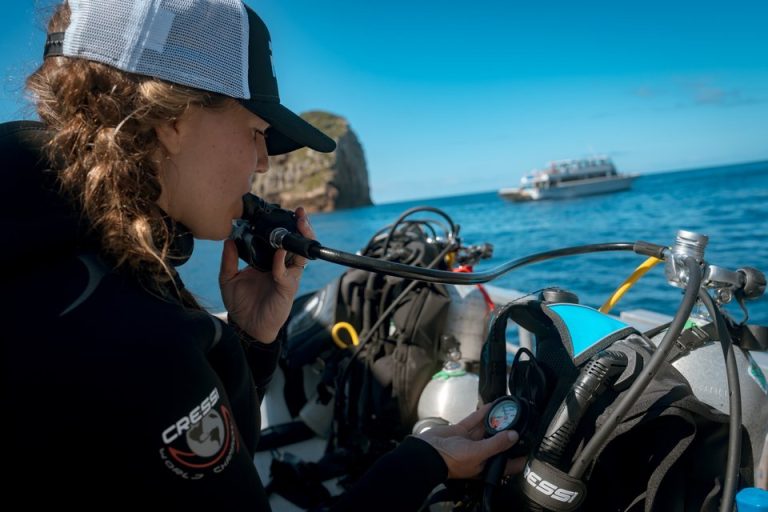
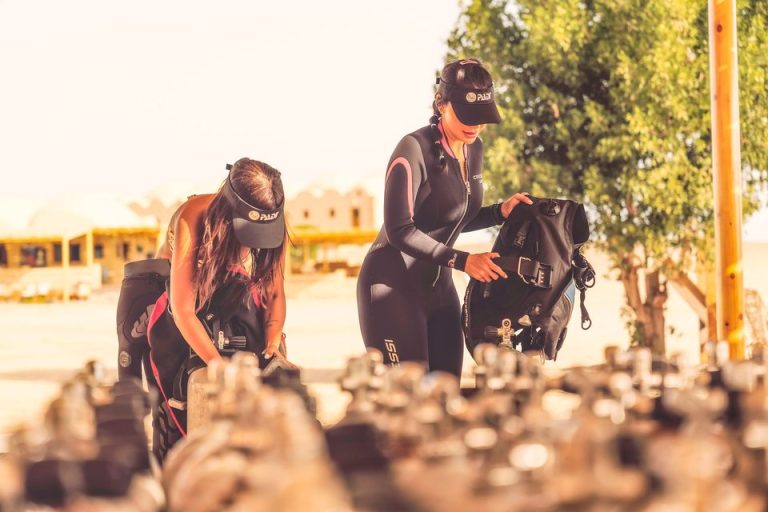
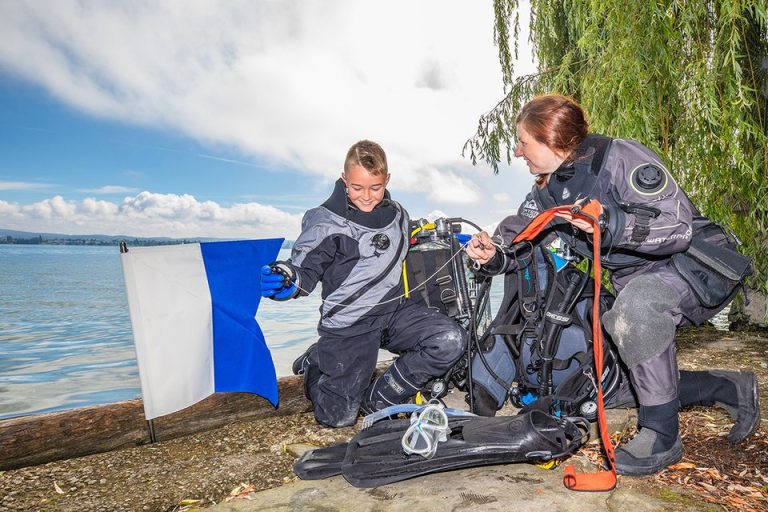
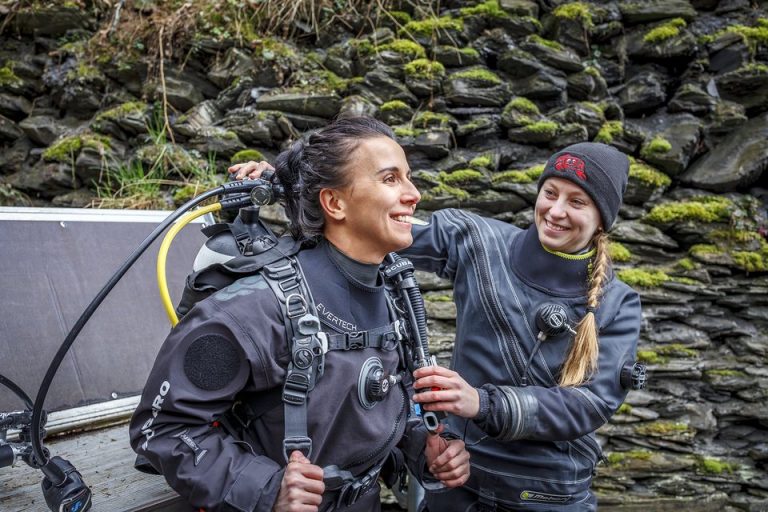
The practice is a workshop on land. You work on your own set or on training equipment, and the instructor corrects the configuration as you go.
- taking the set apart and putting it together, and the pre-dive check,
- replacing the mouthpiece, o-rings and the inflator hose,
- adjusting hose length and routing for a streamlined configuration,
- checking for leaks and intermediate pressure,
- simulating typical faults: free flow, a leaking valve, a stuck inflator,
- preparing a repair kit for a trip,
- rinsing, drying and preparing equipment for storage.
Every change to the configuration means new equipment. After rearranging hoses or weights, make the first dive shallow and calm before you go deeper.

FAQ

The next step on your path
- Peak Performance Buoyancy, to test the new configuration in the water,
- PADI Enriched Air Diver, if you plan to work with enriched gases,
- Self-Reliant Diver as the next step in redundancy and configuration,
- Tec Basics or Tec Gas Blender, when equipment becomes part of planning a technical dive.
An equipment course only makes sense if you dive in the new configuration right after it. Plan a few calm dives before you sign up for the next course.
Trips
- putting together a repair kit: o-rings, mouthpiece, mask strap, cable ties, tools,
- preparing a regulator for cold water on trips to Norway, Sweden or under ice,
- assessing rental equipment at a dive centre before the first dive,
- packing equipment for a flight, including the rules for carrying batteries and computers,
- minor repairs on a boat, where the nearest service centre is far away.
A spare mouthpiece and a few o-rings weigh a few dozen grams and can save a whole day of diving. Always take them on a trip, whether or not you have your own regulator.