


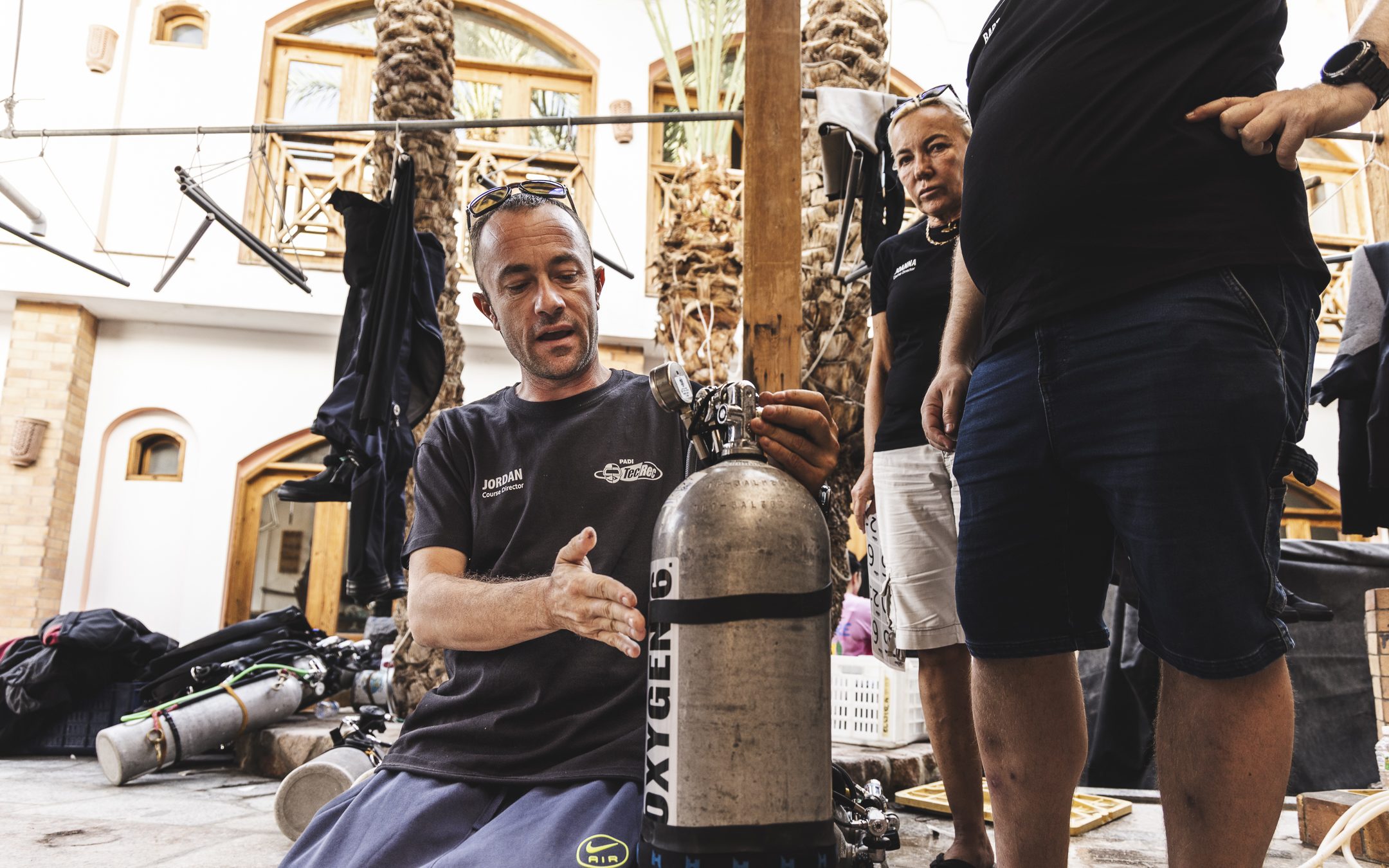
Conscious and safe gas blending
PADI Tec Gas Blender: dive gas blending

Course description
PADI Tec Gas Blender teaches you to prepare, on your own and safely, the breathing mixes used in recreational and technical diving. It is an operational course: after finishing it you can blend a mix, verify it and take responsibility for it.
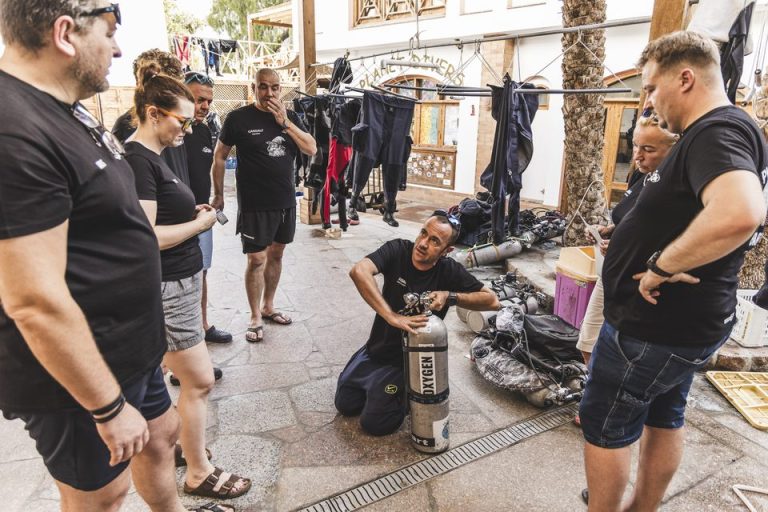
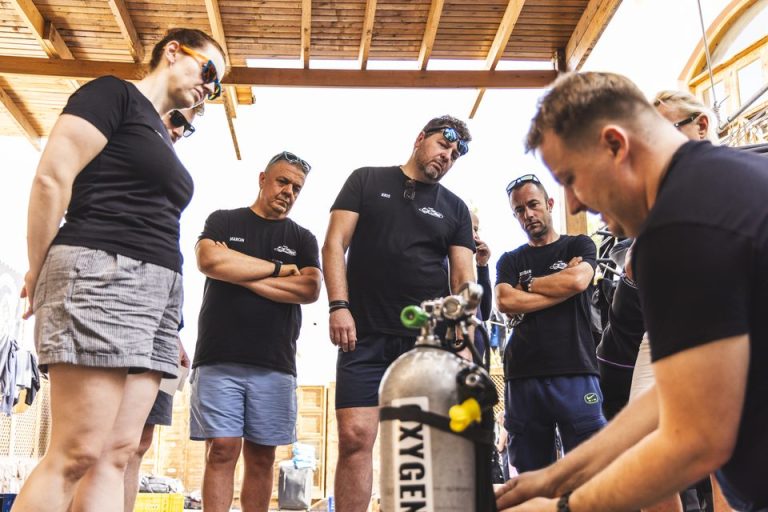
The course is entirely dry and includes no dives. We focus on two areas: understanding the hazards of working with oxygen under high pressure, and consistently applying the procedures that control those hazards. Participants learn to blend nitrox, learn the principles of preparing mixes that contain helium, and learn the requirements for the oxygen cleanliness of equipment and installations.
The pass criterion is measurable: the participant must prepare, on their own, mixes within one percent of the target composition, and then correctly analyse, mark and document them.
It is the only course in our technical range with a clearly professional character. A gas blender qualification is a real advantage when working in a dive centre, a base or a liveaboard, and when supporting technical expeditions. For a technical diver it also means independence from someone else’s filling schedule.

1-2 training days, which means about 8-10 hours of classes, depending on the scope of the exercises and the group’s experience.
5 theory sections and 3 practical sessions at the gas blending station.
None. The course is theory and practice only (a dry course).
A maximum of 4 people per instructor, so every participant can blend the required mixes on their own.
Air, oxygen, nitrox and mixes containing helium (trimix, heliox).
After completing the course you can:
- choose the blending method that suits the equipment you have, taking its limitations into account,
- calculate and blend a mix to within one percent of oxygen content,
- assess and prepare equipment for oxygen cleanliness,
- correctly analyse, mark and document a finished mix,
- recognise the hazards of working with oxygen and high-pressure gases and counter them.
- Age: 18 years old;
- Certification: PADI Enriched Air Diver or an equivalent certification from another organisation;
- Experience: no requirements for technical experience or number of dives;
- Health: good general health. The course includes no dives, so a medical clearance for diving is not required.
You do not need to be a technical diver to join the course. Knowing the realities of technical diving does help a lot in understanding why the accuracy of a mix and its marking matter so much to the person receiving the gas.
- a calculator or an app for calculating gas mixes,
- a notebook and writing materials for calculations and records,
- personal protective equipment: safety glasses and gloves,
- your own cylinders, optional, if you want to practise on your own equipment.
The blending station, equipment, analysers and gases are provided as part of the course.
Training fee
The price is set individually, depending on the scope of the exercises and the gases used.
Registration and certification fee
According to the current price list of the certifying organisation.
Training materials
The PADI Gas Blender manual, charged separately.
Additional costs
Gas consumption (mainly oxygen and helium), consumables and, where applicable, travel, accommodation and meals.
Theory
The theory part covers five sections and is the foundation for the practical exercises:
- the physical properties of oxygen, the combustion process and the hazards of high oxygen concentrations;
- oxygen cleanliness: requirements, material compatibility, lubricants and seals;
- air grades and the requirements for oxygen-compatible air;
- blending methods (partial pressure, continuous flow, membranes) with their advantages and drawbacks;
- nitrox and trimix calculations, done by hand and with software;
- the hazards of working with high-pressure gases and the rules for safe operation of the equipment;
- the blender’s responsibility: analysis, cylinder marking and process documentation.
Practice
Three practical sessions carried out under close instructor supervision, at a real blending station:
- oxygen cleaning of equipment, plus testing and assessing cleanliness;
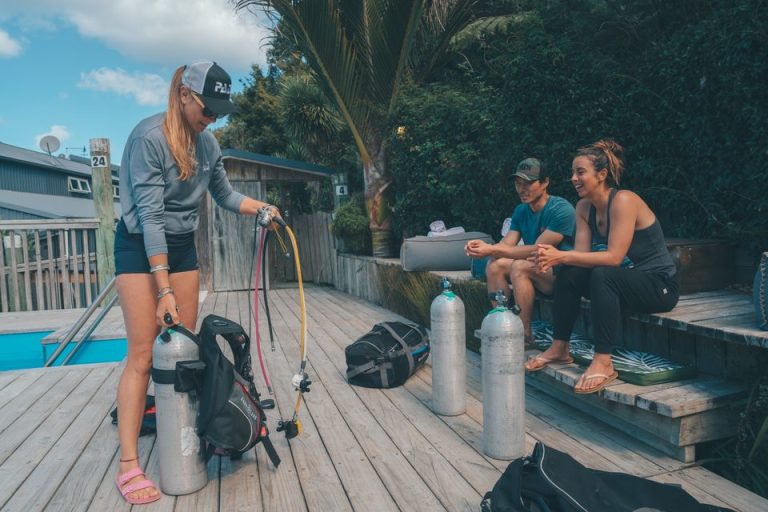
- preparing and operating the blending equipment, checking its technical condition;
- blending nitrox by the partial pressure method: calculating, mixing and verifying;
- preparing mixes that contain helium;
- analysing a finished mix, calibrating the analyser and interpreting the result;
- marking cylinders and keeping the blending records.
Certification requires you to blend the required number of mixes yourself, each within one percent of the target composition, and to show a responsible approach to working with gases.

FAQ
Further training
The natural next step after the Gas Blender course. The direction depends on whether you are developing as a diver or professionally:
- PADI Tec Basics and Tec 40, if you want to start using the mixes you prepare;
- PADI Tec 45, Tec 50 and the trimix path, for the full competence of a technical diver;
- PADI Divemaster, if you are aiming for professional work in a dive centre;
- PADI Tec Gas Blender Instructor, if you want to train other blenders.
For people planning a professional career in the industry, combining Divemaster and Gas Blender is one of the most practical sets of qualifications to start with.
Trips
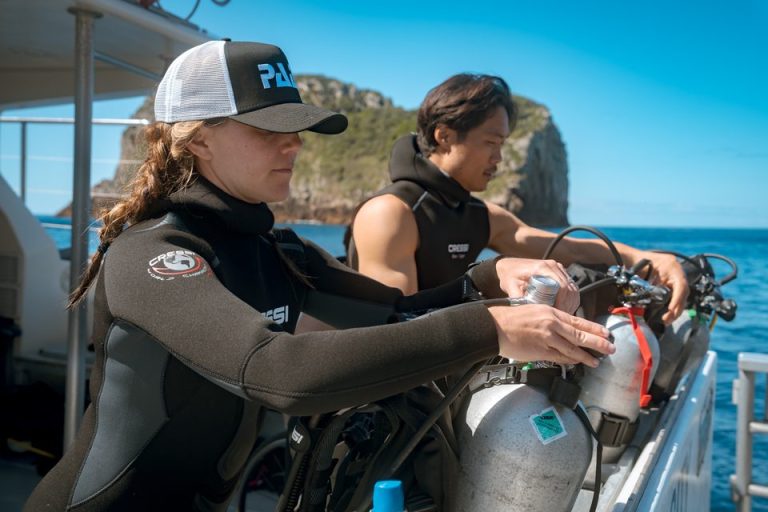
On technical trips, gas logistics is a separate job, and that is where a blender qualification really counts:
- taking part in technical trips as the team’s gas support;
- planning the gas supply before the trip: demand, availability of helium and oxygen, the filling schedule;
- handling mixes on site, in field conditions and with limited facilities;
- checking the analyses and cylinder markings of the whole team before every dive;
- practice with different types of equipment, because every base works a little differently.
Projects
Tasks where a blender qualification turns into a concrete role in the team:
- gas support for technical projects: preparing bottom and decompression mixes;
- surface support for expeditions and deep dives;
- keeping the project’s gas records and checking cylinder markings;
- practice at the blending station in a dive centre, under the eye of an experienced blender;
- taking part in research and conservation projects as technical support.
We match the role in the team to your qualifications and experience. Gas support for a project is a responsible task, and we bring you into it gradually.