


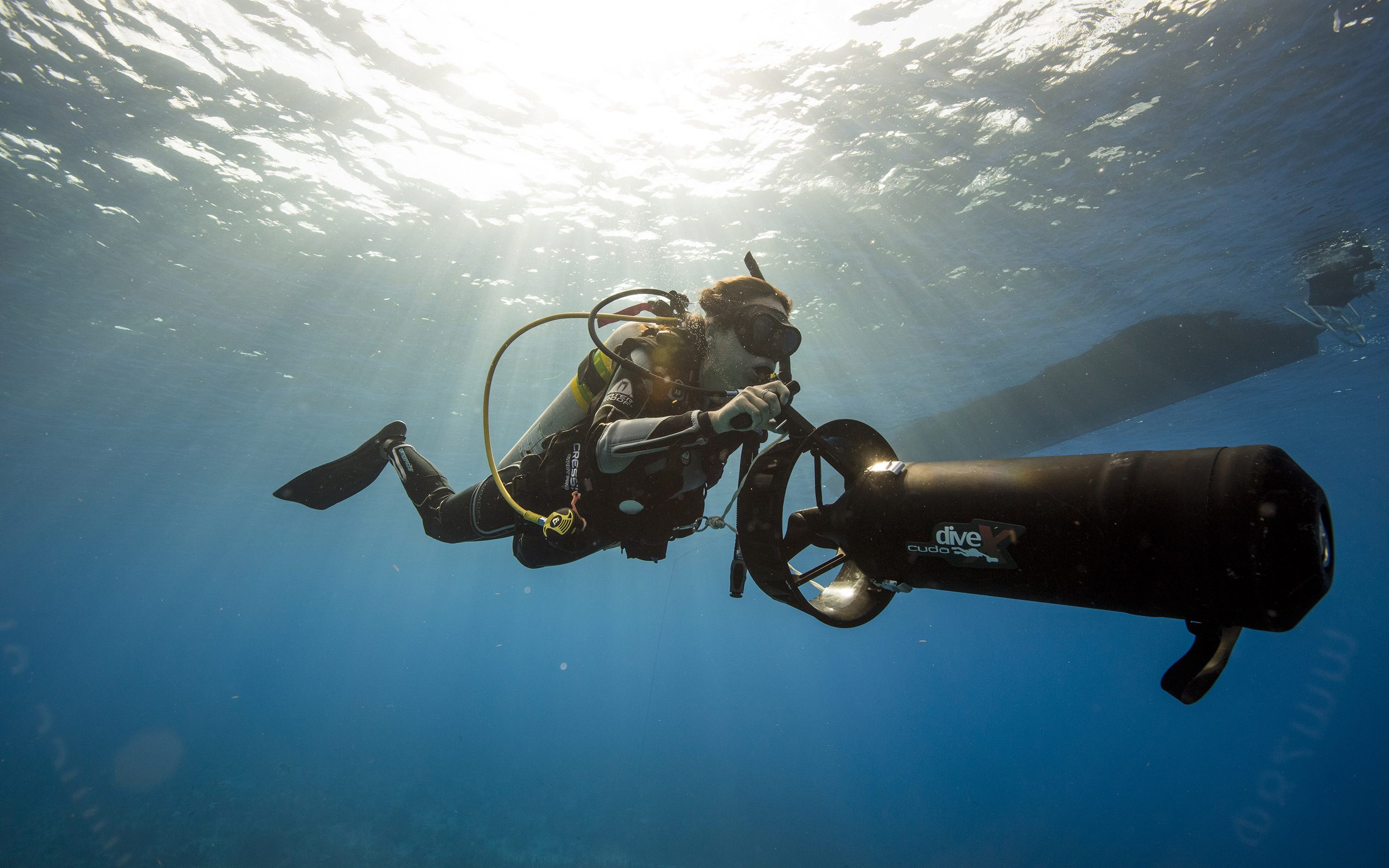
Further, longer, with less effort
PADI DPV Diver: underwater scooter diving

Course description
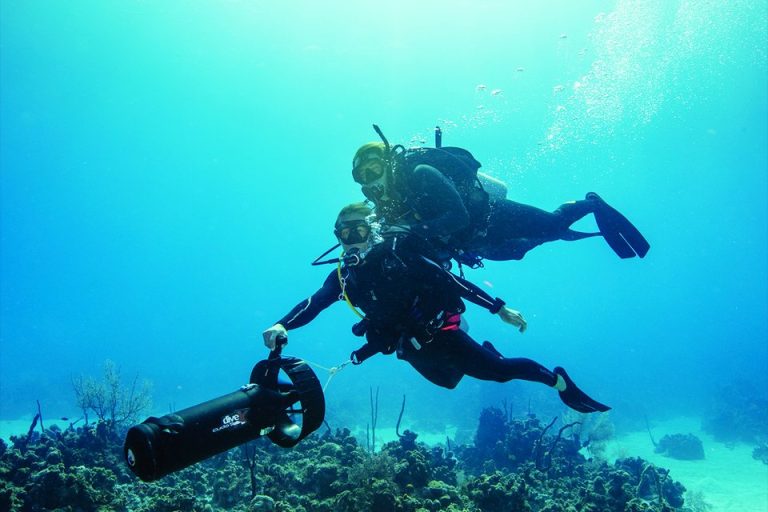
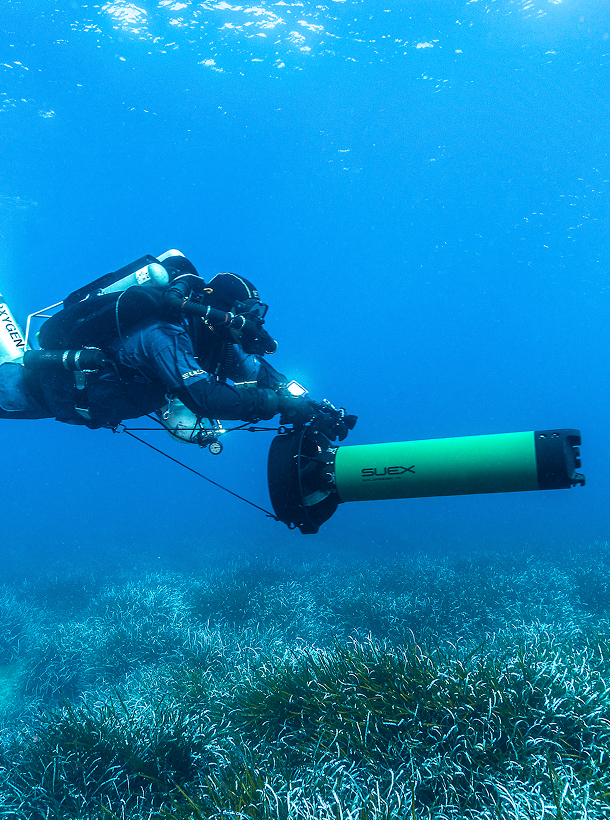
The PADI DPV Diver course teaches the safe and informed use of an underwater scooter, which lets you move underwater faster, further and more efficiently than on fins.
It is a specialty that combines practicality with pure fun. A scooter lets you see a larger area on a single dive, reduces physical effort and so lowers gas consumption. For many divers this is the biggest advantage: you can see more without getting more tired.
During the course you learn how to prepare the scooter, plan dives taking battery run time and gas reserve into account, manoeuvre, ride in tandem and respond to typical problems, including the most serious one, a jammed trigger and uncontrolled riding.
The course also builds environmental awareness. A scooter increases speed but does not change the rules: it demands good control of your position and your distance from the bottom. A diver on a scooter too close to a reef can do damage in a few seconds that they would not do in a whole dive on fins.

2 training days; total training time (theory, scooter preparation, dives) is about 12 hours.
2 training dives in open water.
The standard allows up to 8 students per instructor; we run the course in groups of up to 4.
Air or nitrox, according to the dive plan and the certifications you hold.
After completing the course you can:
- prepare the scooter for a dive and check its technical condition,
- enter and exit the water with the scooter and handle it on the surface,
- hold a stable course and control speed,
- perform manoeuvres: turning on the spot and banked turns,
- ride in tandem and stay in contact with your buddy,
- plan a dive taking gas, no-decompression time and battery run time into account,
- respond to a scooter failure and to a jammed trigger.
- Age: minimum 12 years;
- Certification: PADI Open Water Diver or Junior Open Water Diver, or an equivalent certification;
- Health: no contraindications to diving;
- Experience: good buoyancy control. It is not a formal requirement, but on a scooter trim errors are clearly more noticeable.
- a full set of diving gear suited to the conditions,
- an underwater scooter with the manufacturer’s accessories, your own or rented at the centre (extra charge),
- a dive computer,
- a signalling buoy with a reel,
- a compass,
- a slate or wetnotes for planning.
A streamlined, tidy configuration is key. Anything that dangles can get caught in the propeller or add drag, and at scooter speeds both effects are immediate.
Training fee
The price is set individually, depending on the location, logistics and the type of scooter used.
Registration and certification fee
Training materials and the certification fee, according to the current price list of the certifying organisation.
Additional costs
Scooter rental, breathing gases, dive logistics, travel, accommodation and meals.
Theory
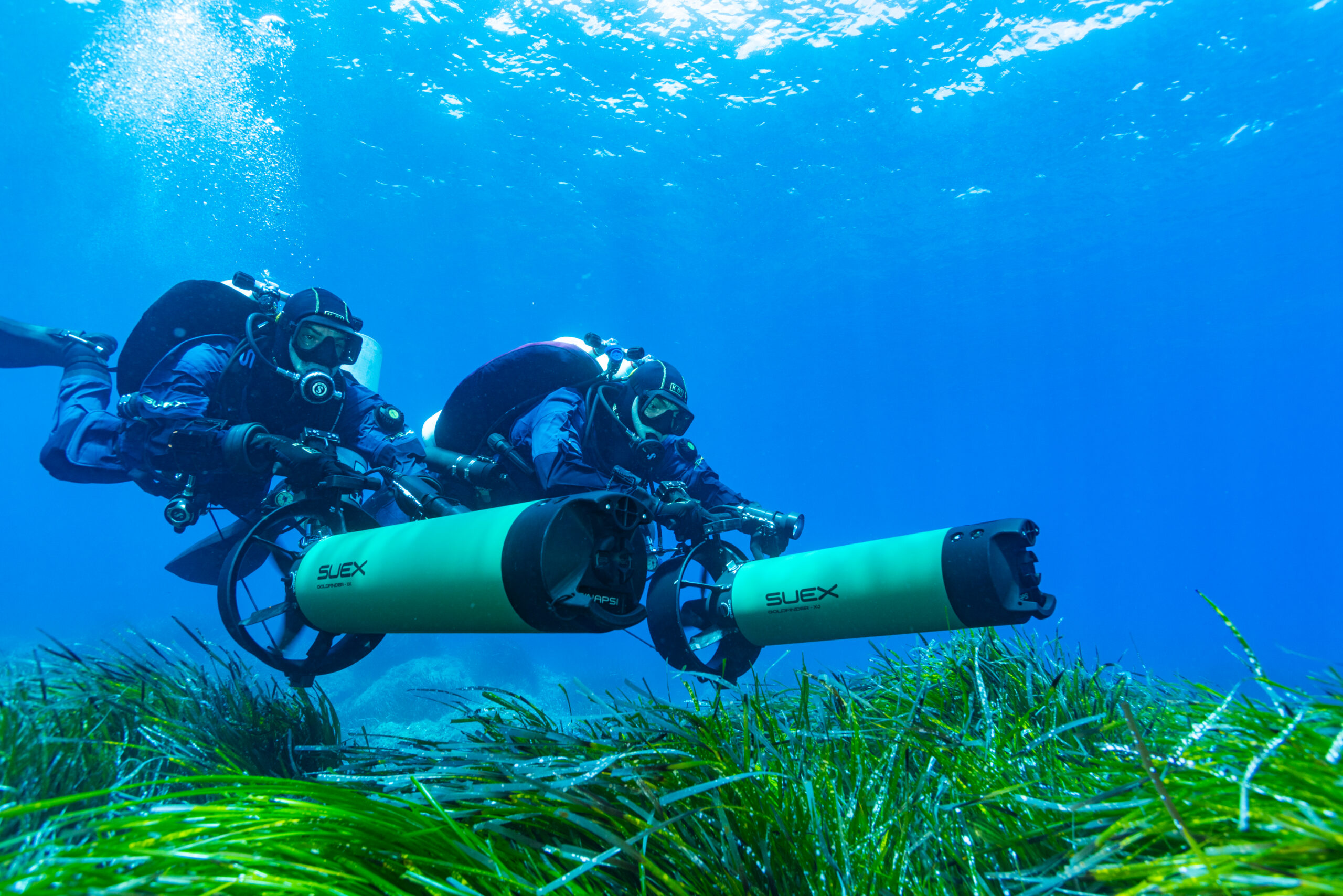
The theory part covers choosing, preparing and safely using a scooter:
- why a scooter is used and what real benefits it gives;
- types of scooters: compact, recreational and technical;
- DPV construction: trigger, propeller, handles, battery access, buoyancy characteristics;
- what to look for when choosing a scooter;
- battery types, their strengths and weaknesses, charging rules;
- scooter safety and transport, including air travel;
- planning a dive with three variables at once: gas, no-decompression time and battery.
Practice
Two training dives, each with a different goal:
First dive: handling basics
- preparing the scooter before entering the water,
- entering and exiting the water with the scooter and using it on the surface,
- controlled descent and ascent,
- holding a level, stable course and controlling speed,
- turning on the spot and banked turns,
- staying in contact with your buddy.
Second dive: a full planned dive
- planning the route yourself, taking battery and gas into account,
- tandem riding over a longer distance,
- navigation and keeping your orientation at higher speed,
- the procedure for a scooter failure: returning under your own power,
- dealing with a jammed trigger.
The most important planning rule: you must be able to cover the distance you travel on the scooter on your way back on fins. A battery failure is not a theoretical scenario.
FAQ
The next step on your path
Directions in which the scooter becomes part of a bigger whole:
- PADI Wreck Diver: a scooter greatly extends how much of a large wreck you can explore;
- deep diving and nitrox specialties: longer bottom time spent on the route;
- buoyancy improvement: with a scooter, position control matters even more;
- the technical path, where the DPV is a standard exploration tool.
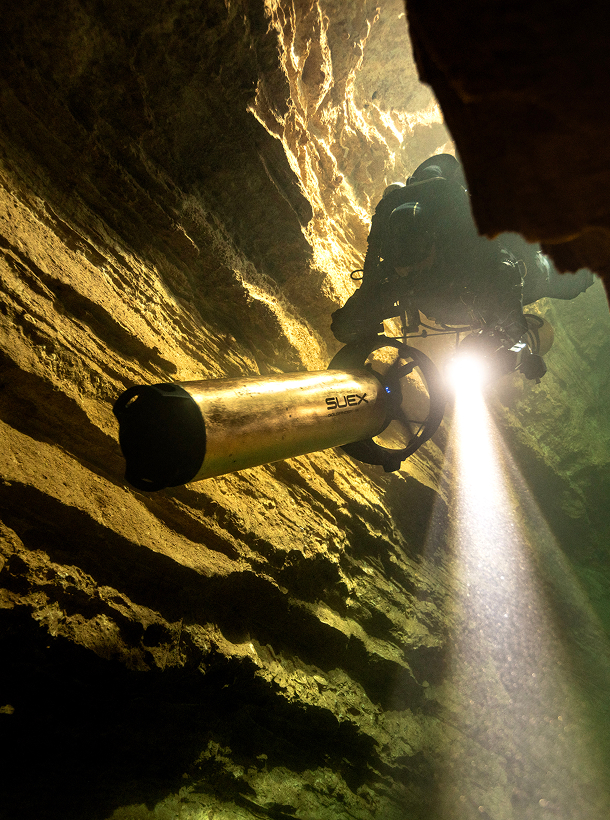
In technical and cave diving, a scooter stops being a convenience and becomes part of the safety plan. A skill gained recreationally pays off later.
Trips
On trips, the scooter shows its full potential:
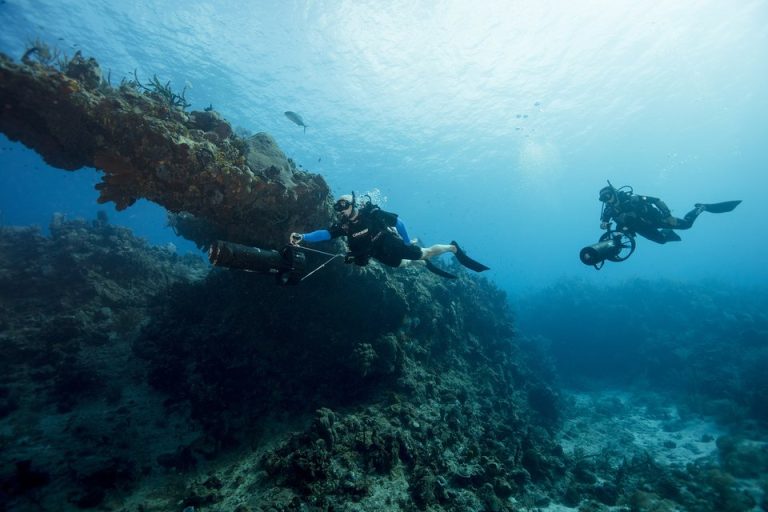
- exploring extensive reefs and walls out of reach on fins;
- dives on large wrecks, where just getting there would take half the time;
- exploration trips with an emphasis on range;
- photography dives with the option of changing location quickly;
- checking local DPV rules before you travel.
On trips abroad, check the rules for transporting lithium batteries in advance, as they can be a real limitation. We keep the trip calendar separately.