


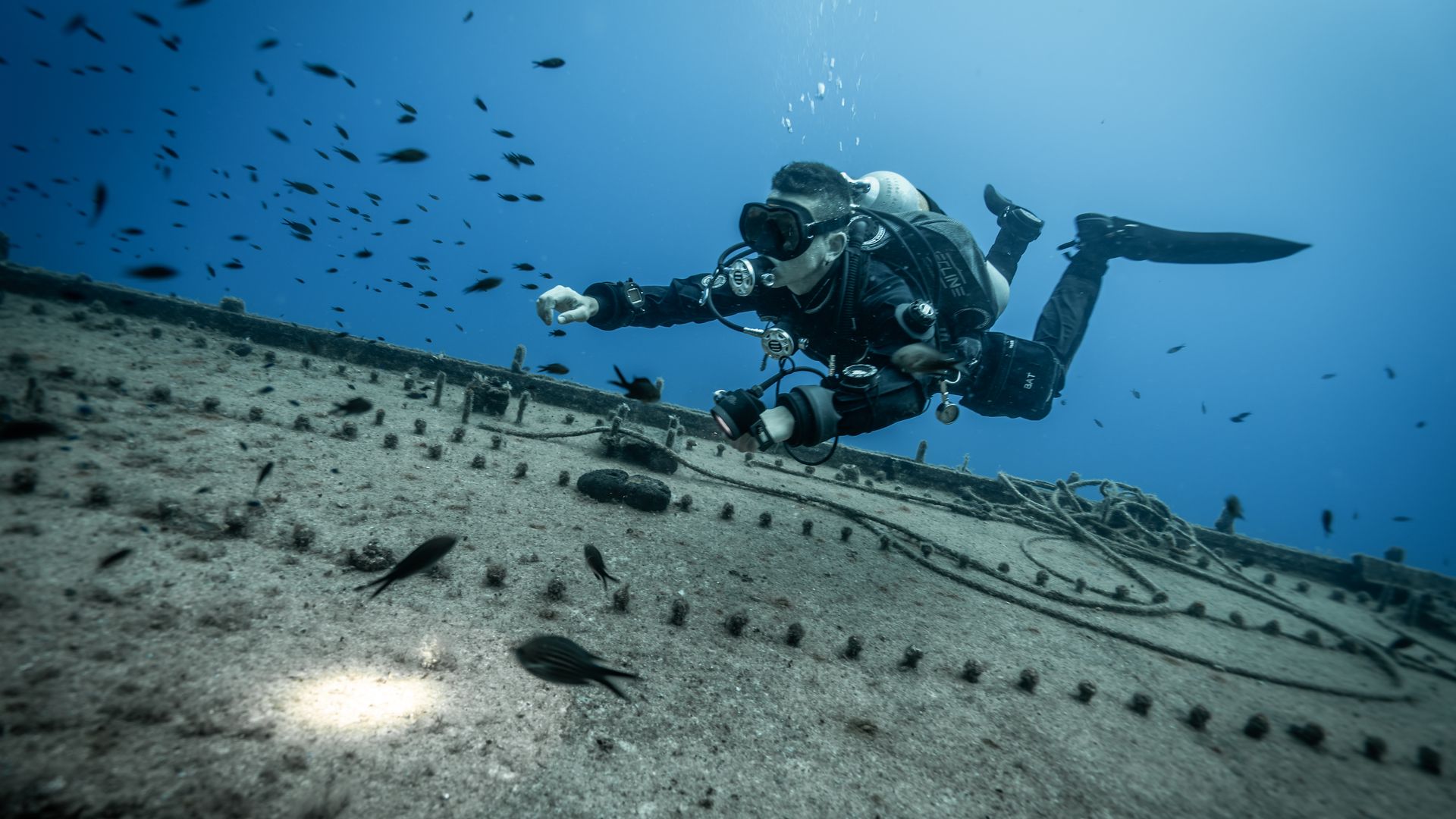
Buoyancy, trim and teamwork in one course. For divers who want to dive cleaner and with more confidence.
GUE Basic Fundamentals
Course description
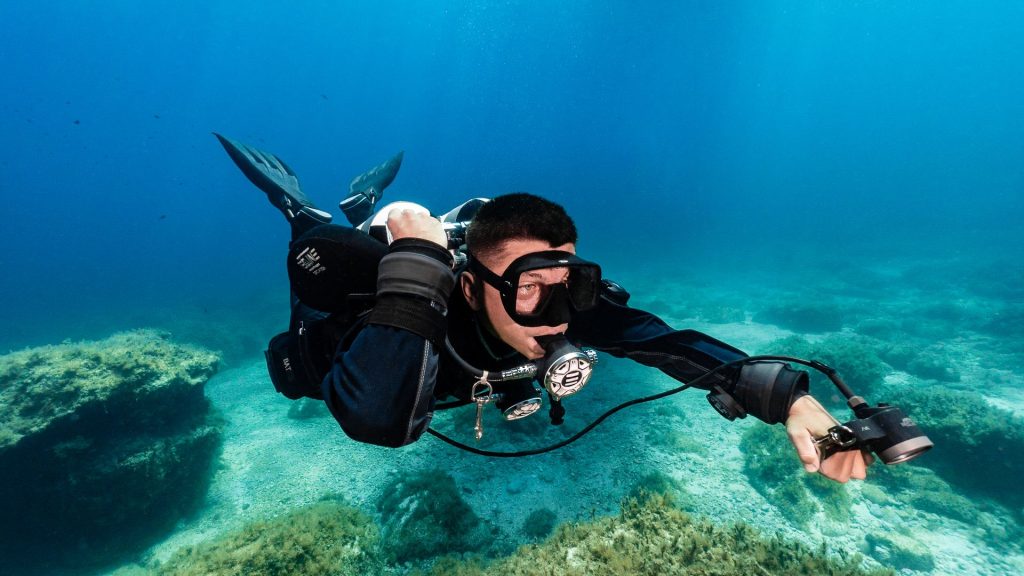
GUE Basic Fundamentals is a diving technique course in the GUE system. We work on buoyancy, trim, propulsion techniques, equipment configuration and teamwork. We repeat every exercise until it comes out calm and the same every time, and the instructor explains why a given solution works and how to carry it out.
The course is for divers at the start of their journey who want to build good habits from the beginning, and for divers with hundreds of dives who want to check their technique and get rid of old mistakes. It also suits anyone who plans to dive with a twinset, a drysuit or further GUE courses.
We practise ascents according to GUE rules for no decompression dives: you calculate a stop at half of the average depth of the dive, ascend to it at 9 m per minute, then slow down to 3 m per minute, and when conditions allow, you make the last stop at 3 m and finish with a slow ascent. When you plan a dive, you reserve gas for your buddy’s emergency. This reserve (minimum gas) is the amount of gas that two people need to ascend from the bottom at 3 m per minute. We calculate it with the CAT formula: the consumption of two divers, average depth and time.
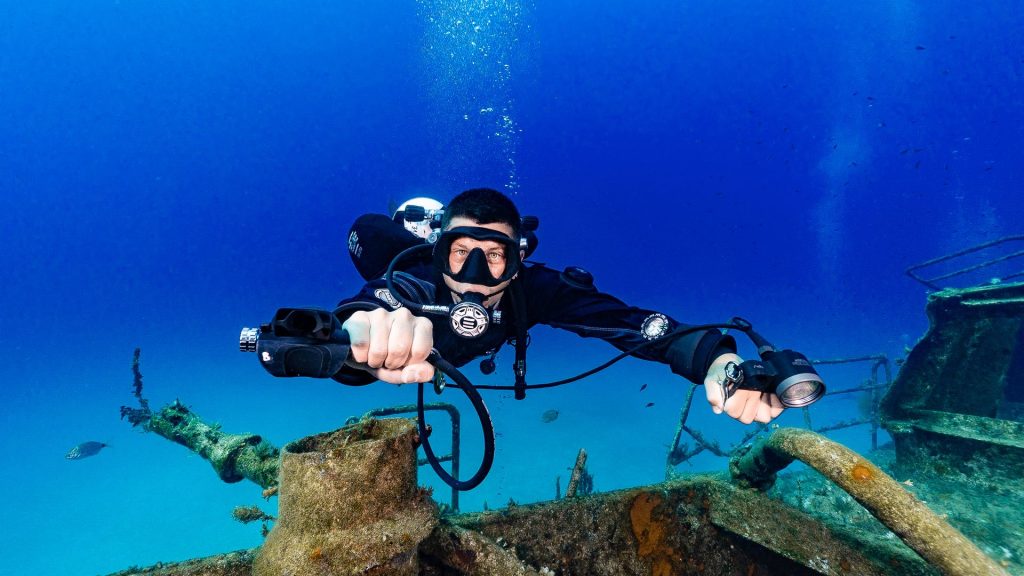
At least 3 days of classes on site, plus online theory before the course.
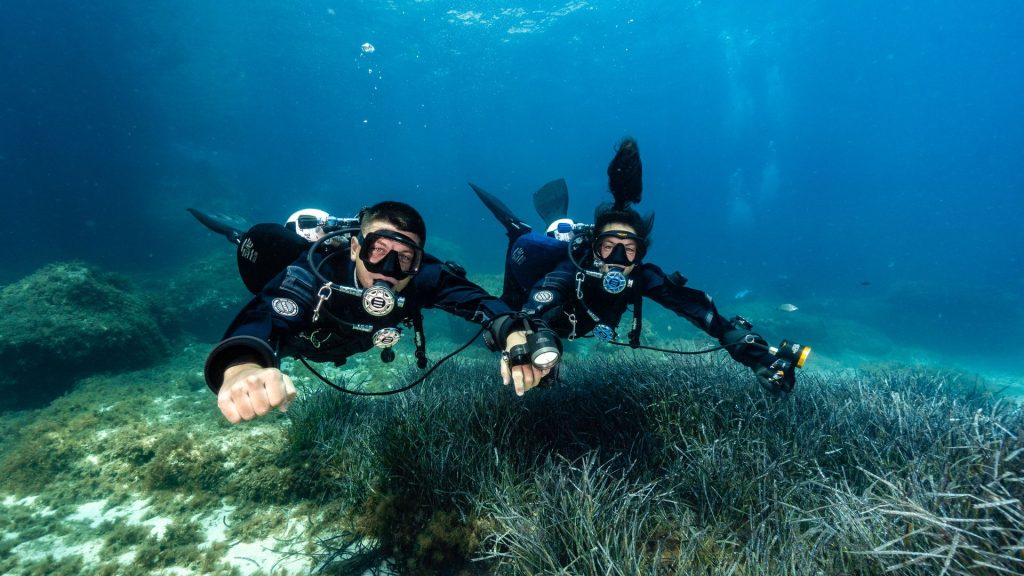
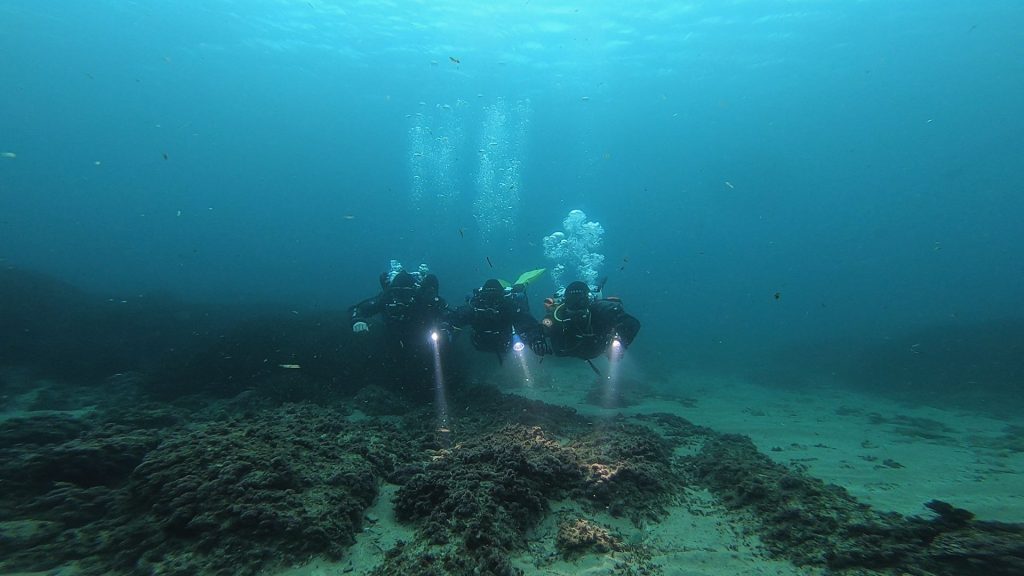
The course consists of theory, exercises on land and at the surface, and dives. In the water the instructor assesses your skills as you go, analyses mistakes and shows you what to improve. With three students per instructor, there is time for it.
At least 6 training dives, to a depth of 18 m.
A maximum of 3 students per instructor during the in water sessions.
A single cylinder or a twinset, depending on the student’s experience and the training conditions.
Nitrox. The type of gas for each dive depends on the programme and conditions.
We run the course according to GUE standards and procedures, with an emphasis on repeatable skills and teamwork.
The course does not qualify you for technical diving. After you pass, you receive the GUE Basic Fundamentals certificate, which opens the way to further GUE training, including technical courses. Whether you can move on to further courses, and any shortened path, depends on current GUE standards and the prerequisites of the given course.
- age: at least 16; minors need consent from a parent or legal guardian,
- certificate: an autonomous diver qualification issued by a recognised training organisation,
- health: meeting the GUE health requirements,
- twinset: at least 15 dives outside training in a GUE doubles configuration, or the GUE Doubles Primer certificate,
- drysuit: at least 15 dives outside training in a drysuit, or the GUE Drysuit Primer certificate.
- A single cylinder or a twin cylinder set.
- Backplate, harness and wing.
- Regulators and a pressure gauge.
- Mask and fins.
- Dive computer and compass.
- An exposure suit suited to the water temperature.
- Other configuration elements required by GUE standards.
Before you buy anything, agree the configuration with your instructor.
Training fee
The price is set individually.
Registration and certification fee
According to the current GUE price list.
Additional costs
Breathing gases, equipment rental (if needed), dive logistics, travel and accommodation. We will tell you what the fee covers before you sign up.
Theory
You start learning before the course. After registration you get access to the GUE Mastery Learning platform, where you go through the material at your own pace. The scope:
- GUE philosophy and training standards,
- buoyancy, trim, balance and propulsion techniques,
- equipment configuration and optimisation,
- situational awareness and teamwork,
- dive planning and gas management,
- properties of breathing gases, nitrox analysis and the rules for using it,
- basics of decompression theory and Minimum Deco procedures,
- recognising hazards, preventing accidents and responding to failures.
Practice
- You prepare and check your equipment before a dive, configure it to GUE standards, and analyse and label your gases.
- You practise a stable position in the water, controlled depth changes, and limiting movement and contact with the bottom.
- You learn the frog kick and flutter kick with modifications, the back kick, turning on the spot with the helicopter turn, and moving without stirring up silt.
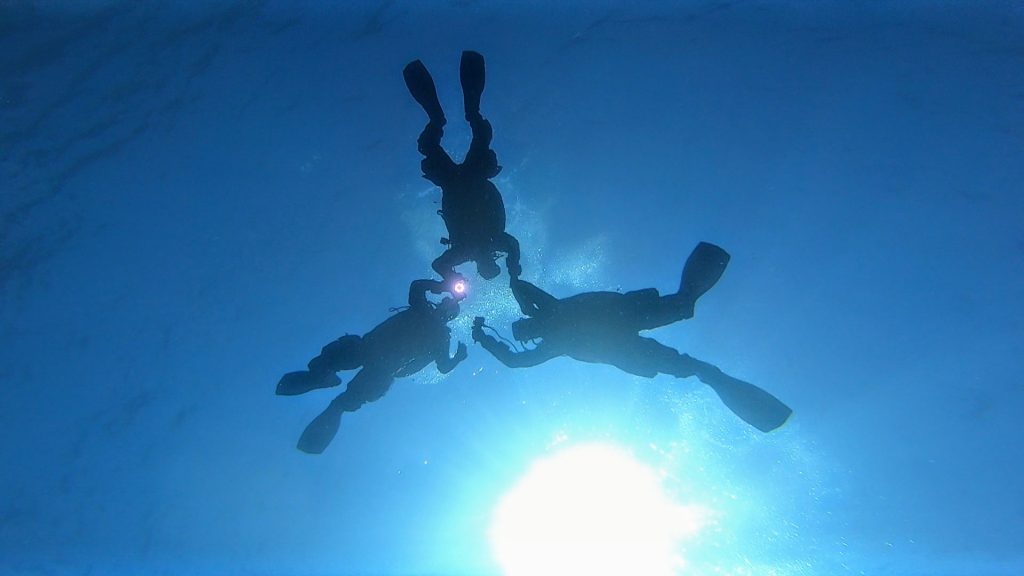
- With your team you go through underwater communication, dive preparation, Basic 5, gas sharing in an emergency, the Valve Drill, deploying a surface marker and an ascent according to Minimum Deco rules.
- You plan and carry out a dive, monitor your gas reserve and use nitrox in practice.
FAQ
Projects
The skills from this course are useful wherever precision and teamwork matter:
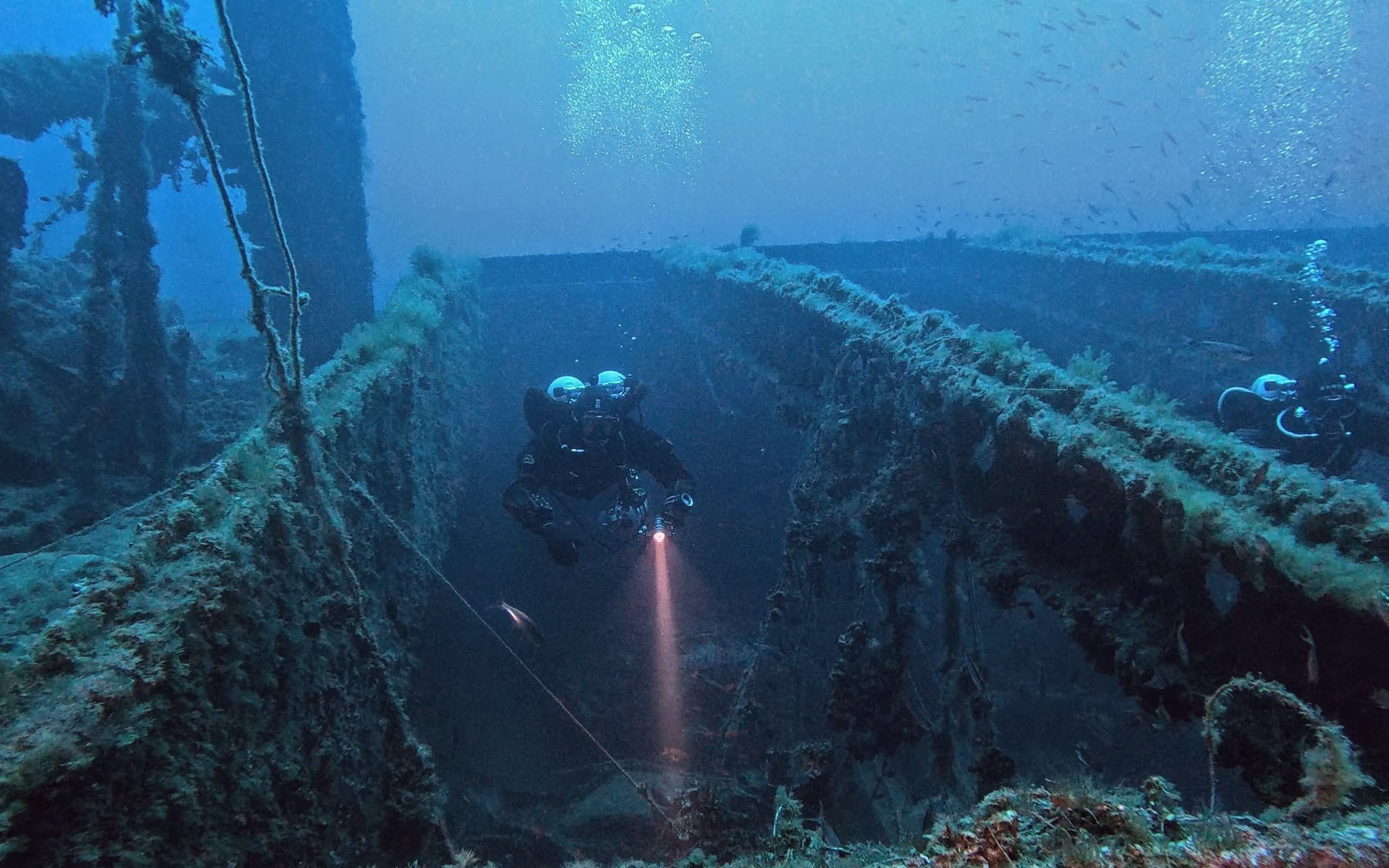
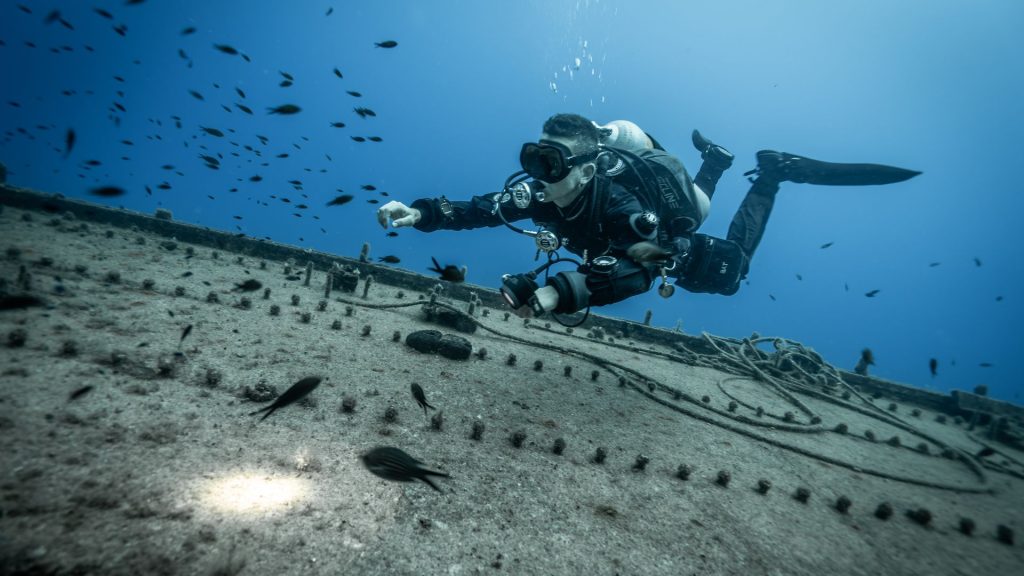
- wreck dives,
- underwater documentation,
- environmental protection projects.
In such projects what you practise on the course helps: precise manoeuvring, buoyancy control and smooth cooperation with your buddy.
Further training
After Basic Fundamentals you can develop in several directions, and the natural next step is GUE Technical Fundamentals:
- GUE Technical Fundamentals: a course that links recreational and technical diving. You need a qualification to dive to 30 m, at least 75 logged dives (including at least 25 to a depth of 21 m or more, at least 25 in a twinset and 15 in a drysuit) and a minimum age of 16,
- further GUE recreational courses: navigation, rescue and deeper diving.
Every course has its own prerequisites, so check them with your instructor before you sign up. Any shortened path depends on current GUE standards and the requirements of the given course.
Trips
We organise training and project trips at Long Deco so that the technique from the course becomes a habit:
- training trips, where you repeat your skills in new conditions,
- project trips, where you dive with a specific task.
We announce current dates and places separately.