


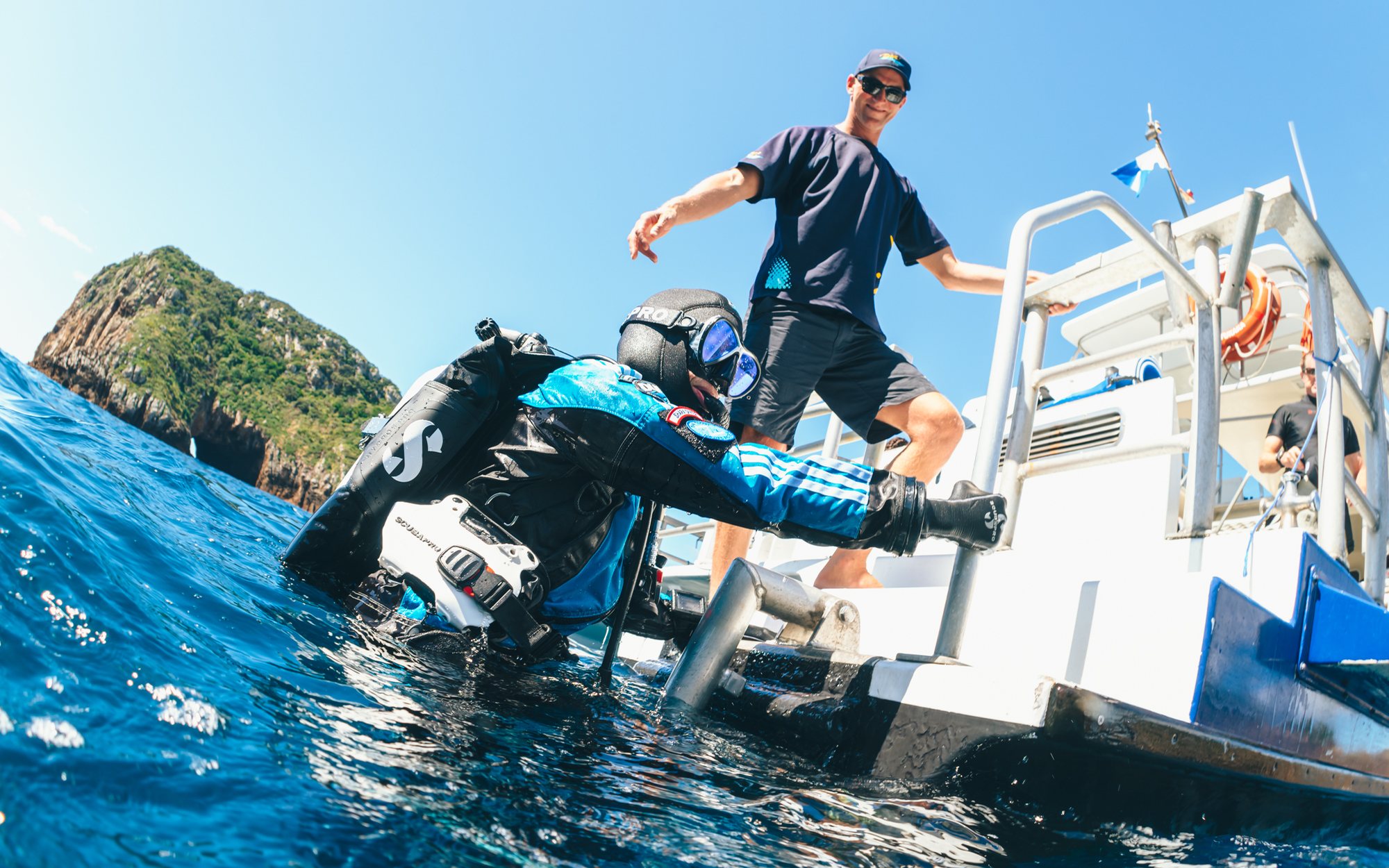
Oxygen on the shore before help arrives.
PADI Emergency Oxygen Provider: oxygen in diving first aid

Course description
PADI Emergency Oxygen Provider, called PADI Oxygen Provider for short, is a short course without dives that teaches you to recognise situations that need oxygen, and to prepare and use an oxygen kit. Oxygen in diving first aid, given as early as possible, is a basic part of managing decompression sickness, gas embolism and near-drowning, and it often decides how the further treatment goes.
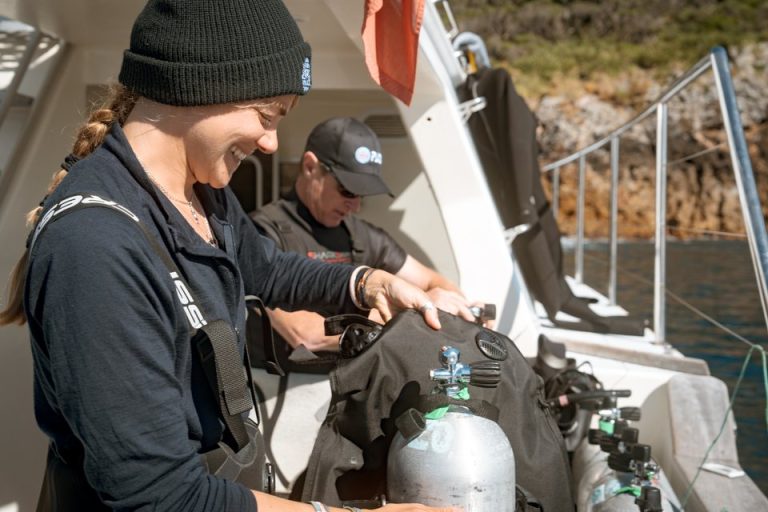
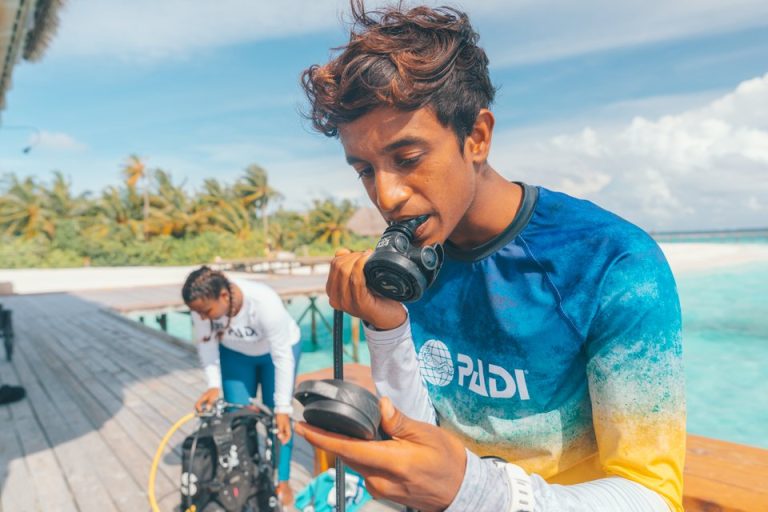
The course is mostly practical. You assemble an oxygen kit, check the pressure and leaks, choose the flow rate and practise giving oxygen through a mask with a reservoir bag, a demand valve and a rescue breathing mask with an oxygen inlet. We also practise what you cannot see in a textbook: handling oxygen safely, storing cylinders and organising help on the shore.
At Long Deco the course completes the first aid path. Emergency First Response teaches resuscitation and care of a casualty, Rescue Diver teaches rescuing a diver in the water, and Emergency Oxygen Provider adds what happens after the casualty is pulled onto the shore. For people who want to go further, the next steps are the DAN Diving First Responder and Diver Medic Technician (DMT) courses.
In Polish conditions the decompression chamber is often far away, and we often dive in places the ambulance takes a long time to reach: in quarries, on lakes and in the Baltic. An oxygen kit in the car and a person who can use it without hesitation are among the most sensible safeguards of any diving trip.

A few hours, usually one afternoon or half a training day. The course combines well in one day with Emergency First Response or with the theory part of Rescue Diver.
The course does not include dives. Everything takes place on land: theory, an equipment workshop and scenarios with a simulated casualty.
We work in groups of up to 4 people per instructor. Each participant assembles the kit and gives oxygen on their own several times, instead of only watching someone else do it.
On the course we work with medical oxygen in rescue kits. We also cover the rules for handling oxygen safely: lubricants, seals, opening the valve and storing cylinders.
Skills after the course:
- recognising the symptoms of decompression sickness and gas embolism,
- judging when to give oxygen and by which method,
- assembling and checking the oxygen kit,
- giving oxygen through a mask with a reservoir bag,
- giving oxygen through a demand valve,
- assisting breathing with a pocket mask with an oxygen inlet,
- storing and transporting an oxygen cylinder safely.
- no formal minimum age in the standard; younger people are accepted after a conversation with their parents,
- no diving certificate required, the course is open also to people who do not dive,
- enough fitness to exercise kneeling beside a casualty,
- earlier or parallel resuscitation training is recommended, e.g. Emergency First Response.
- oxygen kits with a cylinder, regulator and flowmeter are provided by Long Deco,
- masks with reservoir bags, demand valves and rescue breathing masks are provided by Long Deco,
- PADI training materials,
- comfortable clothes for exercises on the floor.
If you have your own oxygen kit, bring it to the course. We will check its condition and contents, and you will practise on the equipment that will later lie in your car.
Training fee
Price set individually.
Registration and certification fee
According to the current PADI price list.
Additional costs
Training materials and possible travel; when the course is taken in a package with EFR or Rescue, the organisational costs are shared between both courses.
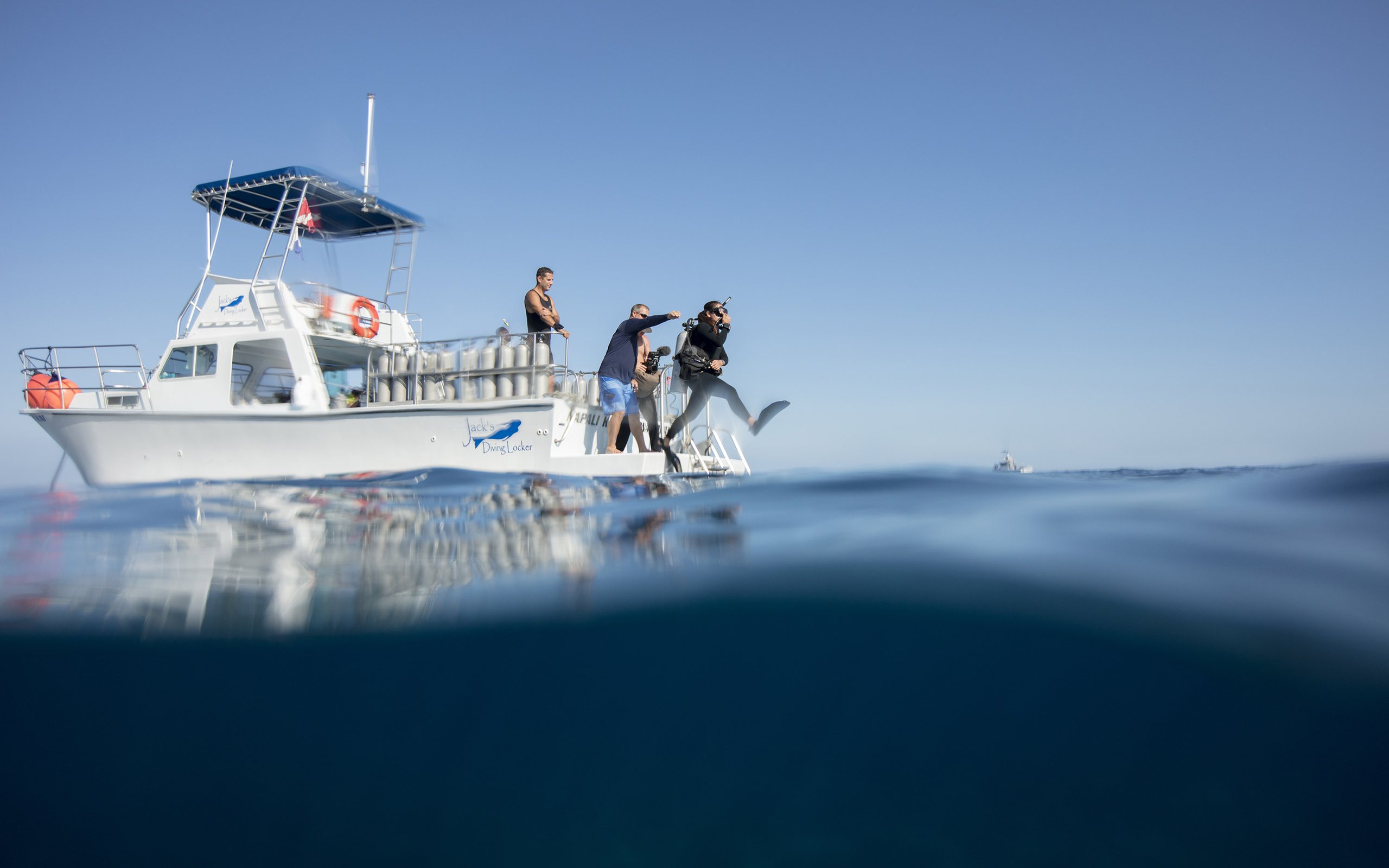
Theory
We keep the theory close to practice: every topic ends with an exercise on the equipment.
- breathing physiology and why oxygen helps with diving injuries,
- decompression sickness, gas embolism and near-drowning: symptoms and first steps,
- the oxygen kit: cylinder, valve, regulator, flowmeter,
- oxygen delivery methods and choosing the flow rate,
- fire hazards and the rules for handling oxygen safely,
- storing, filling and transporting oxygen cylinders,
- organising help, calling the emergency services and handing over the casualty.
Practice
The practice covers an equipment workshop and scenarios in which you act as you would at a real accident on the shore.
- assembling the oxygen kit, opening the valve and checking for leaks,
- giving oxygen to a conscious casualty through a mask with a reservoir bag,
- giving oxygen through a demand valve,
- assisting the breathing of a non-breathing casualty with a pocket mask with an oxygen inlet,
- a diving accident scenario, from pulling the casualty out of the water to handing over to the emergency services,
- dismantling the kit, checking the oxygen supply and preparing for the next use.
The oxygen kit should stand where divers leave the water, not in a closed boot. Every minute counts, from surfacing to the first breath of oxygen.

FAQ

The next step on your path
- Emergency First Response: resuscitation and care of a casualty, if you do not have it yet,
- PADI Rescue Diver: rescuing a diver in the water and managing an accident,
- DAN Diving First Responder and Diver Medic Technician (DMT): extended diving first aid,
- PADI Master Scuba Diver or PADI Divemaster: oxygen as a permanent part of responsibility for others.
First aid skills fade faster than diving skills. It is worth refreshing the course every two years and checking the oxygen kit before every trip.
Trips
- trips to Polish quarries and lakes, where the chamber is far away,
- the Baltic and boat dives, where help from land arrives with a delay,
- technical trips with decompression dives,
- expeditions to remote places, where the nearest chamber is in another country,
- club trips, where one person is responsible for the rescue kit.
Before a trip, check how much oxygen you have in the cylinder and for how many minutes it lasts at full flow. The supply should be enough to reach a place where you can refill it.