


Lore lore lore lore
DAN Medical Technician
Course description
The DAN Medical Technician course expands on the competencies acquired at the First Responder level and focuses on in-depth assessment of the injured party, interpretation of symptoms, and supporting medical decision-making in diving incidents.
The program prepares participants for operating in environments where the time to professional medical assistance can be prolonged, and proper assessment of the diver’s condition is crucial for further management. Particular emphasis is placed on neurological assessment, analysis of DCI symptoms, and the organization of medical transport and communication.
DAN Medical Technician:
- develops competencies in extended medical assessment of divers,
- teaches how to interpret symptoms and differentiate diving injuries,
- prepares to support decision-making in diving incidents,
- increases team autonomy during technical and expedition dives.
This course is for divers who want to progress from first responders to informed medical support and incident management.
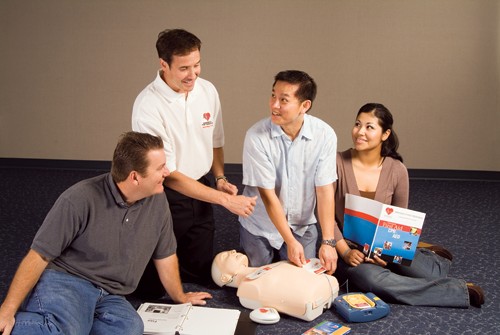
The course focuses on event analysis, symptom interpretation, and building decision-making skills under uncertainty. The program utilizes realistic scenarios that require the integration of medical knowledge, communication, and teamwork.
The training includes:
- Diving accident simulations with increased complexity,
- Case analysis and case studies,
- Teamwork and debriefing,
- Development of communication and organizational skills,
- Event management in an environment with limited medical support.
The program leads to increased clinical awareness and decision-making skills in ambiguous situations.
1 training day or hybrid model (eLearning + practical workshops).
1 training day or hybrid model (eLearning + practical workshops).
1 training day or hybrid model (eLearning + practical workshops).
1 training day or hybrid model (eLearning + practical workshops).
1 training day or hybrid model (eLearning + practical workshops).
1 training day or hybrid model (eLearning + practical workshops).
1 training day or hybrid model (eLearning + practical workshops).
Scope of competences after the course
After completing the DAN Medical Technician course, participants gain competencies that allow for in-depth analysis of a casualty’s condition and informed support for medical decision-making in diving incidents.
After the course, you will be able to:
- conduct an extensive neurological assessment of a diver,
- analyze symptoms and differentiate potential diving injuries,
- interpret changes in a casualty’s condition over time,
- support planning for further medical treatment,
- coordinate communication with the medical system and DAN,
- participate in incident management in technical diving,
- support the process of transport and preparation for hyperbaric therapy.
These competencies increase the autonomy of the diving team and the quality of decision-making in crisis situations.
Theory
The theoretical section encompasses in-depth knowledge of diving medicine and physiology, providing a foundation for interpreting symptoms and assessing the condition of the injured person.
The program includes:
- Diving physiology and mechanisms of decompression injuries,
- Differentiating DCI, AGE, and other diving injuries,
- Principles of neurological assessment,
- Symptom interpretation and monitoring of changes in condition,
- Organization of medical communication and transport,
- Psychological aspects of incident management.
Theory is presented in an interactive and analytical format, with an emphasis on understanding processes and their practical application.
Practice
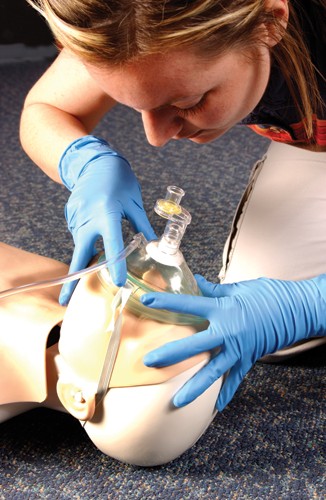
The practical portion develops the ability to apply knowledge in realistic scenarios and focuses on integrating assessment, communication, and incident management skills.
Exercises include:
- Extended neurological assessment,
- Monitoring patient parameters,
- Analysis of symptoms and differentiation of injuries,
- Diving incident scenarios requiring medical interpretation,
- Communication with the team and medical services,
- Organizing transport and preparing for further treatment.
Practice develops analytical skills and decision-making in dynamic situations.
Responsibility and role of the instructor
The DAN Medical Technician supports the medical assessment and incident management process. They do not replace the medical system, but rather serve as a vital link through thorough assessment, condition monitoring, and proper communication of medical information.
The role includes:
- Conducting extended medical assessments,
- Supporting decisions regarding further action,
- Coordinating medical communications,
- Monitoring changes in the casualty’s condition,
- Supporting the team in organizing operations,
- Preparing for transport and further treatment.
Awareness of this role leads to increased team autonomy and improved response quality in situations requiring advanced assessment.

FAQ
The next stage of the development path
The DAN Medical Technician program represents a transition from first responder to informed support for the medical assessment process in diving. The next natural step is to further develop safety and risk management competencies through participation in specialized training, technical projects, and team skills development programs.
A natural progression could include the Qualified First Aid (QF) course, and in the longer term, even pursuing education as a Paramedic, which allows for deeper clinical knowledge and understanding of medical processes.
Work and practice
After completing the course, participants can apply their acquired skills in a variety of diving environments, from recreational diving to technical and expedition projects.
Regular practice reinforces analytical skills and increases confidence in situations requiring symptom interpretation and decision-making
Further training on the professional path
As part of the Long Deco pathway, the DAN Medical Technician course represents the highest level of medical competency for divers in the DAN system. It completes a training progression that leads from basic rescue response to informed support for the medical assessment process in diving incidents.