


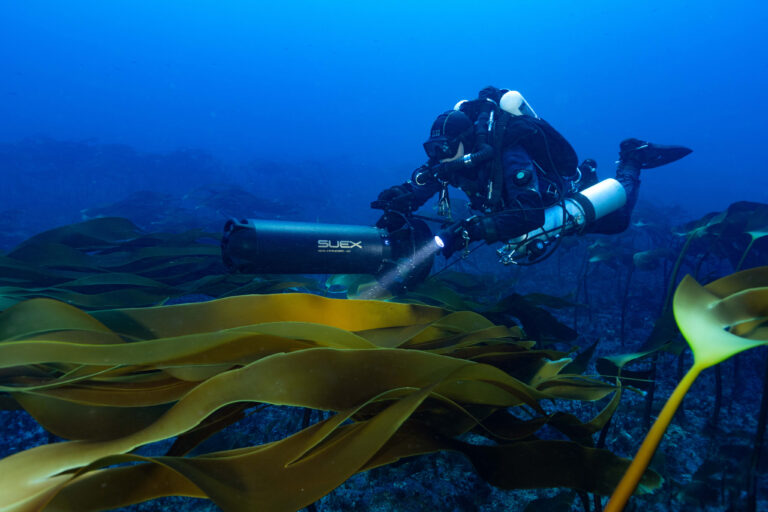
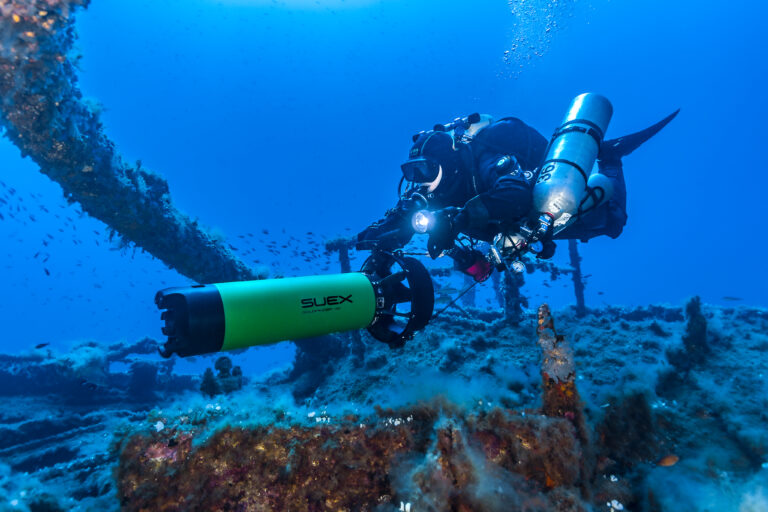
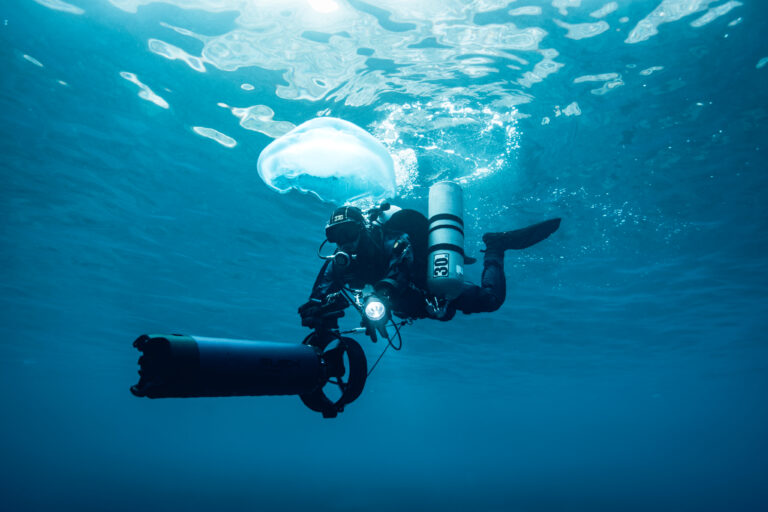
Underwater scooter: go further, stay longer, see more – with less effort underwater.
Diver Propulsion Vehicle Diver - diving with an underwater scooter

Course description
The Open Water Scuba Instructor (OWSI) course is the second stage of the Instructor Development Course (IDC) and provides direct preparation for the Instructor Examination (IE).
OWSI develops and validates teaching competencies acquired at the Assistant Instructor level. Participants learn to independently plan, conduct, and evaluate complete diving courses in accordance with PADI standards. After completing the OWSI and passing the IE exam, the candidate earns PADI Open Water Scuba Instructor status, which grants them full certification to teach recreational PADI courses.
After completing the OWSI and passing the IE, the participant is certified to teach courses for the following levels:
· Open Water Diver (OWD),
· Advanced Open Water Diver (AOWD),
· Rescue Diver (RD),
· Divemaster (DM),
· certifying students within PADI recreational specialty programs (after passing additional exams for MSDT specialty programs).
The instructor operates independently or within a dive center and assumes full civil and educational responsibility. The OWSI is the point at which the candidate transitions from partial responsibility to a full instructor role. The course teaches not only how to properly transfer knowledge but also how to manage the entire training process – from lesson planning to assessment and certification.

The course can be completed in just one day, although the recommended total training time is approximately 12 hours.
The course can be completed in just one day, although the recommended total training time is approximately 12 hours.
The course can be completed in just one day, although the recommended total training time is approximately 12 hours.
The course can be completed in just one day, although the recommended total training time is approximately 12 hours.
The course can be completed in just one day, although the recommended total training time is approximately 12 hours.
The course can be completed in just one day, although the recommended total training time is approximately 12 hours.
The course can be completed in just one day, although the recommended total training time is approximately 12 hours.
The course can be completed in just one day, although the recommended total training time is approximately 12 hours.

Theory
The theoretical part of the course covers the most important topics related to selecting, preparing, and safely using a water scooter.
The following are discussed:
- Why DPVs are used and what real benefits they offer?
- Basic types of water scooters: compact, recreational, and technical.
- The most important DPV elements, such as the trigger, propeller, handles, battery access, and buoyancy characteristics.
- Features to consider when choosing a water scooter.
- Battery types, their strengths and weaknesses.
- DPV charging, safety, and transportation principles.
Practice
The practical portion includes two open water training dives, during which students learn to use the DPV step by step.
During the first dive, the student will become familiar with the basics:
- preparing the DPV before entering the water,
- entering and exiting the scooter,
- using the DPV on the surface,
- correct descent and ascent,
- maintaining a steady, stable trajectory,
- performing pivot turns and banking turns,
- maintaining contact with a buddy.
Required equipment
Standard diving equipment and access to a DPV and its accessories are required for the course.
Typical equipment includes:
- full diving kit appropriate for the conditions,
- DPV,
- manufacturer’s accessories, e.g., straps, mounts, charger,
- dive computer,
- signal buoy,
- compass,
- slate or wetnotes, if needed for planning.
Proper setup and streamlining of the equipment are also important, as loose parts can get caught in the propeller or increase drag during the dive.

FAQ

The next stage of the development path
After completing the DPV Diver course, completely new possibilities for underwater exploration open up.
DPVs allow you to dive further, faster, and more effectively, making them a natural part of more advanced dives—both recreational and exploratory.
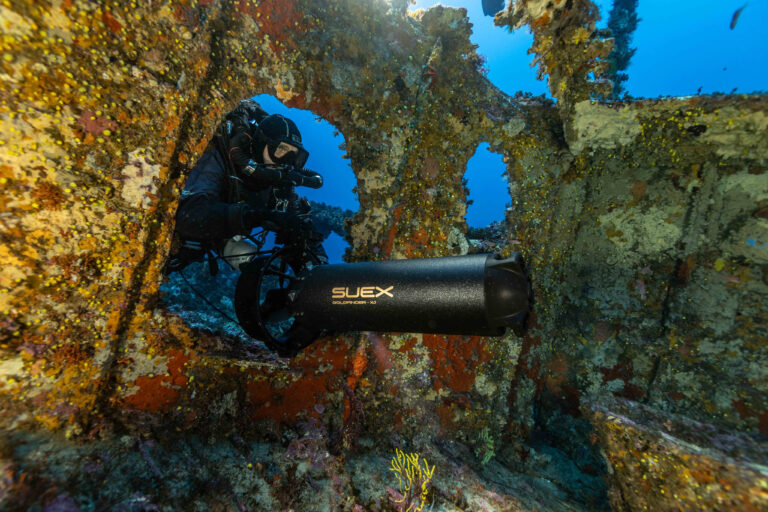
After their initial DPV experience, many divers begin to develop their dives toward longer routes, wreck exploration, and extended-range dives.
During dive trips, the DPV demonstrates its true potential.
For many divers, the DPV course is the beginning of a completely new style of diving—exploratory diving with a DPV.
Work and practice
Knowing how to use a DPV underwater scooter offers many practical benefits during diving.
It allows you to:
- explore larger areas during a single dive
- reduce physical exertion
- increase diving comfort
- photo and video underwater more effectively
- move between dive sites more quickly
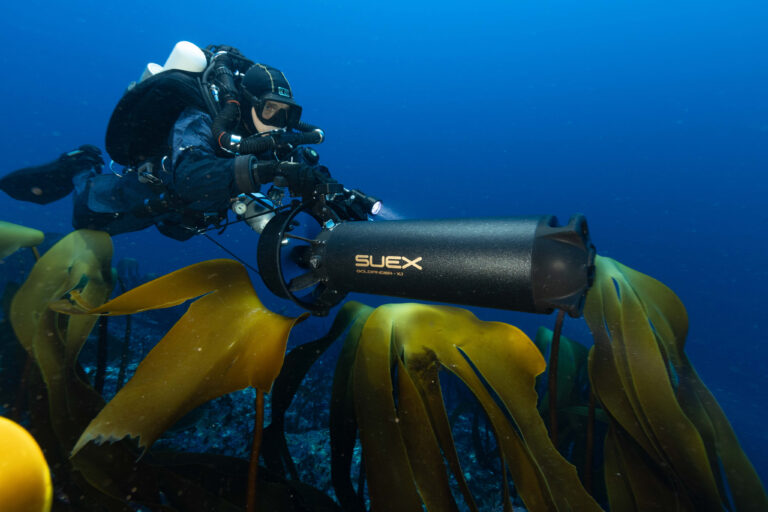
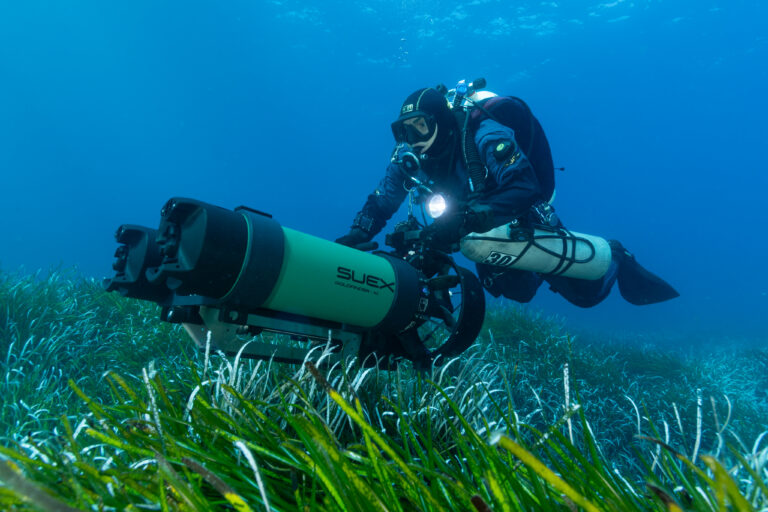
Therefore, scooters like the Seacraft and SUEX are increasingly used not only for technical diving, but also by recreational divers who want to expand their diving capabilities.